
X APZB Conference
THERE ARE MORE CURRENT PROBLEMS THAN WAYS TO SOLUTION THEM
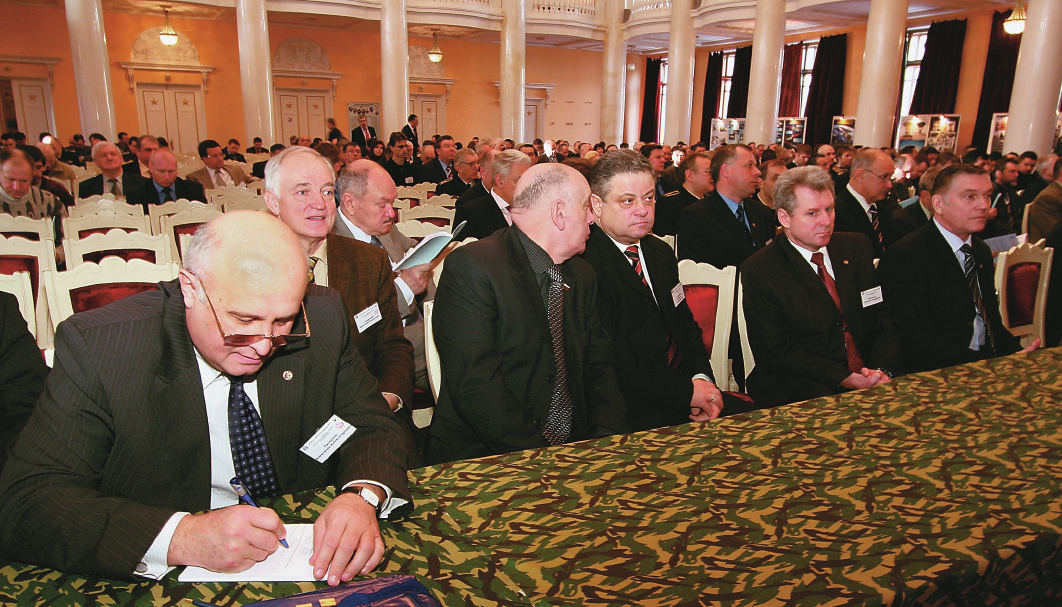
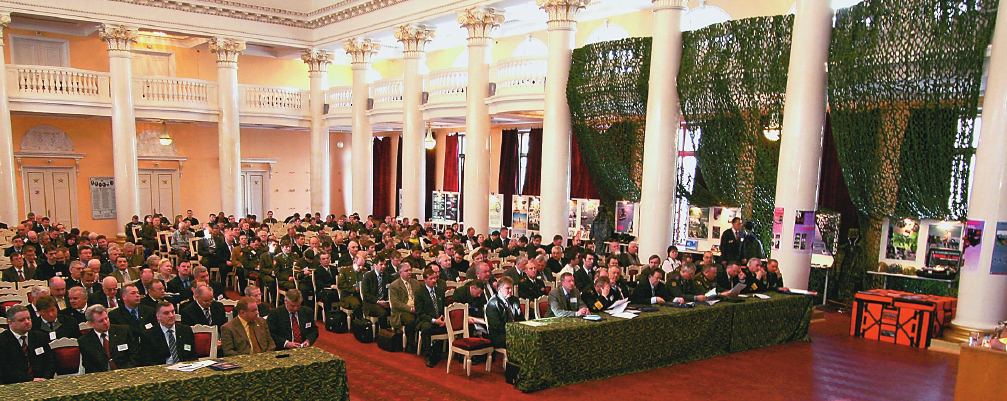
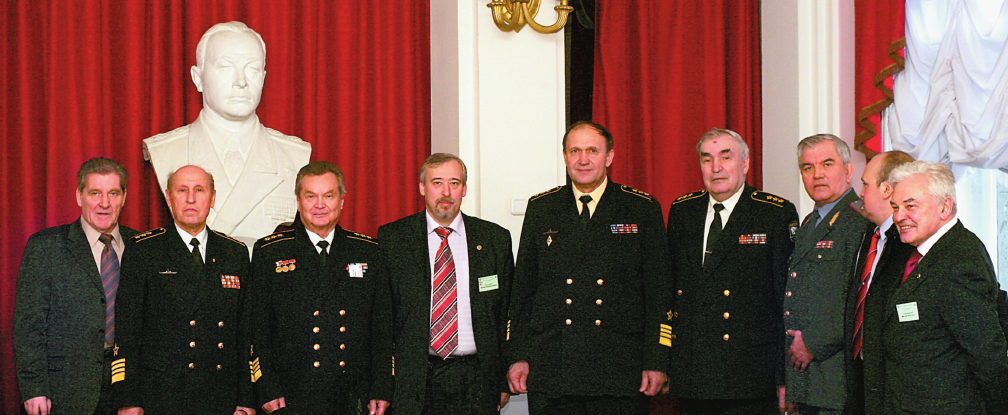
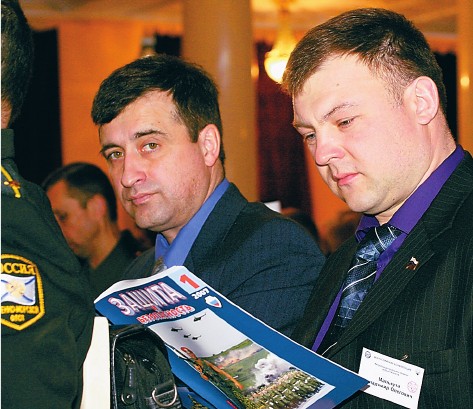
WITHIN THE WALLS OF THE NAVAL ACADEMY NAMED AFTER N.G. KUZNETSOV THE X ALL-RUSSIAN SCIENTIFIC AND PRACTICAL CONFERENCE “CURRENT PROBLEMS OF PROTECTION AND SECURITY” WAS HELD
WITHIN THE WALLS OF THE NAVAL ACADEMY
The tenth serial number of the current conference did not become a reason for the usual congratulations on such occasions. In any case, no ceremonial speeches were made at the plenary session. Their place was taken by serious, sometimes alarming speeches, which voiced sincere concern about the yet unresolved problems of military construction and the development of the defense-industrial complex. True, in conversations between participants of the scientific forum and our correspondents, the decade of the conference, which coincided in time with the decade of the journal of the same name, was mentioned more than once.
Let us note that the first conferences took place in the context of a deepening crisis in the defense industry. In the 90s, military science and the defense industry essentially had one and only problem - to preserve, to the extent possible, the potential of the defense industry, primarily intellectual resources. In other words, survive. Many, including the top leaders of the Russian state, were then convinced (or pretended to be convinced) that after the end of the Cold War, the threat of a large-scale attack on Russia by former potential adversaries was forever a thing of the past.
Such misconceptions had objective reasons. After all, the geopolitical situation that emerged after the collapse of the USSR, combined with Russia’s remaining powerful potential of strategic nuclear deterrent forces, as well as the absence of contradictions that could not be resolved without the use of military intervention, provided our country with a “security window” for a period of 10 to 20 years.
The reliability of such a “window” was also confirmed by the fact that at that time the armies of the NATO bloc had just begun to launch long-term rearmament and technical re-equipment programs, as well as the development of fundamentally new methods of conducting combat operations. The corresponding research and the scale of industrial implementation of the results of experimental design and experimental technological work are unprecedented in scale and depth. Almost all types of weapons, military equipment and clothing were subject to replacement and modernization - from aerospace reconnaissance and communications equipment to the underwear and protective equipment of an individual soldier. In the field of defense and offensive technologies alone, over the past decade more than 7 thousand research and development (OK(T)R) projects have been carried out.
Experts believe that the rearmament of NATO armies will be gradually completed in the period from 2015 to 2020, but by the end of 2010 the weapons of the former Warsaw Pact countries that have become NATO members will be unified, in accordance with the technical requirements established by NATO standards.
It can be assumed that the deployment of the US global missile defense position area in the Czech Republic and Poland, as well as the accession of Albania, Croatia and other Balkan countries to the NATO bloc is just a small part of the plans aimed at gaining US military and geopolitical dominance in the so-called unipolar world.
In this regard, one cannot fail to mention the potential threat to Russia’s interests from the direction opposite to the West, where China is doing everything possible to build up its defense and offensive capabilities. It is expected that in the field of production and development of weapons of mass destruction, delivery vehicles, as well as in the creation of related military technologies, the PRC will overcome the gap with Russia in the early 20s.
Thus, we should expect that the “security window” for Russia will slam shut, and large-scale military threats may arise at the turn of 2015–2017, primarily caused by the fierce struggle for the possession of energy, biological and water resources.
Currently, Russia has confidently declared itself as the leading subject of the world energy system, the most important source of energy resources, and for Western Europe - the main guarantor of reliable energy supply. The current situation requires a revision not only of our country’s role in the system of existing world economic relations, but also the development of new approaches to its geopolitics, including issues of ensuring the country’s economic and military security. The latter is associated with the development of all components of the military organization of the state, since forceful confrontation in modern conditions includes methods of both military and non-military struggle with the enemy.
Most of the reports, to one degree or another, directly or indirectly took into account fundamental changes in the geopolitical space and Russia’s place in it. The need to sharply increase the efficiency of the defense industry
complex and strengthening the country's defense capability was the leitmotif of the main reports delivered at the plenary session of the conference.
It was emphasized that military science has a special role to play, as it faces a number of tasks that require immediate solutions. These include the issues of developing such a balance of weapons and military equipment that, on the one hand, would ensure proper combat readiness of the Armed Forces and other military formations to repel various threats to the state in all possible azimuths, including from sea and ocean directions, and on the other hand, would correspond to the real economic and financial capabilities of the country.
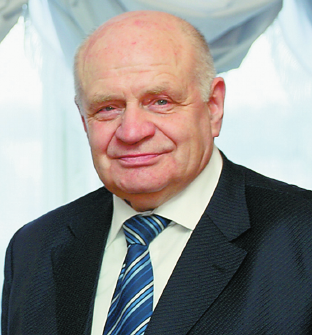
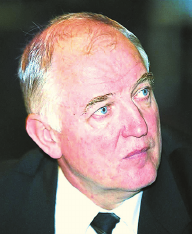
The scale and significance of the problems mentioned in the speech of RARAN President V.V. Panov, became a kind of tuning fork that determined the atmosphere of the conference, which became not so much an anniversary event, but rather a general one in terms of theme and significance, marking a transition to a new level of research and organizational decisions - from analysis to synthesis.
“In contrast to the situation that developed in the last decades of the last century, today’s threats to the security and national interests of Russia are gradually becoming complex,” note
l V.V. Panov. – Today we can say that Clausewitz’s classic formula that war is a continuation of politics by violent methods is no longer effective, since war, if we qualify it as a violent confrontation, becomes a permanent phenomenon: a struggle for resources, a struggle for privileges, a struggle for priorities, a struggle for the very existence of ethnic groups.
This confrontation, with one intensity or another and in various forms, goes on continuously and covers all areas of relations between countries and within states, both non-military: economic, political, social, ethnic, religious, others, as well as military. In addition, new forms of contradictions and the resulting dangers are emerging, generated by the globalization of processes and phenomena occurring in the world, reflecting, along with national interests, the needs of monopolies, various kinds of international institutions, etc., manifesting themselves in their extreme form in the form of terrorist threats. The peculiarity of our country is that, having at least a third of natural resources, as their deficit worsens, it increasingly becomes an object of aspirations of other states.
It is obvious that Russia's national wealth will be used by the world community. It is important that this is done taking into account our own national interests. Changes in the geopolitical situation and internal life of Russia and emerging internal and external threats required and require appropriate policies, including military ones, and its component – military-technical policy. When forming it, it is necessary to take into account such contradictory and difficult to predict factors as changes in geopolitics and the nature of external and internal threats; the nature of the development of science, technology, technology and the possibility of using scientific and technological achievements to create weapons and military equipment; restrictions imposed by economic and other conditions, and many others. It is also necessary to take into account the fundamental possibility of the emergence of such dominant means of influence,having which, you can, at least for a limited period of time, dictate your will to the community or individual states. All this requires scientific research and the use of scientific research results to justify political, economic and military decisions. The tenth conference “Current problems of protection and security” is designed to make a feasible contribution to solving these problems.
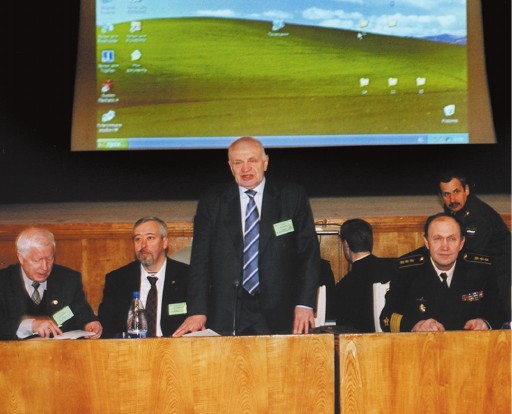
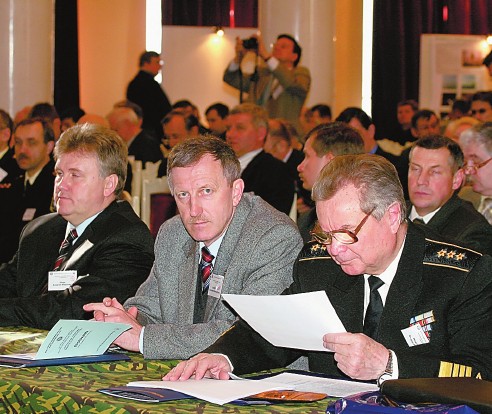
It is legitimate to consider it as an integral part of the work of the Russian Academy of Missile and Artillery Sciences as a form of bringing the methods of organizing scientific research into conformity with the emerging social, economic and political organization of society. The peculiarity of the current and all previous conferences is that it organically absorbed what is important that distinguishes RARAN: the Academy brings together the leading and most authoritative military and civilian specialists. Such an organization is able to formulate proposals independent of departmental affiliation and conduct independent examinations free from the influence of departmental affiliation. In addition, it is capable of considering the entire range of problems facing the military organization of the state, since the scope of the Academy’s activities covers all areas of development of military equipment and technologies that are ultimately implementedIn the end, in the creation of means of force confrontation, and not just weapons and military equipment in their traditional sense.
Having gathered at the conference “Current Problems of Defense and Security” for the tenth time, we can note with satisfaction the growing interest both in the conferences themselves and in the relevant published materials, which have become quite widely known in the country and, by the way, help strengthen the authority and affirm the place of the North-Western region, the city of St. Petersburg, as a historical center for the development of military and law enforcement science, technology and technology.
From the materials of all our conferences, embodied in many dozens of volumes, it follows that the starting point for our work was the formation of conceptual approaches and the selection of main directions to reflect them in the relevant guidelines, normative and methodological documents. The conferences addressed issues related to the search for a rational structure of the military-industrial complex, in particular, the construction of vertically integrated structures. This topic is extremely relevant, but I am unlikely to be mistaken if I say that out of 86 structures planned last year, only 6 were formed. This, generally speaking, is not so surprising, since systemic shortcomings of defense industry enterprises still remain, including their traditional focus on state defense orders, low levels of capital productivity, difficulties in repurposing, high production costs, depreciation of fixed assets, insufficientfinancing and, finally, the construction system itself, which in fact is often dominated by the protection of group or regional interests.
The question is that there is no scientific, systematic justification for these processes to the proper extent. And our attempt to make a certain contribution to the solution of these issues that are absolutely necessary for the country deserves some attention.
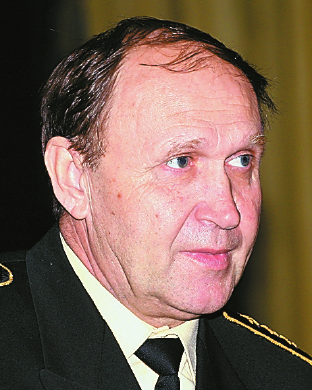
I would like to note that we traditionally search for breakthrough solutions within the framework of a system that includes a set of defense industry enterprises, as well as managing entities - ordering Directorates of the RF Ministry of Defense and other ministries (departments). Today it is necessary to find a mechanism to use the opportunities that small and medium-sized enterprises represent for the defense industry. The events held within the framework of our conferences provided the key to solving this problem.
Another topic is related to the problems of restructuring the defense industry and issues of economic policy. To a large extent, failures in the formation of economic and financial policies led to the fact that we were unable to implement any of our government weapons programs. As for the latest large-scale (until 2015) program, there are fears that it will not be implemented in full, and therefore will not receive the results that were expected. One of the unresolved problems is real pricing. We considered this problem at last year’s conference and then at the conference, which was held on the basis of the 46th Institute of the Russian Defense Ministry. It is associated, in particular, with the correct determination of product prices, which is largely determined by the formation of deflator indices. There is a well-known contradiction when we calculate the price based on macroeconomic indicatorsraw materials, basic elements, and then we try to translate them, without taking into account proper price dynamics, into the cost of products, the cost of which does not at all correspond to the calculations that are included in the formation of programs.
I would like to draw attention to the problems of legal protection of intellectual property that were brought up for discussion. This problem is well known to everyone. It is alarming that at one of the last meetings of the Military-Industrial Commission, in particular, quite authoritative persons said that the adoption of the 4th part of the Civil Code solves this problem. Indeed, the adoption of the 4th part of the Civil Code is a significant milestone
. At the same time, one cannot help but notice that in this part of the Civil Code, even in the subtext, one cannot find any mention of the fact that there are specifics of legal protection, the procedure for recording and implementing the results of intellectual activity of military, special and dual-use. The main essence of this issue is that there is no effective mechanism for introducing the results of intellectual activity of military, special and dual-use into intra-economic circulation. If in the field of military-technical cooperation this problem is more or less solved, then the use of these results in the interests of the national economy, in the domestic market (in which the Americans are strong) still remains a pressing problem for us.
The next issue is innovation policy. We made some contribution by becoming a co-founder of the 13th commission of the Russian Union of Industrialists and Entrepreneurs, which deals with the problem of the defense industry. The commission was headed by Viktor Konstantinovich Glukhikh, and Anatoly Petrovich Sitnov became his deputy. I think that this creates certain preconditions for putting our ideas into practice.
I would also like to remind you of those applied issues that we considered at various conferences and which have a certain resonance and have, albeit a modest, but certain positive influence on the choice of priorities in determining the directions for the development of weapons and military equipment. I will give several examples related to the consideration of issues in the field of creating new equipment and the search for advanced technologies.
From the first years of our work, serious attention was paid to discussing issues to develop proposals for the creation of individual, group and complex means of protection that meet the requirements of the time: from the development of equipment for people working in extreme situations to the production of effective, inexpensive means of comprehensive protection of government facilities. The entirety of the problem was considered: from medical and biological factors, through the choice of materials to the search for optimal design solutions and production technologies for the final product.
Another direction is the detection and neutralization of explosives and radioactive substances. From a humanitarian standpoint, these problems are especially important not only for our country, but also for the entire world community. Our reports on this problem were considered at the suggestion of the Security Council at technical conferences on combating terrorism, which were held with the participation of Russian and foreign scientists.
Next, I would like to draw attention to issues related to the use of new physical principles in the creation of means of force confrontation, an integral part of which is non-lethal weapons.
Finally, issues related to the creation
knowledge of intelligent weapons, the introduction of artificial intelligence, issues of robotics, which have always occupied a large place in our work. These and many other problems were reflected in the reports and messages submitted to the conference for ten years, which, like the materials of the discussion, were reflected both in the published proceedings of the conference and in materials published in the magazines “Protection and Security”, “Armament. Policy. Conversion", "Izvestia RARAN".
In conclusion, I would like to note that the X Conference on topical issues of defense and security was traditionally held within the walls of the famous Naval Academy. In Russian history, it turned out that all cataclysms had the most tragic impact on the fate of the Navy. Meanwhile, our future largely depends on the state’s ability to use the potential of the seas and oceans. A country that is washed by thirteen seas and oceans is simply doomed to have a strong fleet. If we limit ourselves to the dominant trends in modern foreign policy, when Russia has declared its ability to take its place as the guarantor of energy security and thereby strengthen its geostrategic position, the protection of sea communications without a strong fleet does not seem possible.
During this and subsequent conferences, we will have to turn again and again to pressing issues of ensuring state security, to the search for optimal ways to form and implement the military-technical policy of the Russian Federation.
Many reports at the plenary session voiced ideas that military confrontation in the world is taking on new forms, different from those established in classical military theory. To win in modern armed struggle, it is necessary to make not only a technological breakthrough in many areas of weapons and military equipment (in this sense, Russian science is not giving up its positions), in the field of organization and information support of military operations, but also to rebuild the structure of the defense industry on completely different principles.
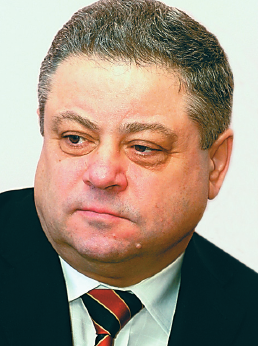
This issue was developed by the head of the Naval Academy named after. Admiral of the USSR Fleet N.G. Kuznetsov Admiral Yuri Nikolaevich Sysuev. In his opinion, the ongoing process of geostrategic reorganization of the world forces many military theorists to argue that we are already participants in the 3rd World War of low intensity. It is based on the struggle of world centers of power (the speaker included the USA, United Europe, China, India, the Muslim world, Southeast Asia, as well as Russia, which is increasingly active in the international arena) for access to various resources. It is already obvious that with the growing needs of the world economy, their supply on the planet is limited. Consequently, for now the only way out is to reduce the level of social production and consumption. However, not everyone agrees to curb their appetites. Let's say the USA, where 3-4% of the world's population lives, consumes 25% of the world'senergy resources.
Thus, today the question of what the world should be like after the collapse of the USSR, which balanced the military power of the United States, is being finally decided: unipolar or multipolar? It is from this angle that many burning problems of our time should be considered: the globalization of the world economy, the growing aggressiveness of radical Islamic and separatist movements, international terrorism and drug mafia, the struggle to choose the path of human development, rivalry at the civilizational and cultural level, the growth of national self-awareness of the population of various countries, attempts to revise the borders established after the Second World War. An analysis of all these processes shows that already in the first half of the 21st century, a crisis is inevitable. And NATO’s persistent advance to the East, to the southern borders of Russia and to the western borders of China, gives reason to assume the option of preemptive forceful influence on these dynamically developingstates.
The nature of possible conflicts can be judged by the operations already carried out by the United States in the Middle East and Yugoslavia. First of all, these will be non-contact wars waged by technologically developed states,
a decisive role in which will be assigned to conventional high-precision weapons, as well as weapons based on new physical principles, high information, space and robotic technologies. The nature of future forms of conflict is already more or less clear. The space of armed confrontation will expand and unite, the usual concepts of front and rear will disappear. Strikes will be carried out primarily against objects of state, political, military, and economic significance. In these conditions, as well as if it is necessary to control combat operations in real time, to repel aggression requires priority of means of attack over means of defense.
It is very, very difficult for us to compete in this with the United States - not so much because of the lack of ideas, but because of the lack of funds for their implementation, as well as the difficulties of organizing coherent production in a poorly controlled economy. This topic was touched upon in one way or another by many reports. A special resonance was caused by the speech of the auditor of the Accounts Chamber, Alexander Alexandrovich Piskunov, dedicated to the economic justification and control over the implementation of military reform. The turn from a financial audit to an efficiency audit and a strategic audit, to which most military programs had already been subjected, including rearmament programs and the transition to a contract basis for the recruitment of the Armed Forces, helped to clarify the real state of affairs.
You can be happy or sad about how military reform is going in Russia, comparing what has been achieved with what would have happened if we ourselves were our potential enemy. But the real starting point for us should be the indicators that the United States is guided by. And there, Congress is already considering the comprehensive development system proposed by the Pentagon, called “Purposeful Architecture Management.” It includes 3 main areas: goal setting, architecture management, technology management.
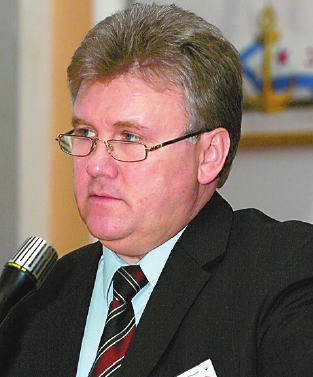
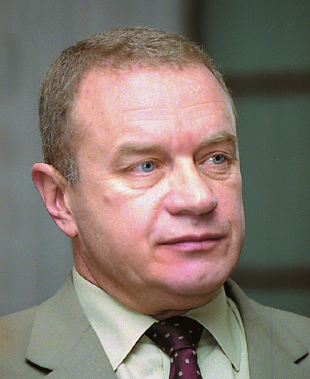
A country's scientific prestige is judged by its achievements in the field of intellectually intensive technologies. Therefore, the report of the General Director of the Central Research Institute of RTK, corresponding member. RAS Vitaly Aleksandrovich Lopota, who traditionally leads a symposium at conferences on the development of extreme robotics. He emphasized that the main path in this industry is associated with the miniaturization and intellectualization of robots, which are already represented in the 3rd generation in the world. Their appearance does not fit into the image familiar to our consciousness. The philosophy and tactics of action of decimeter, centimeter and even millimeter robots are based on the principle of their group interaction. From the outside, they resemble bugs, which, when approaching an obstacle, unite into a snake, and then, having overcome the obstacle, each crawl away to complete their task. Therefore, in their creation we have to start not frompre-planned design, but from the logic of action.
Also in demand today is the creation and implementation of unmanned technologies in military tactics. By 2010–2012 The Pentagon plans to increase the share of unmanned aircraft in aviation to 40%. In addition to the opportunity to save the life of the pilot, this is beneficial, since unmanned aerial vehicles (UAVs) are much cheaper than airplanes. UAVs are particularly effective in reconnaissance as they are extremely difficult for an enemy to detect.
Today the whole world is following the path of robotization. The total production of robots in total has already reached 6 billion dollars. And the ratio between the leading powers in this area is as follows: Japan accounts for 46%, Asia - 18.4%, the USA - 17.2%, Western European countries - 16.2%, and other countries, which includes Russia, only 2.2%. However, if we take the production of military robots, then 80% of such products belong to America.
Our lag is primarily due to a lack of adequate funding. All current Russian robotics are created by several organizations. However, enthusiasts and bright minds work there, which is confirmed by the fact that at the next World Football Championship among robots, Russian “electronics” won, which cannot be said about their human colleagues. In general, the speaker was optimistic about the prospects for his industry, explaining that, due to objective reasons, the 3rd–4th generation of engineers—the creators of robotics—are reaching the level of winners, and they are already on their way.
Head of the Office of the Chief of Environmental Safety of the Armed Forces of the Russian Federation, Lieutenant General A.I. Yunak spoke about the experience of creating and operating ship environmental protection systems (SEC) at the facilities of the RF Armed Forces. They have been developing since 1997, and now the Baltic, Black Sea and Northern fleets are equipped with such ship systems. Each of them is placed on a boat and allows you to receive accurate information about the state of the water and bottom soil in a given water area in real time, both stationary and on the roads; provide environmental support for military-technical activities. The environmental vessel is equipped with means for localizing oil pollution and refining it.
The appearance of such a complex in Sevastopol, in the area where the Russian Navy is deployed, made it possible to deflect a significant part of Ukraine’s claims regarding the pollution of its waters. According to the agreement between the two states, penalties for one kilogram of oil spilled by the Russian fleet are $329, and for one kilogram of garbage thrown out - $100. As a result, we paid $2.5 million in fines annually, and it was almost impossible to prove their groundlessness before the advent of SPOK. The presence of the ship forced Ukraine to drop most of the charges against Russia.
These were the main reports presented at the plenary sessions of the X All-Russian Scientific and Practical Conference “Current Problems of Defense and Security” will be published in full in the Proceedings of the Conference, in the journals “Izvestia RARAN”, “Problems of Defense Technology”, and the most interesting for a wide range of readers - in the journal “Protection and Security”.
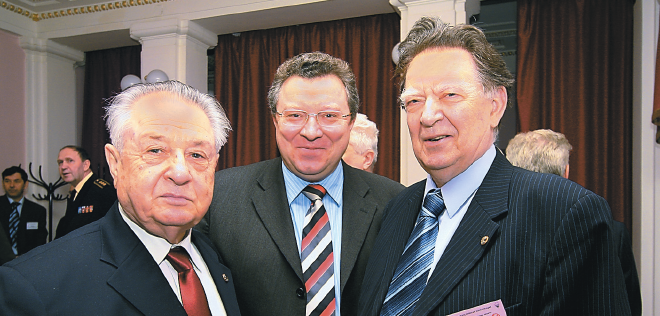
The content of the speeches at the plenary sessions was supplemented and deepened during the work of seven specialized symposia, to which more than 600 reports and messages were presented.
List of conference volumes
Volume 1. “Technical means of countering terrorism and non-lethal weapons”, 297 pp., 56 reports, 114 authors.
Volume 2. "Armament and military equipment", 524 pp., 146 reports, 191 authors.
Volume 3. "Armored vehicles and weapons", 200 pp., 36 reports, 57 authors.
Volume 4. "Russian Navy", 458 pp., 93 reports, 147 authors.
Volume 5. "Extreme Robotics", 424 pp., 74 reports, 130 authors.
Volume 6. "Medico-biological problems", 375 pp., 92 reports, 169 authors
Volume 7. "Special Issue".