
XIV APZB Conference
Time to arm yourself!
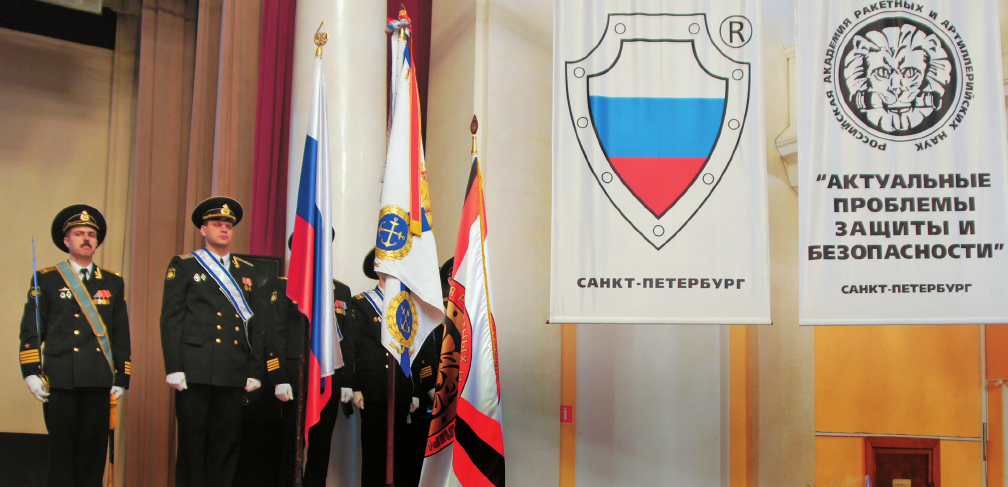
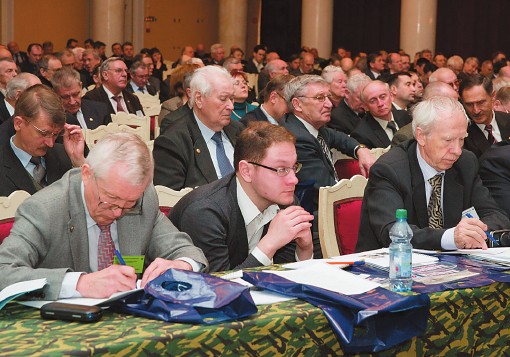
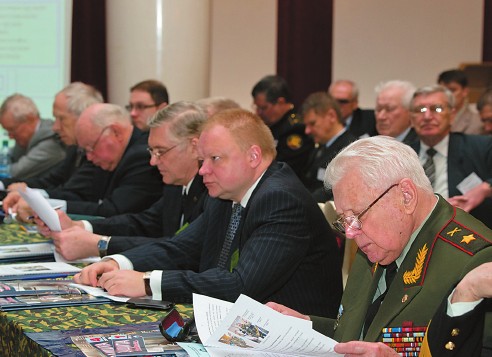
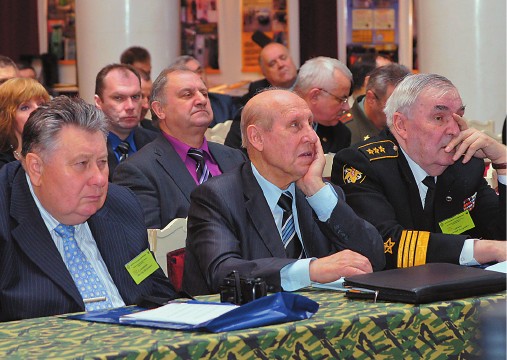
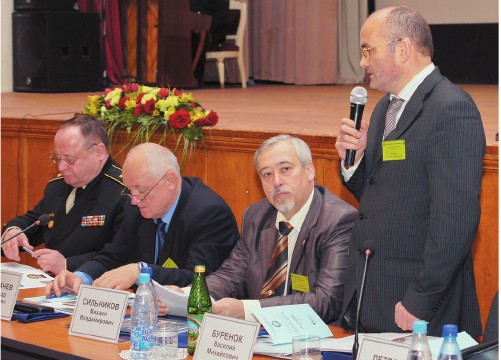
At the Military Educational and Scientific Center of the Navy “Naval Academy named after Admiral of the Fleet of the Soviet Union N.G. Kuznetsov" hosted the XIV All-Russian Scientific and Practical Conference "Current Problems of Defense and Security", which brought together over seven hundred scientists, designers and specialists from enterprises and research institutions of the military-industrial complex, as well as generals, admirals and senior officers of the Armed Forces, the Ministry of Internal Affairs, the Ministry of Emergency Situations and other law enforcement ministries and departments of the Russian Federation
Currently, Russia has only one chance left to secure its future as an integral and independent country. What is meant here is not the next few years, but the period beginning in the third decade of this century and extending into the foreseeable historical future. It was in the early 20s that the NATO countries would complete the rearmament of their armies, unprecedented in scale, intellectual and financial costs. And by the middle of the third decade, similar processes will be completed in the Chinese armed forces. Modernization and a significant increase in the military potential of the so-called Japanese Self-Defense Forces are planned for approximately the same period. The recent disaster and accident at the Fukushima nuclear power plant is unlikely to significantly affect the implementation of these plans. Thus, Russia will find itself in a completely new and, to put it mildly, unfavorable military-political situation.
The response to these challenges and threats was the decision of the President and the government to significantly increase federal budget spending on the rearmament of the Armed Forces of the Russian Federation. This refers to the replacement of outdated weapons, military and special equipment with qualitatively new ones.
But what are the prospects for the implementation of these plans if in recent years not a single one of the adopted state weapons programs has been completed? And what efforts should managers of defense industry enterprises, scientists and designers take to prevent the purchase of weapons abroad? Which areas should be developed as a priority, and which have lost their relevance? The answers to these and other questions are published below because they were, in an explicit or implicit form, the leitmotif of the reports and messages made at the fourteenth All-Russian Scientific and Practical Conference “Current Problems of Defense and Security,” traditionally held within the walls of the famous Naval Academy named after Admiral N.G. of the Soviet Union. Kuznetsova.
A distinctive feature of the XIV All-Russian Scientific and Practical Conference “Current Problems of Defense and Security” was, perhaps, the efficiency in raising problematic issues, topics and the specificity of the tasks discussed. And this brought a certain line under the whole stage of the existence of an authoritative scientific forum, during which it was first necessary to prove the feasibility of the existence of domestic military science and the military-industrial complex, determine the sources of threats and the most adequate options for responding to them, argue about the priority of certain areas of weapons and military equipment (W&M). Fortunately,
attention, supported by serious financial support, which the Government of the Russian Federation is now paying to the Armed Forces and the defense industry, allows scientists, military personnel, production workers, employees of the Ministry of Internal Affairs and other law enforcement agencies, who traditionally gather in early April within the walls of the Naval Academy. N.G. Kuznetsov, to focus on purely special, but no less important issues, which gave the conference a generally positive and pragmatic character. In a word, the speakers spoke without unnecessary emotions and with knowledge of the matter. The chair was the vice-president, academician of the Russian Academy of Sciences, head of the 46th Research Institute of the Ministry of Defense, responsible for the main directions of development of domestic weapons and military equipment, Major General Vasily Mikhailovich Burenok. His words that the results of the conference take a long time to be comprehended in the highest government circles and form the basis for making serious decisions did not sound like a beautifulphrase, but as a statement of completely real facts. Plenary report by V.M. Burenka “New Technologies and New Wars” demonstrated that it is not the improvement of traditional weapons, even high-precision ones, that will determine the appearance of future wars. These weapons have already been squeezed to the limit of all the technological capabilities inherent in them (and the qualitative leap turned out to be not so impressive), and this has raised the cost of precision-guided munitions to such a level that even the United States can use them to a limited extent. Rather, new technologies that change the very essence of war can provide an advantage in military confrontation. These include laser, beam, hypersonic, bio-nanotechnological (nanorobots or killer embryos have already been developed that, when introduced into a person, can kill him or suppress the body’s immune reserves) and other types of weapons and, not least, methods of radio-electronic andinformation warfare. Today, military superiority is ensured not simply by the quantity of weapons and equipment, but by the share in it of products of the latest, 6th technological structure. In terms of the ratio of new and old technical levels of weapons and military equipment, we are significantly behind NATO countries. And even if we make a qualitative breakthrough in this area, concentrating all efforts on rearmament of the army, in the future we risk falling into the trap that has already been laid. After all, the desire of domestic defense enterprises to consume imported components and equipment is fraught with collapse in wartime, not only due to a disruption in supplies, but also due to the potential enemy’s knowledge of the weak points of our equipment.
We need to look at the future. And long-term priority in the future can be ensured by fundamental scientific research already underway today, encouraging which US President Barack Obama uttered the iconic phrase: “The time has come for us to become leaders again.” History teaches that it is progress in the field of weapons that can significantly change the nature of war. Network-centric wars, which are widely discussed now, are no longer a hypothetical possibility, but a real threat. Are we ready to reflect it? To some extent, this question was answered in his report by the First Deputy Chief of the Joint Staff of the Collective Security Treaty Organization, Colonel General A.A. Nogovitsyn. For the first time at the conference, non-lethal weapons were discussed not in theory, not descriptively (which samples
are available in different countries and what are their characteristics), and based on the actual practice of application in specially conducted exercises for this purpose. The concept of using non-lethal weapons includes the following requirements: high efficiency, selectivity, ability to incapacitate for a certain time while sparing damage. Currently, the Unified Concept of Non-Lethal Weapons and the Clarifying Concept of 2009 are in force, based on federal laws and a number of international legal norms. What previously existed in the form of an uncertain possibility or experiment has now acquired a legislative basis and a material basis: new military specialties have appeared, a number of enterprises have begun to produce special equipment, non-lethal weapons and ammunition for the needs of not only the Ministry of Internal Affairs, but also the Ministry of Defense. For example, the Research Institute of Applied Chemistry became the lead organization for the developmentand the production of non-lethal ammunition and special equipment.
Such important preliminary work made it possible to demonstrate at the joint exercises of the collective rapid reaction forces “Interaction 2010” the high efficiency and great potential of non-lethal weapons during special operations. It is significant that the first to undergo such exercises were the Russian Airborne Forces, followed by the Kyrgyz special forces, which is understandable due to the unstable political situation in this country, a member of the CSTO.
The exercise recreated the situation of a terrorist hostage-taking in a small locality. The special forces detachment of the Kyrgyz Armed Forces was armed with hand grenades and non-lethal grenade launchers. To reach the deployment line, smoke screens were used, after blocking the building, supersonic cluster grenades were used, disorienting the enemy, and irritating hand grenades, as well as shots from an under-barrel grenade launcher, creating unbearable conditions in the room - the so-called smoking effect. The entire operation was filmed - this film was shown to those present at the plenary session. Result of the operation: the hostages were freed, there were no casualties among personnel or civilians. The advantages of non-lethal weapons in such operations are so obvious that in 2011 Uzbekistan plans to purchase them first, and then other countriesCSTO. In the Russian Federation it will be put into service in 2012 - for now for the Airborne Forces.
Other speakers also returned to the topic of non-lethal weapons. Thus, the head of the department of MSTU named after. N.E. Bauman, Academician of RARAN V.V. Selivanov spoke about the creation of an integrated database on these weapons, the equivalent of which is only available in the UK. The database contains information about non-lethal special equipment, divided into categories according to the physical principle of operation and design features; regarding the objects to which they apply and the means of their delivery. The database also contains information about all development organizations and manufacturing companies in the world.
Innovative technical means are being developed both in the field of non-lethal weapons and in the field of security. General Director of NPO Special Materials, Academician of RARAN M.V. spoke about approaches to their creation. Silnikov. When countering terrorism, preventing and eliminating man-made accidents, it is important to know what kind of explosions can be expected. Terrorist explosions are characterized by a short but powerful shock wave; for man-made or fuel-air, on the contrary, a shock wave of long duration. Their own dangerous features arise when two-act systems are triggered and when several systems explode, the shock waves from which overlap each other. Knowing exactly the characteristics of a possible explosion is necessary when choosing protective devices, which (especially those made of metal) themselves can turn into destructive elements if usedincorrect. But often the terrorist himself does not know how much and what kind of explosive substance is included in his explosive device. The Fontan explosion localizers have become a universal tool that, even if it does not completely extinguish the energy of an explosion, is guaranteed to reduce it and reduce all damaging factors. This product is now actively purchased by many countries around the world - from Israel to India and Australia. Its modifications, specially adapted to the conditions of the aircraft, are capable of extinguishing an explosion in the air while maintaining the aircraft's airworthiness. Since 2003, according to international safety requirements, this device must be on board every aircraft.
Speaking next, Lieutenant General V.S. Sukhoruchenko, representing the Committee on Legality, Law and Order and Security of the Government of St. Petersburg, developed the topic of preventing man-made accidents and disasters, which is so relevant all over the world after the devastating earthquake and tsunami in Japan. St. Petersburg, it would seem, stands on a seismically safe area of the earth's crust. But should we be complacent about this? Recently, two important research projects were carried out in the Northern capital. One of them was devoted to compiling a map of geodynamic faults that run through the entire city. Hence, cracks in the asphalt, frequent accidents in sewer systems, even the foundations of houses may be in some danger, not to mention the negative impact of such zones on human health. Therefore, constant monitoring is necessary.
The topic of another research work was the justification of the permissible volume of circulation of potentially hazardous chemicals at industrial (not only chemical, but also food, textile and other enterprises), scientific, transport and other facilities of such a metropolis as St. Petersburg. Due to the city’s dense infrastructure, there are 4.5 kg of potentially hazardous chemicals per resident, which is 22 times higher than in Moscow and 2.8 times higher than the European average. In general, for enterprises working with radioactive substances, the exclusion radius must be at least 5 km, and for those dealing with large volumes of chemically hazardous substances - 2.5 km. In St. Petersburg, due to dense development, these conditions are not met.
Of course, the drastic way out of this situation is to move such enterprises outside the city limits. But since this cannot be dealt with overnight, it is necessary to carry out a set of urgent measures to develop systems for detecting accidents, alerting them, coordinating the actions of all emergency services, of which there are 19. Complicates
The situation is that the owners of dangerous enterprises are often private individuals who do not want to invest money in installing security systems.
Now in St. Petersburg, only 6% of enterprises (among them Vodokanal, the Baltika and Heineken breweries) have a local emergency notification system. If it does happen, the consequences get worse every hour. There are ways to solve this problem, but they require huge financial investments. For example, the transition from cold technologies to new ones that do not require the use of ammonia will reduce its reserves by 500–1000 times. There are special systems and devices to protect people in the event of a man-made chemical accident, which, in theory, should at least be in hospitals, schools, and kindergartens. But their cost is impressive: 500 thousand dollars for 1 thousand tons of chemical product. Therefore, the most realistic way to prevent a catastrophe is to move enterprises, at least those that use large volumes of ammonia, outside the city.
Another extremely pressing problem for enterprises of the defense complex was voiced in the report of Colonel General of Police, General Director of FGU “FAPRID” V.V. Zubrin “Protection of the state’s rights to the results of intellectual activity of military, special and dual-use when they are involved in civil legal circulation.” For 12 years now, the organization he represents - FGU "FAPRID" under the Ministry of Justice of the Russian Federation - has been exercising state control over the targeted use of state budget funds in the execution of state defense orders, and is also developing measures to prevent the unauthorized transfer of military technologies abroad and the production by foreign companies of counterfeit products based on Russian designs. There are many problems here, and they begin from the stage of drawing up documentation at enterprises. Privatization of defense industry enterprises in the vast majority of cases (over 70%)was carried out in violation of inventory rules, and the technical documentation did not meet the requirements of completeness and accuracy. As a result, the dividing line between the rights of the state and the enterprise was never clearly drawn. And the imbalance here is dangerous both in one direction and in the other: either the interests of the state are infringed (it owns the rights to create
desired result), or the initiative of the enterprise is too limited, which prevents it from developing dynamically. All this requires in-depth study, and the developed rules must be followed when accepting R&D results. As for the protection of state rights in the international arena and the fight against counterfeit production, there is only one way out - to patent all developments abroad and hold violators accountable at the highest level.
Russian tank building was discussed at almost every conference “Current problems of defense and security”, and everything was in minor tones: research is being reduced, funding is not allocated for it, Russian tanks are increasingly inferior to NATO ones. So at this conference, held in the anniversary year, when Russian tank building turns 90 years old, the director of JSC VNII Transmash V.V. Stepanov did nothing to please those present. In his report, he tried to dispel two myths: that in modern wars the role of tank forces is declining, and that it is supposedly more profitable for Russia to buy foreign tanks rather than improve its own tank building.
To understand that this is not so, it is enough to remember the recent past. In all military conflicts of the last 10–15 years, tanks were used: in Iran, Iraq,
Afghanistan, South Ossetia. Since 2010, the US has brought tanks into Afghanistan and keeps them there to maintain stability. Military science says: when territorial claims arise between countries, the conflict cannot be resolved without the participation of tanks. And the NATO countries understand this very well, investing huge amounts of money in improving their tank fleet - creating new vehicles and modernizing old ones. It is significant that among the top three tanks in the world (“Abrams” USA, “Leopard” Germany and “Leclerc” France), the latest models, declared as new, are essentially modernizations of previous models, but with more powerful weapons and a number of other improvements. Compared to them, our T90A tank looks quite decent. Equipped with a new thermal imager and a cannon comparable in class to high-precision weapons, it is not inferior to NATO vehicles in terms of firepower, mobility and security, and in terms ofefficiency/cost is several times higher than them. It’s not for nothing that our T90A is readily purchased abroad: in 2010, more than a thousand vehicles were sold. Only in Russia's fleet tanks the share of new domestic vehicles (up to 10 years of operation) is negligible - only 2%. And it would not hurt those who declare the advisability of purchasing foreign tanks for the Russian army to first carry out simple calculations. The cost of such a vehicle (“Leopard” or “Leclair”) ranges from 6.8 to 8.5 million rubles, to which we must add another 600–800 million, which will be spent on its operation over its service life (after all, all components will have to be purchased abroad, as well as shells for guns, since their caliber does not match ours). The cost of operating one such tank for 20 years is comparable to the cost of 10–15 newest Russian tanks, which, after modernization, are in no way inferior to NATO tanks.
Now let's move from land to sea. A.B. spoke about trends in the development of naval weapons and their importance for the country’s security. Zemlyanov, representing the 1st Central Research Institute of Moscow Region. He noted that in recent years the range of weapons systems in the world has remained the same, but their intellectual capabilities are steadily growing due to improved processors and the improvement of the space navigation system, as shown by recent international exhibitions, for example, Euronoval 2010. But due to the fact that the United States is now actively investing in the development of breakthrough weapons technologies, striving to create sea-based missile defense systems, the appearance of fleets and methods of waging war in the 21st century may change significantly. We are talking about the adoption of laser weapons, systems with hypersonic weapons based on the electromagnetic action of high-speed throwing systems that accelerate a projectile to 2.5 thousand.m/s. When creating such complexes, it is necessary to keep in mind that the United States and Russia have different approaches in preparing for future network-centric wars: the United States focuses on the network of its air bases and aircraft carriers; Russia uses its own space assets. But whatever the network technologies, for adequate confrontation, in any case, weapons of destruction (for the Navy - primarily cruise missiles) and sources of information (for us - mainly space-based) are necessary. This is where the efforts of the defense industry should be concentrated.
One of the most knowledge-intensive areas of the military-industrial complex is extreme robotics, the state of which was discussed by one of the leading specialists of the Central Research Institute of RTK E.I. Yurevich. Indispensable when conducting reconnaissance, including radiation, chemical, bacteriological, adapted for observation in open space or in urban infrastructure, used to detect and destroy enemy firing points, robotics everywhere increase the efficiency of combat missions, reducing losses among personnel. This is their indisputable advantage. A recent example: in Chechnya, terrorists stole a powerful source of ionizing radiation (about 10 thousand roentgens). The remote-controlled robotic complex RTK03 "Razvedchik" detected the source of radiation, captured it, moved it to a safe box, which was then buried.
Now in Russia a whole fleet of robots has been created with various platforms (tracked or wheeled) and manipulation systems. Among the new products is a robotic nurse that searches and examines the wounded on the battlefield. It is curious that when choosing a method of carrying a wounded person, it turned out that the most effective, as during the Great Patriotic War, was dragging.
In general, 24,950 copies of robots have been created and operated throughout the world. The Americans are in the lead, but robotics is also considered a national priority in European countries. Thus, the robotics manufacturer Telerob (Germany) is part of the German space concern. NATO countries have already carried out extensive work to compile an electronic document called ROADMAP - a road map necessary for the orientation and movement of robots. It doesn't exist in Russia. The most urgent task for us now is to unify the component base of robotic systems and to stop depending on foreign companies in its formation. Robotics is now such a promising business that both the state and private capital should be interested in it. It’s not for nothing that a man like Bill Gates, who knows how to keep his nose to the wind, when retiring from work, advised his company’s employees:“Colleagues, don’t miss the market (referring to robotics), the capacity of which is 500 billion dollars, and the growth rate is the same as 30 years ago with the development of computer technology.”
According to tradition, after the plenary session, conference participants continued their discussions at symposiums. The recommendations developed at them will be transferred to the Government of the Russian Federation, interested ministries and departments for further improvement of weapons and military equipment, changing for the better the appearance of the Russian Armed Forces.