
XV APZB Conference
Russia is great, but there is nowhere to retreat!
WITHIN THE WALLS OF THE FAMOUS NAVAL ACADEMY NAMED AFTER ADMIRAL OF THE FLEET OF THE SOVIET UNION N.G. KUZNETSOV (RECENTLY – WUNTS RF Navy), THE NEXT ALL-RUSSIAN SCIENTIFIC AND PRACTICAL CONFERENCE “CURRENT PROBLEMS OF PROTECTION AND SECURITY” WAS HELD.
The current, fifteenth conference has shown that in the sphere of ensuring Russia’s military security and protecting its citizens, there are more and more pressing problems, but there are fewer and fewer ways to solve them. If at the first conferences almost every plenary report began and ended with hopeless incantations about the catastrophic underfunding of the military-industrial complex, now, with the passage of time, it turned out that the lack of money is not the worst thing. It turned out as in the famous saying: “There is money, but there are countless troubles!”
Let us recall that at the end of February the Presidium of the Government of the Russian Federation approved the draft Federal Law on State Defense Orders, as well as the draft Federal Target Program for the Development of the Defense-Industrial Complex until 2020. By this time, at least 80 percent of fixed production assets at industry enterprises should be no older than 10 years, and labor productivity should increase by 2.6 times.
Along with this, it is planned to develop and implement a new procedure for contractual legal relations between the customer and industrial enterprises, within the framework of which it is necessary to coordinate the planning, placement and execution of state defense orders with the deep modernization of the domestic defense industry. Along with this, the strictest discipline is expected to be established and strictly observed in the field of defense supplies. The state defense order must be executed clearly, unconditionally and on time.
Members of the government presidium noted that it is necessary to revive domestic engineering schools, restore the continuity of generations and, as was said at the meeting, “give people the opportunity to put forward and implement the most daring, ambitious ideas that will allow us to launch the production of fundamentally new, competitive military products.” To this end, by 2020 it is planned to train and retrain about 200 thousand defense industry workers.
Yes, forces and funds for updating the fleet of weapons, military and special equipment (M&S) will be allocated in quantities never before dreamed of. As is known, for the implementation of the State Armaments Program for the period until 2020 (GPV-2020), funding in the amount of more than 20 trillion rubles is provided, including costs for research, development and experimental technological work will amount to over 200 billion rubles. More than 3 trillion rubles are planned to be spent on updating the fixed assets of defense industry enterprises, on technological preparation of production and personnel training. The target of the GPV-2020 is to increase the volume of new, including innovative, military and military equipment products in service with troops, from the current 10% to 70%.
Judging by the structure of planned expenditures, where priority is given to nuclear weapons and rocket and space technology, the main guarantor of the military security of the Russian Federation at the end of the third and beginning of the fourth decade of the current century will remain the forces and means of strategic nuclear deterrence (SNF). Meanwhile, an analysis of the development of new technologies and corresponding types of military and military equipment gives reason to believe that strategic nuclear forces have exhausted their capabilities in modern wars. Nuclear missile weapons have long been unable to guarantee victory in a global conflict. But if earlier it was a powerful deterrent, then with the advent of such offensive weapons as the American “prompt global strike” system, combined with a gradual increase in the reliability of space reconnaissance and targeting of high-precision munitions of increased power, as well as ultra-effective missile defense systems, the role ofStrategic nuclear forces will inevitably decline.
Let us recall that in the early 20s, NATO countries will complete the rearmament of their armies and navies, unprecedented in scale, intellectual and financial costs. And a little later, similar processes will be completed in the Chinese armed forces. Around the same period, modernization and a significant increase in the military potential of the Japan Self-Defense Forces are planned, which should not be ignored, especially in connection with the well-known territorial claims of the Land of the Rising Sun. Thus, in the near future the Russian Federation will find itself in a completely new and, to put it mildly, unfavorable military-political situation for it.
The decision of the president and the government on an unprecedented increase in spending on rearmament is nothing more than an attempt to respond to these challenges and threats. Are the planned measures sufficient and adequate? Of course, none of the conference participants dared to speak out on this matter either in reports or in conversations with correspondents of the journal “Protection and Security,” including conversations in an “off-the-record” format. However, some speeches did present opinions and facts related to this topic.
Unfortunately, not very comforting. For example, despite the sharp increase in funds allocated for the army and defense industry, Russia is only in fifth place in the world in terms of military spending. Our country is ahead of the USA (almost 10 times!), China, France and the UK. India is not far behind the top five military powers, with Pakistan close on its heels. An even more alarming conclusion will follow if we compare the structure of defense spending, first of all, analyze the costs of innovative research aimed at creating modern types of weapons and equipment and their effectiveness.
Yes, it is difficult to overcome the pernicious, corrupting legacy of the 90s of the last century. But it is necessary to overcome!
What is needed for this? In what direction and what efforts should managers of defense industry enterprises, scientists and designers, military leaders and civilian leaders of power ministries (departments), primarily the Ministry of Defense of the Russian Federation, take? Which developments should be developed as a priority, and which have lost their relevance? Answers to these and other questions, explicitly or implicitly, were the leitmotif of the reports and messages presented at the fifteenth All-Russian Scientific and Practical Conference “Current Problems of Protection and Security.”
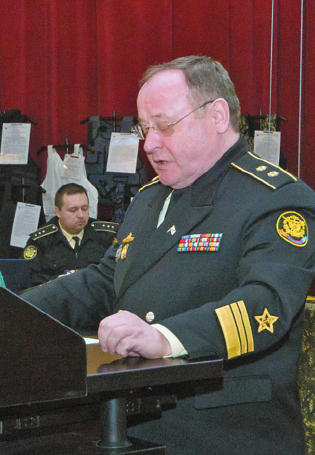
In his detailed speech, the head of the VUNTS of the Russian Navy, Vice Admiral Adam Rimashevsky, formulated two main goals of the conference. The first is the consolidation of the efforts of military and civilian specialists in improving the efficiency of research and development (technological) development cycles. The second is the coordination of the activities of various organizations of the Ministry of Defense and other ministries (departments) of Russia and enterprises (organizations) of the defense industry on key issues of military-technical policy, including in the field of development, production and operation of military equipment, as well as on the civilian use of military technologies in the interests of the country's economy.
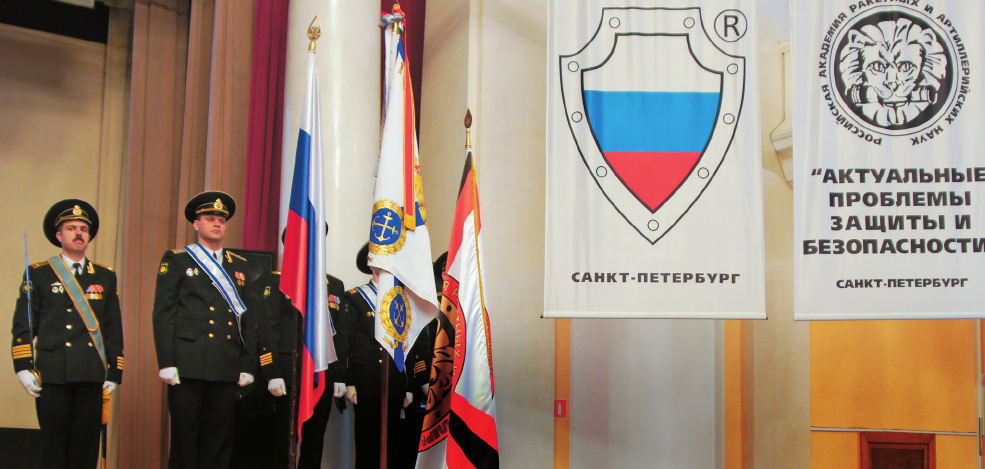
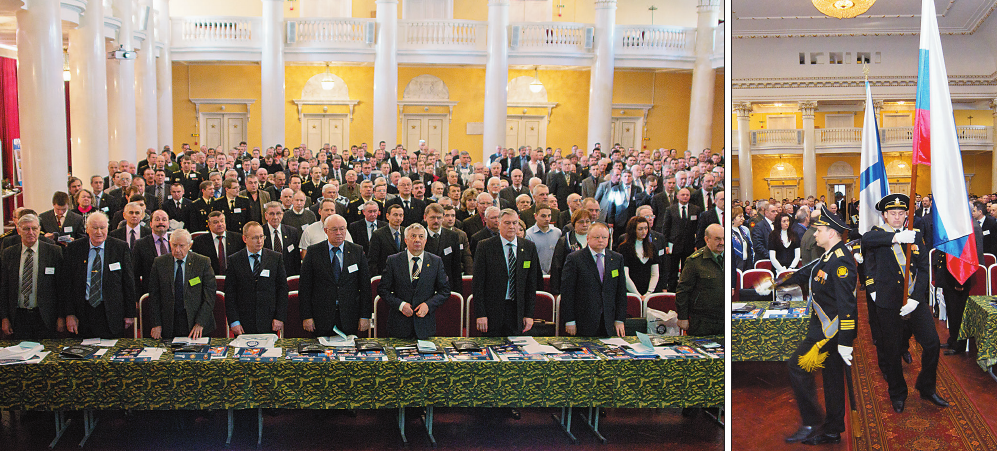
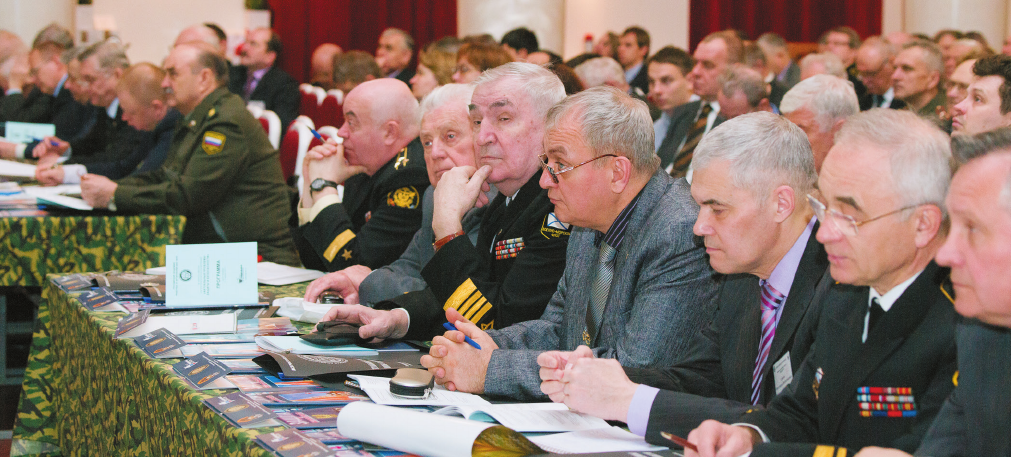
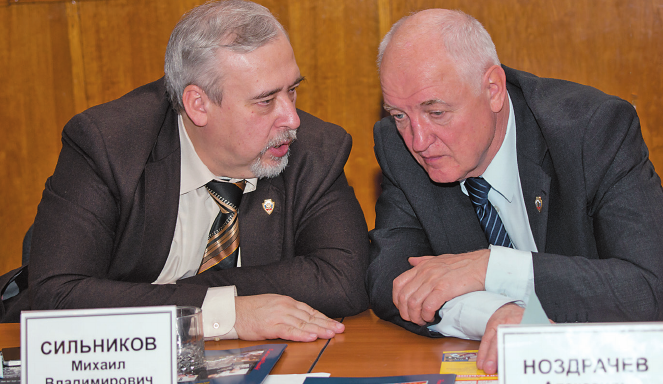
In the assembly hall of the Naval Academy named after Admiral of the Fleet of the Soviet Union N.G. Kuznetsova - several hundred heads of defense enterprises and research institutes, scientists and designers, generals, admirals and senior officers of almost all law enforcement agencies. After the introduction of the State Flag of Russia, the banners of the Naval Academy and the Russian Academy of Missile and Artillery Sciences, the State Anthem of the Russian Federation was performed. The opening speech was made by the General Director of the NPO Special Materials, Corresponding Member of the Russian Academy of Sciences, Academician of the Russian Academy of Sciences Mikhail Silnikov. The results of 15 years of holding conferences, he noted, are impressive. More than 6 thousand reports were read at them, presented by 9 thousand authors from all the main scientific centers of the country, as well as from more than 500 enterprises (organizations) of the defense industry. There were practically no such problems in the development and production of high-tech equipment that were notwould be discussed at conferences. “For all these 15 years, information support for one of the leading military-technical forums has been provided by the magazine “Protection and Security,” the official publication of the conference of the same name. These days, the magazine is also celebrating its 15th anniversary,” the speaker noted.
First Vice-President of RARAN, Academician of RARAN Gennady Gorchitsa spoke about the basic concepts of modern warfare. He settled on a fundamentally new method of conducting combat operations, the so-called network-centric operations. Analyzing the experience gained during military conflicts of the last decade, Western experts came to the conclusion that the success of modern warfare is achieved not so much by the heroism and skill of personnel, or even the quality of individual weapons, but by the efficiency and accuracy of interaction of all types and branches of troops - ground, sea, air and space. The outcome of a fight is sometimes decided within a few minutes. In such conditions, both the previously existing weapons and methods of warfare are unsuitable.
The domestic system of “reconnaissance - automated control system - fire weapons”, which was successfully used until recently, has exhausted itself, because it leads to unacceptable losses of time. If the cycle time exceeds 5 minutes, then the effectiveness of the striking blow drops by 10-15%. More than 30 minutes - losses become catastrophic, the battle is lost. That is why the modern army must move to new complexes of reconnaissance and strike operations.
It must be said that such complexes of various levels - from strategic to divisional - were developed and tested in the USSR back in the mid-80s. Tactical and technical requirements were developed in 1983 after multi-service exercises held in the Baltic Military District. And in 1984, the Proryv reconnaissance and strike complex was already tested. It made it possible to reduce the interval from the moment of receiving intelligence data to launching a missile airstrike to 10 seconds! No army in the world had such weapons at that time. But the engines for reconnaissance aircraft were produced in Ukraine. And after the collapse of the USSR, supplies stopped, the planes were laid up, and the Proryv complex was mothballed.
During the fighting in the South Caucasus in August 2008, the need for such systems became obvious. Victory over the small, disorganized and poorly trained, but well-equipped Georgian army was not as easy as expected. The Russian Armed Forces suffered unjustified losses and did not act effectively enough precisely because of the lack of coordination between units of various branches of the military. Willy-nilly, the question of restoring the “well-forgotten old” had to be raised. But it is very difficult to do this in the current unbalanced state of the economy - coordinating actions of the federal government are needed.
We must admit honestly that the defense industry has not yet integrated into the market economy. Vyacheslav Aleshin, a member of the expert council of the Public Chamber of Russia, stated this bitterly. According to him, the adopted Civil Program 2020 is not within the legal framework. The contractual relationships that determine the pricing system are not transparent. The responsibility of the subjects of legal relations is not defined. Antimonopoly requirements are not met. In addition, market relations thoughtlessly applied to the defense industry caused enormous damage to the military economy, increasing its technological dependence and creating a breeding ground for large-scale abuses, including theft, bribery and corruption.
Currently, the Public Chamber is conducting an examination of the draft Federal Law “On State Defense Order”. So far it is “raw” and does not contain a comprehensive mechanism for forming a defense order. In addition, it must be linked with the upcoming law “On the system of public procurement of goods and services”, which should replace the notorious Federal Law-94, which makes it possible to steal trillions!
As the creators of the new law assure, the contract procurement system they propose must be transparent and eliminate abuse. But experts are not so optimistic - they see a lot of weaknesses in the bill. In particular, the opacity of procedures at the contract and post-contract stages, as well as the lack of clear audit mechanisms. In addition, the document is replete with terms and concepts with ambiguous interpretation. The lack of a clear system of criteria for assessing the effectiveness of the concluded contract also raises questions. Despite these glaring gaps, the bill has already been submitted to the State Duma for discussion.
What is the real structure of military threats to Russia today? Vice-President of the Academy of Geopolitical Problems Konstantin Sivkov spoke about this in his bright speech. He recalled that the nature of the threats that Russia has already faced is associated with a systemic geo-economic and geopolitical crisis that affects all aspects of human life. Two main factors are decisive. This is the gradual depletion of natural resources and the growing imbalance between the rapidly updating technological structure and the world order, which is sharply lagging behind this growth. Such imbalances have been observed twice in the last century. Both were associated with the First and Second World Wars. There is reason to hope that the resolution of the current crisis will not involve a global military catastrophe.
The speaker emphasized that the development of civilization is accompanied by increasing negative impacts on the ecosphere and requires more and more non-renewable energy resources. The struggle for control over them is the main reason for possible armed conflicts and wars of varying intensity. Under these conditions, humanity has two paths of development. The first is to ensure the prosperity of the “golden billion” by placing the burden of environmental, demographic, social and other problems on the population of undeveloped or developing countries. The second is the formation of a multipolar world, when states coexist with each other within the framework of a fundamentally new international legal system. Of course, the second path is preferable for the majority, but for Western civilization this is the end of its dominant role in the world hierarchy.
Meanwhile, the United States, which, of course, is the main adherent of the “golden billion” concept, is suffering defeat after defeat in the struggle for world resources. They achieved nothing in Afghanistan, failed the campaign in Iraq, lost control over the “revolutionary” Middle East and North Africa. In these conditions, Russia becomes a “tidbit” - not only as an unlimited source of raw materials, but also as a convenient springboard for possible aggression within the European-Asian continent. The only limiting factor today is the presence of Russia's strategic nuclear deterrent forces. Everything else in our country will not withstand military confrontation. It is no secret that the maximum number of combat-ready forces that Russia can field in the event of a military conflict is one hundred thousand people. For military confrontation in the western, southeastern and northern strategic directions of thisobviously not enough.
Rear Admiral, Corresponding Member of RARAN Vyacheslav Apanasenko specified the concept of threats in relation to the Arctic. Since the early 2000s, he said, this region has become the springboard from which the Third World War could begin. Currently, the Arctic territory is divided between five states, but 24 countries lay claim to the Northern Sea Route. The armed forces of the USSR reliably covered the northern borders. Border and ground forces, a fleet, including a nuclear submarine, anti-aircraft missile units, as well as tactical and strategic missile formations operated in the Arctic. But over the past 15 years, the domestic defense potential in the northern strategic direction has decreased by almost 25 times. The submarine fleet, which previously “held” the entire Atlantic (the flight time of a missile fired towards the United States was 6-8 minutes, preventing the Americanmissile defense systems), is now effectively locked. Since 2007, the exit from the White Sea has been patrolled by two American Los Angeles-class submarines, each of which can drop more than 50 mines into the water at any moment. Every year, the United States and its allies conduct exercises in the Arctic and increase the presence of aircraft carriers. At the same time, the circumpolar states constantly present claims to Russia regarding the demilitarization of the North.
At the same time, a well-planned information struggle for the Arctic is unfolding: the media, governments, diplomats. Seeing our helplessness, the United States is using its favorite tactic of “arm twisting.” For example, they propose to ensure the information security of the Northern Sea Route - in fact, to take control of it. We leave these challenges, just like the military ones, unanswered. However, the policy of silence is disastrous. In essence, the Arctic becomes, as it were, a “no man’s land.” But this cannot go on for long. The precarious balance threatens to swing from day to day - and, most likely, not in our direction.
General Director of VNIITransmash OJSC Viktor Stepanov, who spoke at the plenary session, characterized the current situation in the world tank building and, demonstrating tactical and technical data, proved that the Russian T-90AM tank is almost equivalent to the best American M1A2. And in terms of price/quality ratio it is 2–2.5 times higher.
Deputy Chief Designer of JSC NPP RADARmms Valentin Sarychev spoke about fundamentally new approaches to radar systems - the introduction of ultra-wideband SDR radar.
V.I. Potapov and L.L. Kulakov (AVN, VUNTS VMU "VmorA") devoted their report to the legal support for the use of underwater robots. These devices are widely used abroad, including for exploration of oil and gas fields, as well as for the protection of tankers, gas carriers and floating nuclear power plants. But they can also be used for military purposes - to conduct reconnaissance or carry combat charges. In Russia, such devices are also available, but... in single copies. As, indeed, other advanced high-tech equipment. No matter how sad it is to admit, almost all of our current military power is the remnants of the Soviet legacy.
The emotional speech of Colonel General Leonty Shevtsov, formerly Commander-in-Chief of the Internal Troops of the Russian Ministry of Internal Affairs, evoked a significant response.
“It pains me to see how military science and military education are being destroyed. Higher military educational institutions are being liquidated, and enrollment in those that remain is being reduced. Instead of universities, officers are being taught in some courses. But military affairs are becoming more complicated, war is becoming completely different. The interaction of different types of troops comes to the fore. You can’t teach this in courses! We are losing our combat capability to the delight of our enemies. No one needs a strong Russia except Russia itself! – he said in particular.
The need to overcome the stagnation of the state’s military organization is the most important requirement of the time, a matter of the country’s survival. Currently, Russia does not have many chances to ensure military security, its integrity and independence. And we need to take advantage of these chances. The question is how to do it. It is clear that no matter what efforts are made in certain areas of development of the military organization of the state, no matter how significant the funds are invested, the required result will not be achieved.
So what should not fake, but true patriots do? Of course, not those who send their offspring to foreign colleges, Cambridge-Oxfords, and not those who, under the guise of empty chatter about democracy, humanity or liberalism, brazenly appropriated national wealth and use it with impunity, melting billions of dollars into numbered accounts in foreign banks. There can be only one dialogue with these degenerates - military dialogue!
Yes, it is necessary to creatively comprehend the experience of Stolypin, reviving military field (military district) courts and simplified legal proceedings for economic crimes in the field of fulfilling state defense orders, providing for the said jurisdiction for selfish crimes of military personnel, regardless of ranks, titles and merits. Everyone must be equal before the law: from a private who stole a bucket of gasoline to a general who signed obviously illegal documents.
But cartel measures alone are also not enough. The lack of public agreement on the most important issues of the activities of the state body, obsequious lies or, what is no less harmful, the sly suppression of flagrant problems by the leading media, the degradation of the moral sphere - all this harms military development more than thieves, bribe-takers and other corrupt officials combined.
A decisive improvement in all aspects of government activity and social life is possible in a narrow segment of measures. The main one is the general mobilization of all healthy forces of the people to prevent military aggression against Russia. You should not be afraid of the “terrible” word militarization. General demilitarization—how else can we call the current state of the state’s military organization? – in combination with sloppiness and corruption, with betrayal and indifference, it is not only much more dangerous; it's simply disastrous.
The fish rots from the head, but it should be cleaned from the tail! This is what zealous housewives do in their kitchens, not forgetting to cut off the head. What about us? Aren't we masters in our huge common house, which we call the Motherland? The homeland not only of ours, but also of our ancestors, our children, grandchildren and, we hope, great-grandchildren.