
XVI APZB Conference
The armor is still strong, but we are losing momentum
TRILLIONS FOR PATCHING HOLES
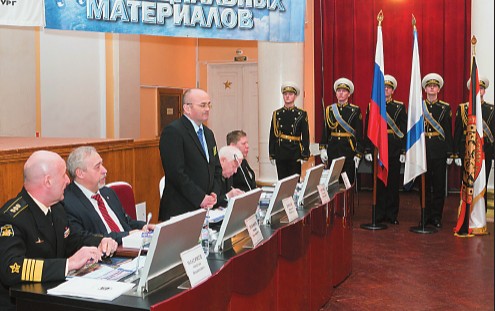
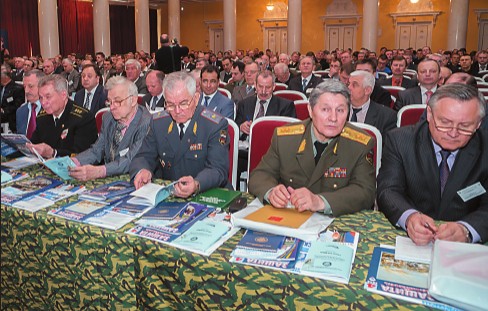
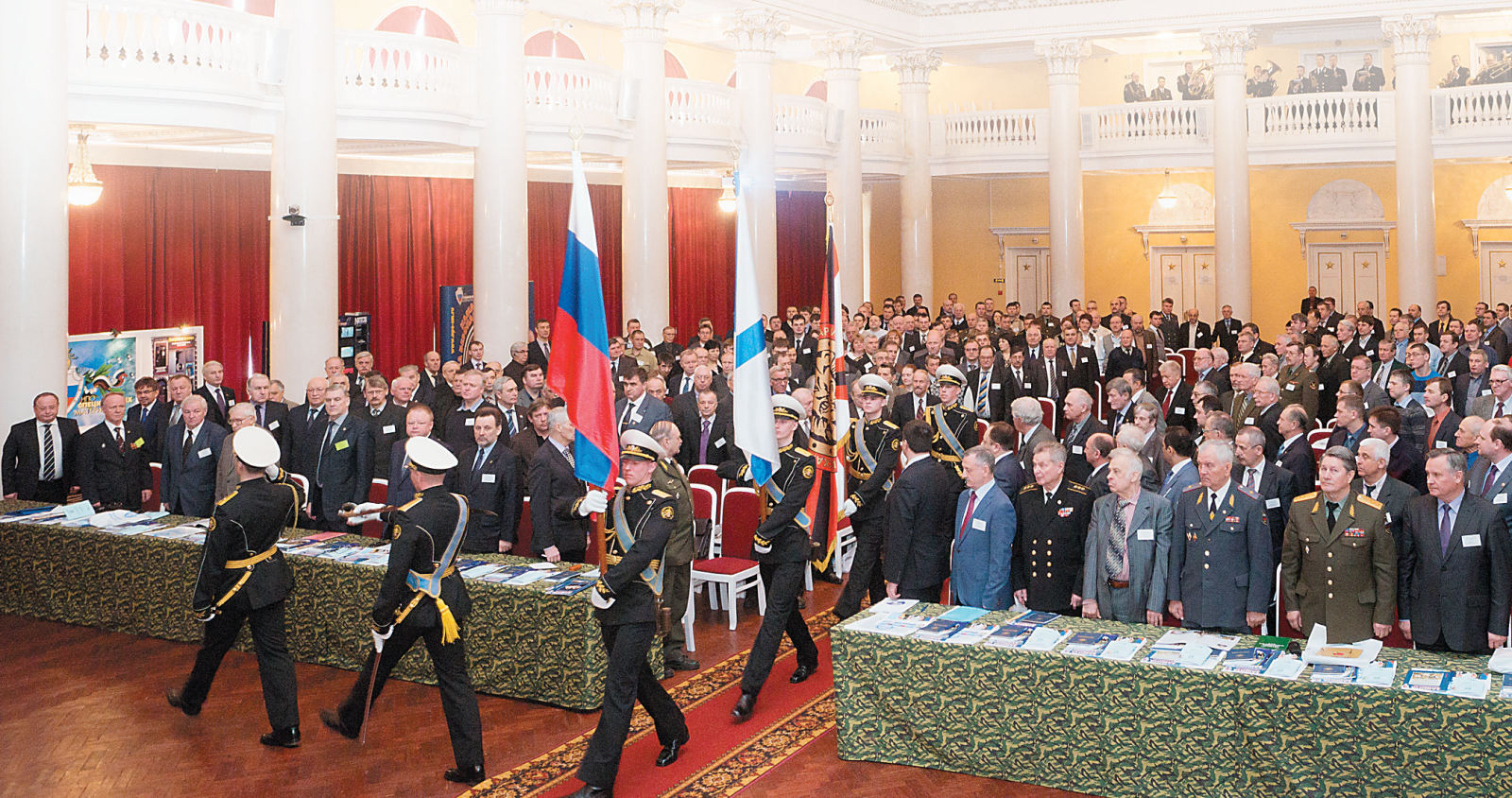
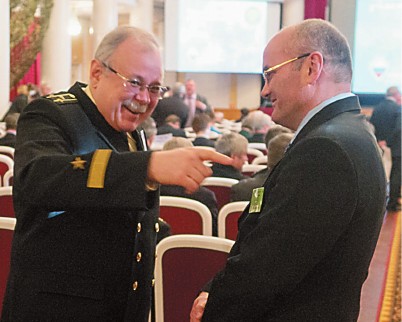
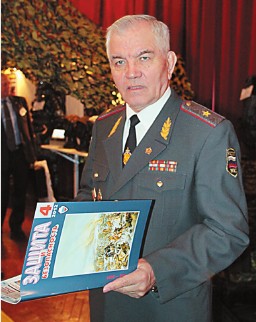
The elite of the defense industrial complex speak about the industry's unresolved problems with disarming directness, although not all is bad. Defense industry enterprises have new advanced developments that deserve serious attention and are ready for mass production and delivery to the troops. Some of them were presented during the XVI All-Russian Scientific and Practical Conference “Current Problems of Defense and Security,” which was held in early April within the walls of the Navy Educational Training Center “Naval Academy named after Admiral of the Fleet of the Soviet Union N. G. Kuznetsov.” Several hundred guests and participants of the conference, who came from many regions of Russia, represented power ministries (departments), enterprises and organizations of the military-industrial complex, military science, federal authorities, higher educational institutions and military units.
There was no need for those gathered to feign optimism and pretend that everything was fine. Our army, which once brought fear to a potential enemy, is now going through hard times. As is known, the collapse of the USSR dispersed and largely destroyed the once unified organism of military science and production. The chimera of the global market, which “will sort everything out on its own,” turned out to be disastrous for the majority of research institutes and enterprises, “sharpened” not on immediate results, but on the creation of advanced, promising military equipment and weapons. Highly qualified personnel, unique equipment, and the latest technologies did not fit into the market and instantly became unnecessary to anyone.
Having slowed down, we have lost our position in the global confrontation with the West in a short period of time. The armament of the Russian army began to rapidly age, both morally and physically. The army was finished off by monstrously illiterate reforms and the wave of corruption that engulfed it in recent years. The result of all these destructive processes has been the growth of real threats to the military security of the state, which its leaders, including the Supreme Commander-in-Chief of the RF Armed Forces, openly admit. The problem is more acute than ever - the rearmament of the army is becoming a matter of survival of the country and people. This is precisely why the decision to allocate an unprecedented amount of 23 trillion rubles to the state program of armaments and modernization of the defense industry is connected. It is expected that these funds will allow us to ensure an almost complete renewal of the entire weapons fleet of our army by 2020. However, as I noted in my introductory remarksPresident of RARAN Vasily Burenok, a plan is now being developed for an even longer term - until 2030. In July, it must be submitted to the president of the country for approval.
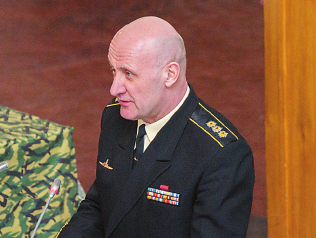
In his report, the acting chairman of the Military Scientific Committee of the RF Armed Forces, Oleg Guzenko, stated that priorities for the development of the Armed Forces have already been determined to meet modern challenges. This is, first of all, the preservation of strategic deterrence forces, their rearmament and combat training. It is also necessary to build up permanent readiness forces and form combat-ready groupings of troops on their basis. Although, as he admitted, our main trump card - nuclear weapons - will soon cease to be “invincible.” Fundamentally different types of weapons than before are on the way, including those based on new physical principles, which are much more effective than all existing ones. And if we do not provide our army with them in a timely manner, we will have to forget about the parity of military-technical potentials.
Modern warfare is a war of technology. The winner is the one who, on the basis of advanced weapons, creates an effective, maximally controllable interconnected system of different types and branches of the military - a single organism aimed at specifically solving combat missions and, ultimately, winning.
The main strike forces are primarily considered to be rocket and space complexes, stationary and mobile, containing missiles with multiple warheads and a variable flight path. In one bundle
Strategic aviation, submarine fleet, space weapons systems, unmanned aerial vehicles, and general ground forces must operate. On the agenda is the completion of work on the creation of new launch vehicles and upper stages, as well as the construction of cosmodromes on the territory of the Russian Federation.
As Guzenko assured, the Russian Air Force in the coming years should receive new generation equipment: Su-34 and Su-35S fighter-bombers, Il-76D military transport aircraft, front-line and attack aircraft fighters, high-speed helicopters. The Ground Forces will receive modern models of light and medium-class armored vehicles, created on unified platforms. The Navy expects the renewal of long- and short-range ships and the creation of a multi-purpose group of nuclear submarines equipped with modern missiles. Electronic support for troops must undergo a real revolution, providing a unified, uninterrupted information and intelligence space.
One of the most painful issues - the dependence of our weapons on imports - must be resolved by 2020. By this time, our defense industry must completely switch to domestic components. The defense industry development strategy also includes the creation of new scientific centers in the space, marine, underwater fields, as well as in the development of unmanned aerial vehicles.
THE DEAD GRIP OF SOFT POWER
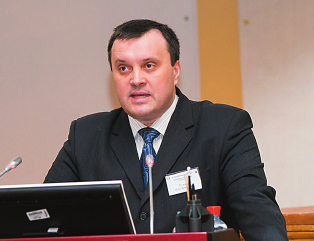
Technology, no matter how perfect it is, does not solve anything on its own. The most pressing problem in the development of our Armed Forces, as Guzenko admitted, is the personnel shortage, which will become especially noticeable in the coming years due to the impending demographic decline. It is necessary to reverse the trend of stagnation of the army as a social organism that has emerged over the past two decades. A whole system of measures has been designed for this purpose to raise the prestige of army service. First of all, we will have to pay attention to the strategically important, but infrastructurally and socially neglected territories of the Far East, Sakhalin and the Kuril Islands.
Thanks to the efforts of zealous “reformers,” the military education system has been greatly weakened. A difficult process of its revival lies ahead. To strengthen the military personnel system, it is advisable to use graduates and students of leading technical universities.
The same topic was developed by the head of the VUNTS Navy "VMA" N.M. Maksimov, who emphasized the importance of returning old names and honorary titles to military educational institutions. This year, he recalled, they will accept 15
thousands of cadets (remember, a few years ago this figure was reduced to zero). True, the educational base is in urgent need of updating. For example, the training fleet used to train naval officers has practically exhausted its resource, and cadets have to undergo practical training on warships.
However, as RARAN President Vasily Burenok stated in his report, even a well-prepared army today does not guarantee victory over a potential enemy. For confrontation in a broad sense does not reduce directly to armed conflicts. The so-called “soft power”—a set of organizational and ideological measures that destroy the enemy’s country from the inside—is acquiring enormous importance. This poses a particular danger for Russia, which is virtually deprived of a generally recognized ideology, including the so-called national idea. The ideological vacuum is easily filled with a substance beneficial to the enemy.
Billions of dollars are spent on well-designed, highly technical psychological operations. With their help, an atmosphere of lack of spirituality is created in society, the public consciousness is skillfully manipulated, and xenophobic ideas are introduced, creating the preconditions for a split on religious and national grounds and even civil war. Mass riots, strikes, bloody clashes - all this, with current technologies, can be orchestrated from afar in order to weaken a potential enemy.
Conditions of underfunding of science and technology, low living standards and weak social security create the ground for “brain pumping” and industrial espionage. And this makes it possible to weaken Russia’s economic and defense power without firing a single shot. Its elimination as a dangerous economic competitor also occurs through “creeping expansion” - for example, by buying up shares of leading enterprises, bribing lobbying groups in legislative and administrative structures. These “non-lethal” measures are sometimes much more effective than armed violence.
“The time has come,” Burenok concluded, “when the state must create a special mechanism to counter unarmed aggression, which is destroying not only the economy, but also the social base of the Russian state. Without this, we may simply lose the country. A sad example of this is the collapse of the USSR.”
THERE IS NO CONTROL ON THE ROBOT
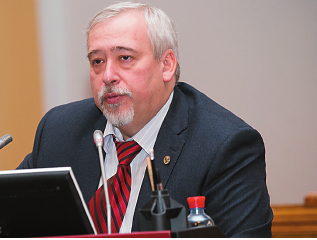
The days of the conference coincided with the 30th anniversary of the creation of NPO Special Materials, one of the leaders in the domestic industry of protective weapons and special equipment. A kind of “calling card” that preceded the report of its general director, corresponding member of the Russian Academy of Sciences, academician of the Russian Academy of Sciences Mikhail Silnikov, was repeatedly scrolled slow-motion footage: a flying bullet bounces off an elastic bulletproof vest...
Silnikov introduced the conference participants to one of the most interesting developments - the Fontan protective system, designed for the safe elimination of a detected explosive device. During an explosion, the product is destroyed, extinguishing the effect of the shock wave. The device is widely used both in our country and abroad, for example, by Australian intelligence services. In the footage shown, Fontan was used inside an aircraft
Il-86, which, according to legend, the terrorists intended to blow up with two kilograms of TNT. The explosion was localized so much that the plane retained its flight characteristics and could continue to fly.
One of the promising areas of the institute’s work is active booking. When used, the ammunition explodes on approach, without coming into contact with the target. The effectiveness of such protection has been confirmed by a number of successful field experiments, and the device will soon enter service.
Alas, the successes of the leaders of the defense industry (and in certain positions we still hold global priority!) do not change the alarming situation in the field of national security as a whole. RNIIIS representative V.N. Lopatin analyzed the efficiency of spending innovative investments and came to a sad conclusion: from 70 to 80% of the funds allocated for modernization go abroad in various ways. At the same time, there is no systemic protection of our intellectual property. The creators of modern, breakthrough scientific and technical developments are in no way encouraged to patent them in their homeland. In China, Lopatin noted with regret, about 30 thousand patents are registered in one province alone - the same as in all of Russia, thanks to a well-functioning system - from the municipality to the ministry. Thus, our know-how, which could bring huge amounts of money to the country, goes to our competitors for nothing. And trillions,allocated for the modernization of weapons disappear into the sand.
Another clear example of our lag is the situation with underwater robots, which was discussed in his report by the representative of the North-Western Branch of the Academy of Military Sciences V.I. Potapov. In the world, he said, up to a thousand such devices are produced annually. In Russia they still exist only on paper. The effectiveness of their combat use is extremely high. For example, they can successfully operate in shallow waters, where it is impossible to use submarines.
Our Northern Sea Route, thus, turns out to be practically unprotected. Oil platforms on the shelf, hydroelectric power stations in coastal waters, the infrastructure of populated areas, nuclear icebreakers and gas carriers - all of this can at any moment become the target of an attack, which we have nothing to oppose. Meanwhile, the explosion of just one gas carrier is comparable in power to the explosion of the atomic bomb dropped on Hiroshima. And the subsequent environmental disaster may even surpass this effect.
Creating underwater robots is not only about developing the device itself that moves underwater. This is the organization of control systems, communications, supply - a whole special industry that we simply do not have and will not appear in the near future.
TO VICTORY - ON A RUSTY TANK?
Our lag of more than 10 years in the field of computer technology and telecommunications was also recognized by the representative of the Military Academy of Communications A.L. Safronov. Modern war is unthinkable without a stable functioning
a global information network that ensures the exchange of information both vertically and horizontally across control systems. We do not have such a system, and it will probably not appear soon. The pace of development of electronic and computer technologies requires a radical update of communication systems every five years. Meanwhile, more than 80% of such equipment in service with our army is outdated.
The principles of creating communication systems, Safronov emphasized, require a radical revision. The main goal is to create an interconnected information and telecommunications infrastructure that will meet modern requirements, primarily the reliability and security of communications. To do this, we need to move from the trunk system of the communication architecture to the layered one.
Combat operations in a modern war will be led by “virtual” headquarters, which, in principle, cannot be destroyed, since their devices are dispersed in different places on the planet. In order for them to function fully, the means of receiving, processing and transmitting intelligence data from ground, air and sea-based systems must work in a single complex. It is necessary to ensure a transition to self-organizing systems. Special units and subdivisions should appear to deploy advanced communication systems and provide a unified information space. This is how they already work in the advanced armies of the world. But, alas, we know about this only by hearsay.
A sad picture of the state of our armored forces was painted by V.V. Stepanov, a representative of VNII Transmash OJSC. All our tanks, with the exception of the T-90, he admitted, do not meet today's technical requirements. Many of them have already exhausted their resources. There is no need to be surprised - the technical support system for the tank fleet is at the level of the last century. For two tanks with a crew of three people each, there is one technician. In US Army tanks, the crew is 4 people, and for two such tanks there are 3 technicians. As a result, we have a tank
wears out by 5% per year, and theirs - by 1%.
Tanks are aging and their hulls are corroding. In addition to maintenance, they need modernization and repairs (current, medium and major). Moreover, the technical support systems in wartime and peacetime are different. The experience of the Second World War, for example, says that during combat operations, each tank on average lasts three months “from repair to repair.” The existing support system does not provide the required level even in peacetime. It’s better not to talk about the military.
The plenary meeting, however, ended with positive information. The participants were presented with reports on promising developments that are actually at a high global level. Representative of the Federal State Unitary Enterprise KB Arsenal named after. M.V. Frunze" spoke about new models of automatic rapid-fire ship weapons developed and put into production. BSTU Voenmekh presented its development - high-tech complexes for ensuring security and eliminating emergency situations. D. F. Ustinova.
And finally, a professor at the Military Medical Academy named after. CM. Kirov V.M. Shapovalov made a report about the sapper’s protective footwear developed within the walls of the academy. This issue is extremely important. There are currently about 110 million anti-personnel mines in the ground in 82 countries around the world. This weapon is terrible and very dangerous, especially for civilians. Many samples of mines are equipped with anti-removal systems, and when they explode, the radius of destruction reaches 120 meters. The risk to the lives of deminers is enormous - the percentage of deaths and amputations of limbs is high. Enormous research work has made it possible to sort out the damaging factors of an explosion and create an optimal design of protective footwear that protects the sapper from serious injury. A patent has been received for this development. There is no doubt that it will save more than one life.