
XVII APZB Conference
“... ALARMED BY IMPENDING THREATS”
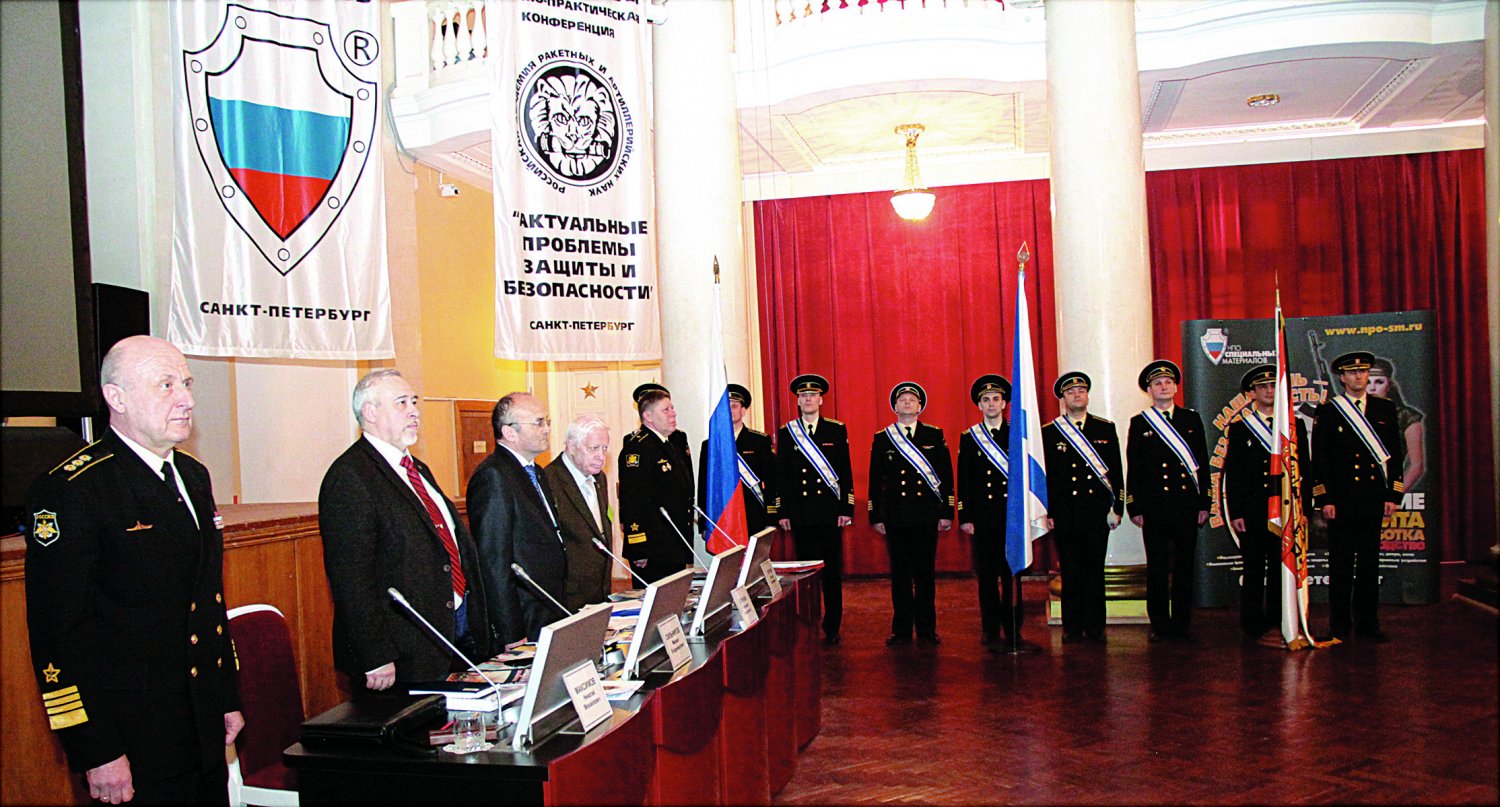
This is how we can summarize the sentiments and statements of a variety of participants in the All-Russian Scientific and Practical Conference “Current Problems of Defense and Security,” who gathered for the seventeenth time within the walls of the famous Naval Academy named after. Admiral of the Soviet Union N.G. Kuznetsova. But if at previous conferences real military threats and measures to counter them were considered theoretically, with varying degrees of probability in terms of some distant future, then recent events in Ukraine forced experts to talk about the possibility of a regional armed conflict with a forecast of its expansion to the entire European theater of military operations.
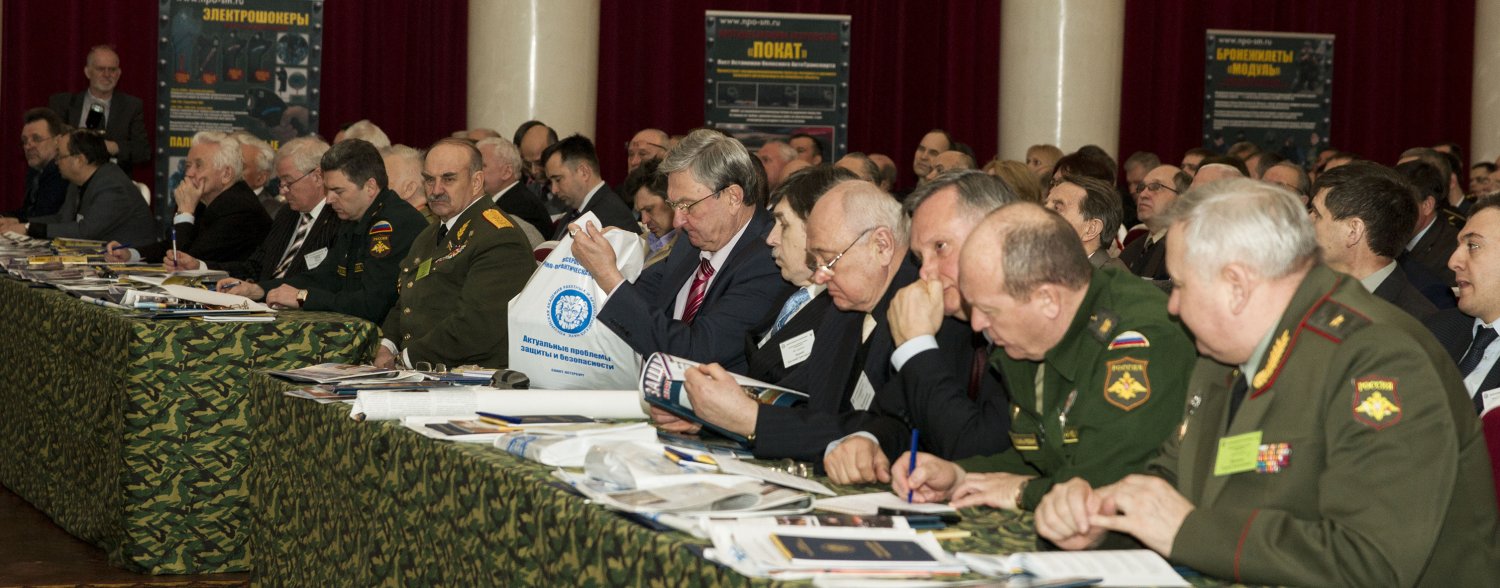
The conference brought together about a thousand scientists, engineers, designers and managers of enterprises of the military-industrial complex, professors and teachers of higher educational institutions, full and corresponding members of the Russian Academy of Sciences, Russian Academy of Sciences, other academies and public scientific and technical associations, as well as military commanders, senior and senior officers of the Armed Forces of the Russian Federation, other power ministries (departments), representing a total of about 200 enterprises, organizations, military units and military command and control bodies. Representatives of general civil and departmental media were not allowed to attend the conference, with the exception of employees of the magazines “Protection and Security”, “Izvestia RARAN” and “Problems of Defense Technology”, since these publications are the official press organs of the conference and RARAN.
At the plenary sessions alone, 22 detailed reports were heard, and a total of 569 reports and messages were presented. The most informative of them were heard within the framework of one symposium on special topics and seven open symposia. Among the latest: “Armament and military equipment”, “Technical means of countering terrorism” and “Humanitarian problems of modernization of the RF Armed Forces”. Separate symposiums were devoted to armored vehicles and issues of their combat use, problems of the Russian Navy, tactics and features of the combat use of missile forces and artillery in armed conflicts of various levels, as well as issues of ensuring the security of special-purpose information telecommunication systems.
Opening the conference, the head of the Military Training Center of the Russian Navy “Naval Academy named after. Admiral of the Soviet Union N.G. Kuznetsov” Admiral Nikolai Maksimov emphasized that the geopolitical challenge of the beginning of the 21st century was the strategy of controlled crises and conflicts implemented by the United States and NATO countries. Relying on financial, economic and military-technical power, especially in the field of new types of weapons and military equipment, the West continues to act within the framework of a unipolar world order model, trying to strengthen its dominant position in geopolitics and the military sphere.
To this end, NATO is constantly updating a wide range of new weapons and offensive technologies, including rapidly developing methods of conducting psychological operations and information warfare aimed at overthrowing governments that the United States does not like. Under these conditions, the activities of international organizations such as the UN and OSCE are becoming less and less effective. As a result, large-scale armed conflicts and bloodshed occur in various regions: Afghanistan, Iraq, Egypt, Syria. Over the past six months, a similar scenario has been implemented in Ukraine.
“Information wars have become the forerunner of ‘hot’ wars,” Vasily Burenok, president of the Russian Academy of Missile and Artillery Sciences, noted bitterly.
Learn from other people's mistakes
The events of recent months give these words a special, tragic meaning. A year ago, in this hall, we could not even imagine that today we would be discussing the bacchanalia in which the neighboring country was mired.
“Lessons from Ukraine,” that’s what the president of the Academy of Geopolitical Problems, Konstantin Sivkov, called his report. In his opinion, the “Ukrainian scenario” is another link in the chain of failures in the foreign policy of the United States and its allies. Nowhere - neither in Afghanistan, nor in Iraq, nor in Libya, nor in Syria - did they achieve what they expected. The same “Arab Spring” did not end at all the way they wanted. In Egypt and Libya, forces that are at least unfriendly to the West have come to power. But Syria is still fighting the gangs of the world behind the scenes and has no intention of giving up.
The origins of the Ukrainian events are the plans of NATO strategists to turn Ukraine into a buffer state, into a springboard for military “overhang” over Russia. And the reunification of Crimea with Russia hollows out a significant part of these plans, Sivkov believes.
However, the speaker warns, our political elites must draw serious conclusions from the confrontation on the Maidan. In particular, such conclusions should be drawn in the field of active counteraction to hostile psychological attacks, as well as in the field of mass communications. After all, protest sentiments in our society arose not only due to foreign influences. The Russian political body urgently needs a constructive and open dialogue with the opposition, no matter how inconvenient it may seem to the leaders of systemic parties and movements who are stuck in routine. Meanwhile, with meaningful and patient work, the energy of the protest electorate can and should be directed in a constructive direction, enter into a real dialogue with the opposition, activate healthy forces in it and strictly cut off the radical component. But this is if the interests of the country are put first, and not personal interests, inin some cases self-interested.
“Isn’t this a lesson? - asks the speaker. And he himself answers: - Lesson! And what another!”
General Director of NPO Spetsmaterialov, corresponding member of the Russian Academy of Sciences Mikhail Silnikov analyzed the chronicle of the confrontation in Kyiv and the actions of Ukrainian special forces from the point of view of ensuring public safety. His report was accompanied by operational video footage from the “not for print” category. The maddened crowd, as can be seen from the faces of the militants if they are not covered with masks, is cracking down on the unarmed Berkut employees. Outdated protective weapons do not protect against Molotov cocktails, improvised explosive devices, or impact weapons made from improvised items. Policemen flare up like torches, fall under blows, and die from the bullets of unknown snipers.
This result is associated not only with betrayal, but also with the fact that law enforcement agencies were unable to counter the methods used by extremists with adequate tactics and modern means of defense. The police officers in Kyiv did not even try to act in small maneuvering groups, timely regroup forces and assets, or use modern special equipment that was in service with the Ministry of Internal Affairs of Ukraine. Water cannons, special elongated sticks and shields of various geometries made of ultra-high-strength and non-flammable materials, immobilizing nets, ultrasonic emitters - all these and other types of non-lethal weapons are capable of neutralizing rioters even at high levels of their aggressiveness. Such equipment, as well as the methods of its operational use, are well known to the police of Western countries and have been used repeatedly. But there's nothing like itThere were no Berkut fighters - unarmed and essentially unprepared people were actually taken to slaughter. This is a harsh assessment, but who will dispute it?
Our response to the aggressor
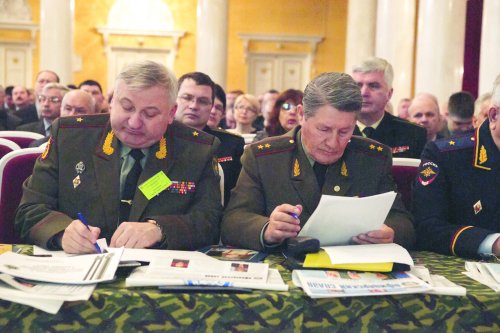
The speech of the President of the Russian Academy of Missile and Artillery Sciences Vasily Burenok should be called goal-setting, and not only because it was one of the first. And not even because the speaker is the president of RARAN. It is goal-setting because it concentrates the main problems facing the defense industry and the military organization of the state as a whole.
“How to respond to military-political challenges and how to counter threats in the field of military security?” - this is, in the shortest words, the meaning and content of the questions posed by the President of RARAN to those gathered. In essence, everything that was reported at the conference, and everything that was discussed on the sidelines, contained the answers we were looking for. First of all, this applies to the report of V.M. Burenka. In his opinion, the leaders of the Russian military-industrial complex need to make a difficult choice in favor of the preferential implementation of one of two possible ways of rearmament: either to give preference to already known and enshrined in military regulatory documents models of weapons and military equipment, or, being proactive, to focus on the creation of innovative types of weapons based on new physical principles. Among such weapons are means of conducting non-contact wars, precision-guided munitions, non-nuclear weapons of mass destruction,combat robotic systems, countermeasures in cyberspace, as well as products based on nano-, bio- and cognitive technologies, etc.
Risks and the danger of failure are inherent in both of these directions. In the first case, we immediately put ourselves behind NATO and other potential adversaries in the near future. In the second, there is a high danger that we simply will not have time to complete the entire cycle of development and industrial development of innovative types of air and equipment by the beginning of the executive period. A reasonable balance is required between the creation of new types of traditional weapons and military equipment, on the one hand, and fundamentally new weapons, on the other. It is the second way of V.M. Burenok considers it a priority, but... subject to the obligatory condition of the simultaneous development and qualitative build-up of nuclear deterrent forces.
Particular attention should be paid to the introduction of combat robotic systems, including unmanned aircraft for reconnaissance and strike applications, as well as so-called cyber weapons. In particular, we are talking about telecommunications and cyber technologies that block the operation of the communication systems of a potential enemy.
Intellectual challenges in the information space today represent perhaps the main global danger. It is no coincidence that the United States declared this area one of the priorities for the operational activities of its armed forces. The development of this area was covered in detail in the report of the Deputy Head of the Military Academy of Communications, Major General Evgeniy Kharchenko. His speech was devoted to the problems of ensuring the security of special-purpose information and telecommunication systems. The speaker noted that in March of this year alone, the websites of Rossiyskaya Gazeta, Channel One, the Central Bank of the Russian Federation, the Administration of the President of the Russian Federation, the Ministry of Foreign Affairs, organizations that supported the Crimean referendum, and the Supreme Council of Crimea were subject to cyber attacks. And if in Crimea they “worked” from the territory of the United States, then in all other objects they “worked” from Ukraine.
Cyber attacks are becoming more sophisticated and widespread. Their level of harmfulness and destructive power are constantly increasing. Therefore, the creation of high-tech, autonomous, multi-protected communication systems becomes the key to victory in a possible war. This was clearly demonstrated by the military actions in South Ossetia in 2008, when out of 11 trusted communication operators, our army immediately lost 9 and for some time was left practically without control.
The balance of power in cyberspace is not yet in our favor. The Eridium information and telecommunication system, implemented by the United States, contains 82 satellites located in low-Earth orbit and providing global and uninterrupted communications for every military personnel anywhere on the planet. A similar system is just being rolled out here. It provides for the presence of four echelons: sea, ground, air and space. However, due to the transfer of launches of heavy space rockets from Baikonur to Plesetsk, the first launch as part of the relevant work will take place in December.
Representatives of the St. Petersburg Institute of Informatics and Automation of the Russian Academy of Sciences supplemented the picture with a story about the so-called “bookmarks” in imported equipment and radio components. Invisible “bugs” can play the role of scouts, leaking valuable information to the enemy. Or they can simply “sleep”, waiting for a command, and after receiving it, cause almost any catastrophe. The ideal way to get rid of this danger is to completely abandon imports, setting up production directly in Russia, providing for the strictest regime of secrecy and protection from hostile attacks at all enterprises included in the industrial cycle of manufacturing VV&ST. But this is not yet the case; it is necessary to constantly improve protection systems against new cyber threats.
In the Arctic theater of operations
No matter how tangible the threat from the Western strategic direction is, the situation in Ukraine should hardly be included in the list of global contradictions that have no other solution other than a military one. By all indications, this is a typical regional conflict, despite the economic rationale associated with gas trade. At the same time, it would be a fatal mistake to exclude the possibility of the conflict in the Ukrainian South-East escalating into a full-scale war, but even more dangerous is the rejection of efforts for a diplomatic settlement without the use of a military component. All the prerequisites for this exist, since there are not and have not been insoluble contradictions between the main players in the Eastern European region.
The military-political situation in the northern strategic direction, which includes the Arctic zone of Russian jurisdiction, looks completely different. The origins and driving force of the escalation of tension in the North is the desire of all participating states to take over as large pieces of the “energy pie” as possible, covered with an ice crust and the waters of the circumpolar waters. According to some estimates, 58% of explored and about 22% of undiscovered hydrocarbon reserves are concentrated there, and the ice shell contains huge reserves of fresh water, the shortage of which is already beginning to be felt in the world.
If we take into account the inevitable depletion of deposits in other areas of the globe, it becomes obvious that the struggle for Arctic resources will be conducted according to the principle “everything that is mine is mine, and everything that is yours is also mine.” In other words, in the development of the Arctic confrontation between interested states, primarily world powers, achieving compromises on the basis of concessions and mutual recognition of rights is very unlikely.
Therefore, special attention, as in previous years, was paid to the problems of ensuring military security in the Arctic.
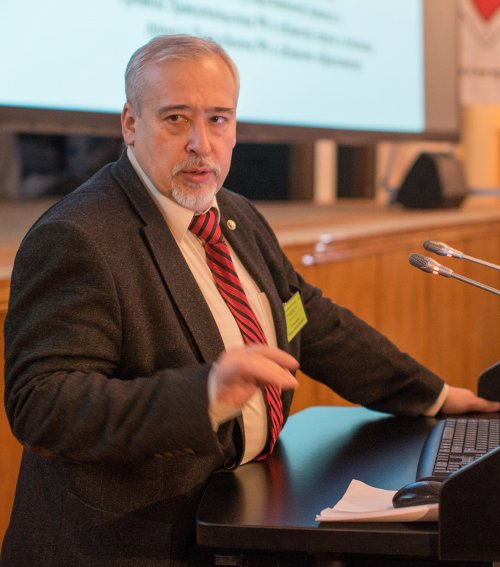
“Today, the Arctic is turning into a testing ground for testing new, ultra-modern technologies in the struggle for control over key geopolitical positions. Apparently, in the near future, this is where it will be decided who is the boss of the world,” noted the rector of the State Polar Academy, Kermen Basangova, in her report. “In this regard, it is urgently necessary to delimit and legally assign to the constituent entities of the Russian Federation the northern territories, including the shelves, build new transport hubs there with a military component, strengthen the icebreaker fleet, and train specialists at universities to work in polar latitudes.”
The leading inspector general of the Russian Armed Forces at the Mikhailovsky Military Artillery Academy, Lieutenant General Vladimir Sukhoruchenko, devoted his report to international legal and military aspects of activities in the Arctic. He, in particular, noted that demands for Russia to recognize its territorial waters, through which the Northern Sea Route passes, as free for navigation outside Russian jurisdiction, directly contradict the UN Convention on the Law of the Sea, which came into force in 1994, which is recognized by 159 countries and the European Union. The United States, however, has not ratified this convention and is now muddying the waters the most. It is not possible to come to an amicable agreement even through certain concessions.
While politicians and scientists are arguing about who owns the underwater Lomonosov and Mendeleev ridges, three American military commands have launched activities in the region. There is no need to talk about the technical equipment of these forces: Arsenal ships with tomahawks on board, equipped with underwater and flying robotic drones, missile defense ships, space strike systems. We are only just beginning to seriously develop our activities in the Arctic: ships of the Northern Fleet have already made several voyages in the Arctic latitudes, infrastructure and military facilities that were destroyed after the collapse of the Soviet Union are being restored on the polar islands.
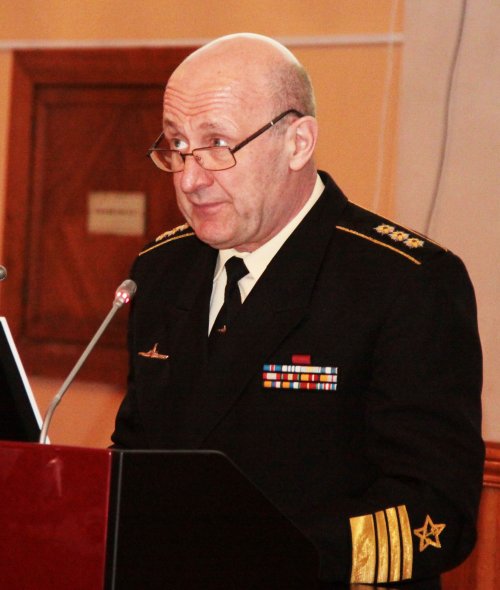
In these conditions, the protection of Russian interests in the Arctic, Sukhoruchenko said, should be carried out under a single command of multi-service groupings of troops (forces), including those within the Northern Fleet (naval personnel, aviation, marines, special forces, grouping of space assets, etc.). It is necessary to develop and accelerate the implementation of a program for the creation of weapons and military equipment capable of operating effectively in the conditions of the North.
It is here, for example, that one of the most important areas in the development of modern weapons systems becomes most relevant - naval underwater weapons and robotic systems, in the development and production of which NATO countries have a decisive advantage over us. The possibility of an asymmetric response to this threat (at least until the Russian industry begins to mass-produce the necessary devices) was discussed by Vyacheslav Trushenkov, a representative of the Marine Underwater Weapons Concern OJSC. Given the length of the maritime border of the Russian Federation is 39 thousand km, this answer can be mine laying in both deep- and shallow-water areas of the seas and oceans, primarily in the territorial waters of Russia. Mines, even outdated ones from World War II, continue to remain a significant threat to enemy submarine forces. With the latest mine weapon technology and useremote mining means (using torpedoes, uninhabited underwater vehicles, and best of all, ekranoplanes), which ensure the secrecy of their deployment, will be able to push back the boundaries of the use of weapons from the shores of Russia. At the same time, of course, we must not forget about the creation of an effective system for detecting mines in the near seas, based both on traditional technology (minesweepers and mine-anti-mine helicopters) and on innovative developments, which include uninhabited underwater vehicles, helicopter mine detection systems using laser technology and other technologies, as well as ekranoplanes - flying platforms that are practically invulnerable to radar. Their production collapsed under Yeltsin, but the design documentation has been preserved, and all that is needed is funds and political will to restore their production.
Autonomous underwater uninhabited vehicles (AUVs) are vital to ensure the safety of our underwater gas and oil pipelines, offshore platforms for hydrocarbon production, tankers with oil and liquefied gas, and nuclear icebreakers, says Vladimir Potapov, a representative of the Northwestern Branch of the Academy of Military Sciences. The Manta AUV, developed in Russia, reaches a speed of up to 5 knots per hour, can operate autonomously for 5–6 days and carry 4–6 underwater missiles, performing reconnaissance, surveillance, and communications functions. To use it, it is necessary to equip 24-hour command posts on tankers, icebreakers, gas production platforms, and coastal infrastructure facilities (fuel depots, gas terminals). These complexes must provide for long-term operation under ice, at low temperatures and in shallow water. And in the light of new geopolitical realities it will be necessarythink over the specifics of working in the Black Sea, where the enemy may use combat swimmers and trained animals.
Something very significant

It is important for the world community to realize that protecting such grandiose structures as underwater gas pipelines (Nord Stream, South Stream, Blue Stream) from military and terrorist attacks is a collective matter. Given the enormous length of gas pipelines, the protection of sections lying in the territorial waters and nearby areas of the world's seas and oceans must be carried out by each interested state.
Despite all the importance, urgency and variety of tasks facing the Russian Navy, not the last criterion is the cost of the planned programs,” Andrei Zemlyanov from the 1st Central Research Institute of the Russian Defense Ministry reported in his speech. Depending on their purpose, each series of ships was previously designed and produced separately. Meanwhile, often the fundamental difference between them was the installed weapons and equipment. It is possible to create flexible countermeasures and significantly reduce the prices for their production by following the path of implementing the project of modular patrol ships. Such projects have already been launched in Germany, Denmark and other countries. We have also started this work. Modules can be stationary (air defense, radar reconnaissance), or replaceable container (anti-mine or anti-submarine weapons).
In February 2014, the Project 22160 patrol ship Vasily Bykov, adapted for the installation of modular weapons, was laid down at the Zelenodolsk Shipyard. It will be capable of autonomous navigation for 60 to 90 days and stay in remote areas for up to two years. Detachments of such patrol ships, equipped with multi-purpose helicopters and rocket and space weapons, will remove a considerable part of the load from a large fleet and will be able to carry out long-term operations in remote areas of the seas and oceans.
Yu.F. dedicated his speech to a common problem for the entire Navy - the creation of an interspecific integrated complex for illuminating the surface situation anywhere in the World Ocean. Podoplekin from the Granit-Electron concern. New ships of series 11-43, 11-44, 11-64, nuclear submarines of series 545, 949-A, using the ATM complex, have already been adapted to receive and transmit signals from the space reconnaissance system, which is carried out in the interests of the Navy by the space station launched into orbit in 2012
"Lotus". It transmits signals through two channels. And if currently operating ships are able to perceive signals from only one of them, then those that will be commissioned before 2017 will be tuned to both channels, one of which is in the microwave range.
In addition to space-based means of illuminating the situation, the ships operate the Monument aviation reconnaissance and target designation complex. Here the gradations are as follows: in the near zone (up to 30 km) reconnaissance is carried out by the ship's radar; at distances of 100–150 km - using a UAV; within 300–350 km - by airplanes or helicopters on board the vessel; over 350 km - only with the help of space reconnaissance means.
Not all elements of this multi-stage system have yet been put into operation or meet the specified requirements: for example, the construction of naval aviation is lagging behind; The information system cannot yet notify about the presence of foreign objects at sea earlier than 30 minutes in advance. These problems can be solved within the framework of interspecific R&D.

A lot was also said at the conference about the prospects for the development of ground forces. The head of the Mikhailovsky Military Artillery Academy, Major General Sergei Bakaneev, noted the low staffing of artillery and missile forces with new modern control, destruction, reconnaissance and support equipment for waging network-centric wars - only 15% of the requirement.
What specific military-technical means are we talking about? In the area of management, it is necessary to introduce elements of network centralization by 2015 and reduce real-time management cycles; by 2020 - autonomously analyze the progress of combat operations and, finally, by 2025, fully launch a network-centric artillery control model. Among the means of destruction, the speaker highlighted the latest models of cannon artillery for the Ground Forces: self-propelled artillery gun "MAK-152" on a tracked or wheeled chassis, used in conjunction with transport-loading and control-checking machines and simulators, 120-mm self-propelled mortars and others. Of particular importance in the network-centric model of warfare is the reconnaissance subsystem based on the use of a single intelligence information space, in which we lag the most behind Western countries. For completeFor the implementation of weapons programs until 2020 and 2025, the production of its components must be increased by 2.5 and 3.8 times, respectively. The speaker gave examples of successful domestic developments in the field of artillery reconnaissance: the Zoo-1M radar system, the reconnaissance radar for Yastreb-AV artillery firing (launching) positions and the Aistenok-M mortars, which provide an increase in reconnaissance range by one and a half to two times and allow for control of hits from their guns. And the sound-metric (sound-thermal) complex “Penicillin” increases the efficiency of reconnaissance by 2–2.5 times.
Increasing the reconnaissance range is achieved through the use of UAVs - for example, in the promising mobile reconnaissance point "Mars-2000". In field conditions, the unified container-type module “Skololaz-O” increases the reconnaissance range to a depth of 25 km. And in case of poor visibility, the FARA-VR portable surveillance and sighting system provides a reconnaissance depth of 10 km deep into enemy territory.
A representative of OJSC VNIITransmash spoke about promising tank precision weapons. In general, of all the types of weapons we have in our arsenal, it is tank weapons that are most suitable for the task of high-precision destruction of the enemy according to the inherent characteristics: reconnaissance, data analysis, automated preparation and firing of a shot. And the efficiency of a shot from a precision weapon is 6–8 times higher than with standard ammunition. In promising high-precision tank weapons systems, information is entered into the projectile already on the trajectory, so that crews are not limited in time to search and detect the target, which is destroyed by the very first projectile. But all these tasks still require intensive research.
The tactics of waging wars of the 21st century using sabotage groups capable of provoking a global catastrophe by blowing up nuclear power plants, chemical plants, military warehouses, and other man-made dangerous objects, the threat of terrorism, natural disasters dictate the need to create a combined system for the protection of such objects. In order for these measures to be adequate to the potential danger, it is necessary to introduce categorization of these objects by significance, degree of risk from 1 (local scale) to 7 (planetary scale) points, and such work is already underway, said an employee of the Institute of Mechanical Engineering. A.A. Blagonravov Corresponding Member of the Russian Academy of Sciences Nikolai Makhutov.
The Russian Academy of Sciences and the Ministry of Emergency Situations have developed models in which risk parameters are multiplied or added, and each object is assigned its own hazard index, depending on which the type of protection and diagnostic systems is selected. This can be hard protection, where the spread of damaging factors is prevented by bunkers, containers, etc.; functional protection, in which processes are regulated through a complex of various means; natural protection (for example, natural obstacles or an exclusion zone around the object) and, finally, the most preferable - combined protection. Based on extensive research work and modeling of processes in three-dimensional space, the publication of the fundamental work “Security of Russia” has begun, which will contain 44 volumes. A 5-volume study “Natural Hazards of Russia” has already been published. Domestic and international legislation requires further developmenton this issue. Another bottleneck is the training of specialists in the relevant profile.
However, the topic of training specialists was touched upon in many reports. There are more problems than there are ways to solve them. After all, the industry system of training specialists through colleges and vocational schools has long been collapsed. In addition, from 2015, our higher school will supply bachelors and masters to the labor market in a ratio of 10: 1. A bachelor, even within the framework of classical education, is not yet a full-fledged specialist. The question is, who will finish their education and at what cost? In Europe, large corporations do this, and in the USA, the Engineering Association, specially created for this purpose. Some of our corporations were forced by life itself to take this path. Let's say, the Elektropribor concern creates and pays for the training of corporate groups of senior students from five universities, its specialists conduct seminars and practical classes with them, and this experience turned out to be successful. It formed the basis of the Additional Programtraining students for the needs of specific enterprises “20 plus 80”, financed from the budget of St. Petersburg. In general, this model of training students seems optimal: the enterprise transfers funds from its profits to the budget of training centers, university departments that are basic to its profile, and laboratories for the training of future employees; students, having received a master's degree, return the amount spent. Everyone wins: the enterprise receives staff, universities receive additional funding, students receive guaranteed employment in two years.
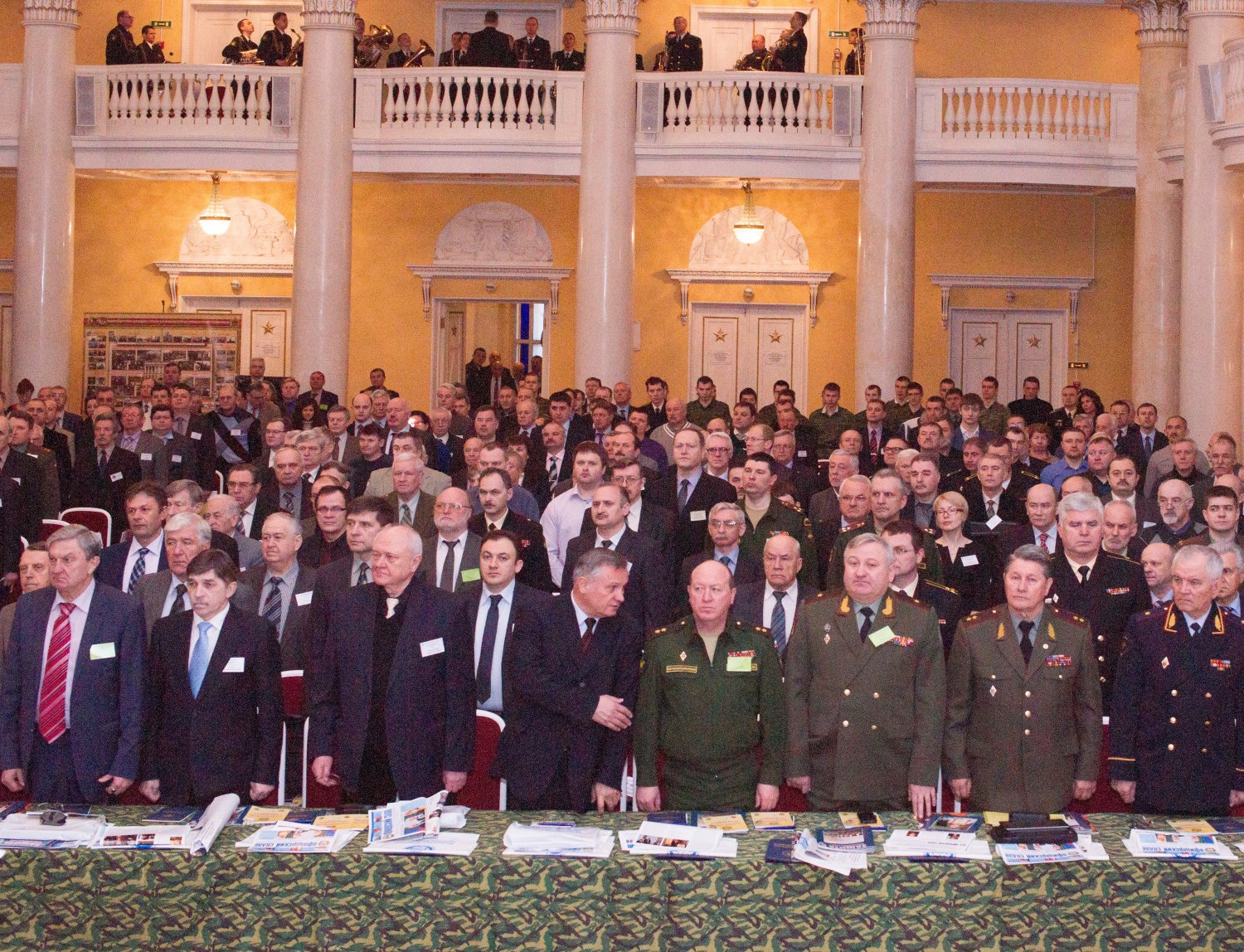
These were some of the reports presented at the plenary sessions of the XVII All-Russian Scientific and Practical Conference “Current Problems of Protection and Security.” But we only talked about a small part of the reports and messages. They will be published in full in the Proceedings of the Conference, in the journals “Izvestia RARAN”, “Problems of Defense Technology”, and the most interesting for a wide range of readers - in the next issues of the journal “Protection and Security”. The organizing committee, participants and guests of the conference received many greetings and congratulations from the heads of federal ministries (departments), enterprises and organizations, the command of military units and formations, and the leadership of law enforcement agencies.