
XVIII APZB Conference
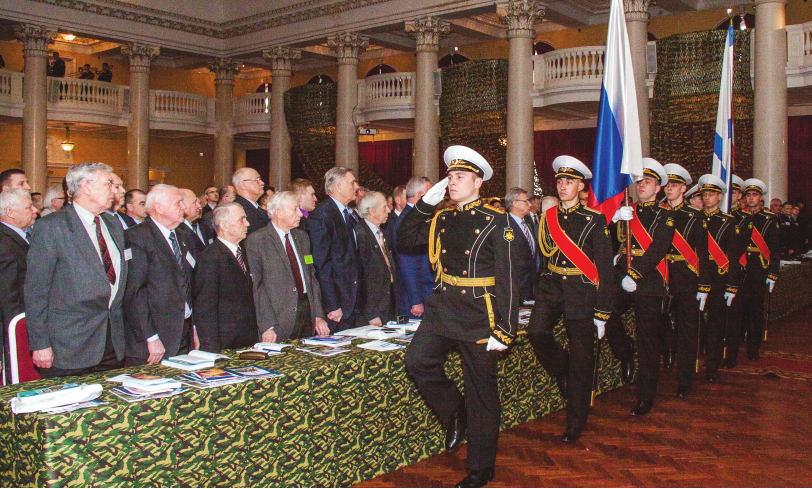
Always ready to work for defense!
And to the defense - not to the fullest extent
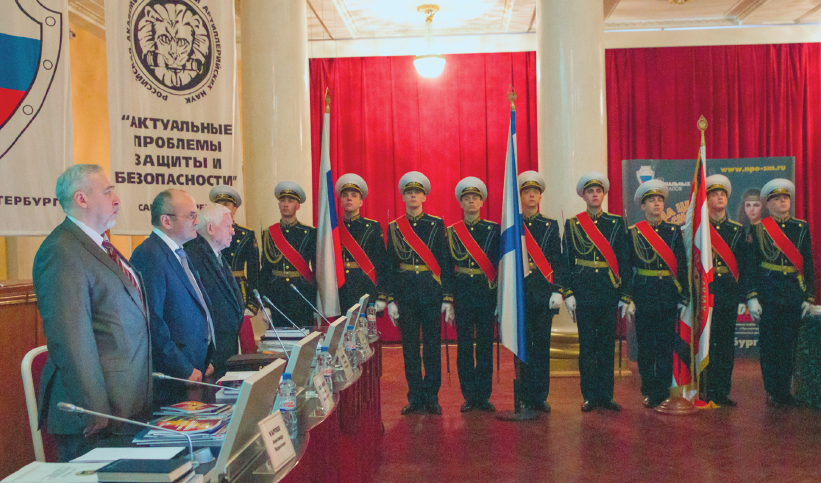
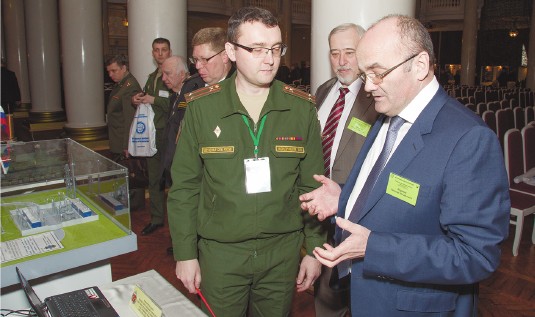
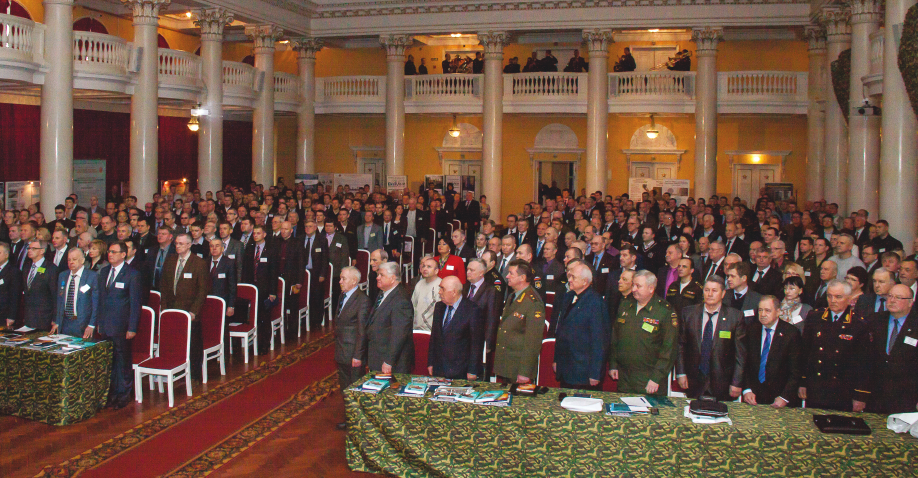
Along the walls of the assembly hall of the Naval Academy named after. N.G. Kuznetsov, where the plenary sessions of the XVIII All-Russian Scientific and Practical Conference “Current Problems of Defense and Security” were held, a small exhibition of the latest military-technical products was located. Among the exhibits, conference participants were presented with a series of small-sized throwable robots “Yula”, similar in shape and dimensions to dumbbells. These self-propelled devices can be launched into a fire, into a terrorist hideout, or sent to enemy battle formations or to an enemy object where a saboteur cannot set foot. Just like in the song: “Where the infantry will not pass and the armored train will not rush by...”.
Watching the robot successfully overcome obstacles, one of the multi-star conference guests remarked: “This is a symbol of what we do today: we puff, we climb, but we get the job done.”
And we move forward despite all the intrigues, we move slowly but surely. Are you afraid it won't work? Look at Yula!
Reforms ruined the army
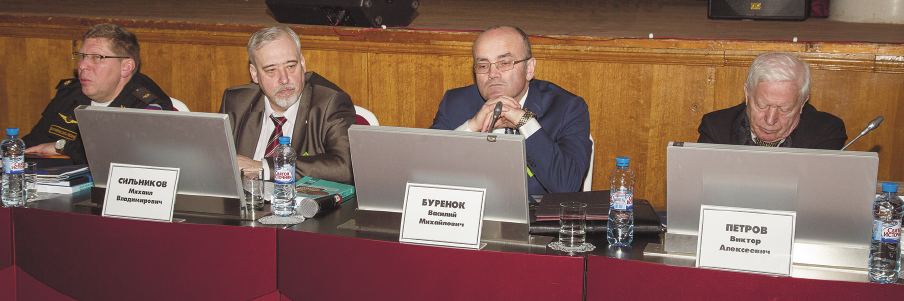
The depth of the abyss from which the defense industry is emerging today is characterized by a diagram that Vladimir Korczak, a professor at the Moscow Aviation Institute and a member of the section of applied problems at the Presidium of the Russian Academy of Sciences, cited as an illustration of his report. The diagram shows the dynamics of changes in the number of fundamental, forecast and exploratory research works (R&D) on military-technical products carried out by RAS institutions. So, if in 2001 there were 274 such research projects, in 2006 - 162, then in 2010 - only one! Then growth begins, timid, uncertain and completely insufficient: in 2014, the number of academic research projects reached an “impressive” level: 28. Over the course of three incomplete five-year plans, the drop was almost 10 times!
To be fair, let us mention that in previous years the situation was no better. In the nineties, research costs, including development and technological work, decreased by more than 11 times, and their share in defense budget expenditures fell from 18.6% in 1990 to 3.6% in 1996. Operational positions in scientific and scientific-applied research were lost in such important areas as radio electronics, information technology, machine tool and mechanical engineering and others, including a number of humanitarian disciplines that are important for maintaining the combat readiness of the Armed Forces. Let us note that during this period, the Russian defense industry reduced production by almost 80%.
The colossal scientific and technical reserve we inherited from the Soviet defense industry is gradually becoming scarcer. As the head of the group of advisers to the general director of Rosoboronexport, Alexander Brindikov, noted, some types of weapons produced in Russia are on the verge of exhausting their moral resources and are about to become uncompetitive.
Meanwhile, NATO countries have moved to the final stage of deep modernization of their armed forces. The share of new types of weapons and military equipment in Western armies has reached 90 percent or more. An endless series of exercises take place in an environment as close as possible to the conditions of real combat operations. The geography of these exercises is wide: from the subpolar regions of the Arctic to the southern Pacific and Indian oceans. From the shores of Chukotka and Japan to Latin America.
In the Near and Middle East, in the zone of clearly defined interests of Russia, the actions of the United States and its allies cannot even be called exercises. These are non-contact combat operations using high-tech weapons, the latest reconnaissance, navigation and target designation equipment.
But NATO is most active in areas directly adjacent to Russia’s borders. This is just a small part of such events.
At the end of March, the US Army conducted exercises in Romania and Bulgaria. In particular, the US Airborne Forces brigade practiced airborne landings at the Romanian Smardan training ground, immediately after which it began to practice interaction with units of the Romanian ground forces. At the same time, units of the US 7th Army practiced a simulated ground operation at the Kogalnicanu airbase with further connection with the airborne brigade. The combined group, with the support of heavy equipment, carried out a combined ground operation to capture the object, as well as artillery fire.
In parallel with the exercises in Bulgaria and Romania, US troops deployed to Estonia, Latvia, Lithuania and Poland as part of Operation Atlantic Resolve on March 21 began Operation Dragon Ride. Troops were transferred over a distance of about 2 thousand km across the borders of five states and returned back to the base in the German city of Vilseck.

And in the twentieth of March, in the Black Sea basin there were too many NATO naval maneuvers, in which five US warships and ships of NATO allies were involved, including the missile cruiser Vicksburg, the Canadian frigate Fredericton, the Turkish frigate Turgutreis, the Italian Aliseo and the German tanker Spessart.
Russia’s adequate response to the unprecedented increase in NATO’s military activity was strategic command and staff exercises conducted throughout almost the entire territory of the country, including the Arctic. They were attended by military units and naval formations of the Baltic and Northern fleets, Western, Southern and Central military districts, airborne forces and other branches of the military. The command and staff training on managing forces (assets) was led by Defense Minister S. Shoigu.
However, despite the noticeably increased training of troops, the combat readiness of the Armed Forces and their ability to carry out large-scale combat operations in the modern environment are still insufficient.
Summarizing the unresolved problems of military development, Colonel General Yuri Bukreev emphasized in his report that the reform of the Armed Forces carried out several years ago had an extremely negative impact on them. The “scientifically based” number of personnel—one million people—is essentially taken “out of thin air” and does not in any way ensure the country’s defense capability. Only 300 thousand people remained in the Ground Forces. If we consider that the length of our borders by land alone is 22 thousand kilometers, then for every kilometer there are about 13 personnel. Even Moscow from the most dangerous, western direction, believes Bukreev, is covered only for 70–80 kilometers. From the Eastern and Central districts, the capital region is not covered at all.
The liquidation of the commands of the branches of the Armed Forces and the transition from divisions to brigades, the general is sure, led to an undeniable weakening of the army. The brigade is two and a half times inferior in strength to the division, and moreover, it is deprived of all the necessary logistics, supply and repair infrastructure. Such a structure is maneuverable, but in combat conditions, in fact, it is not combat-ready.
The idea that in a modern war “soldiers are not needed” and combat operations will be conducted by non-contact means has already been revised by our potential opponents. The experience of all recent local wars (including in Ukraine) shows that without the presence of a person on the battlefield, it is impossible to complete the task. Meanwhile, our military science, like a mantra, continues to repeat theses that what is needed today is not mass armies, but raid detachments and tactical groups. Everything else, they say, will be done by technology. The result is a clear bias towards weapons and a weakening of the functions of control, reconnaissance, communications and navigation.
But, Bukreev believes, our army is poorly equipped to master modern technology. The personnel of the conscript contingent is renewed every six months by 50%, while to maintain combat effectiveness no more than 30% is permissible. The remainder should be contract workers. But, apparently, we are a long way from the emergence of a predominantly contract army.
Don't touch our Arctic!
The events in Ukraine, which demonstrated the possibility and danger of new threats, forced us to reconsider some established views on our defense capabilities. We had to think about what would happen if the former “friend and brother,” having enlisted the support of our potential opponents, struck us from the near field.
In these conditions, the efficiency of decision-making, the efficiency of command and control, and the use of a wide range of modern weapons: high-precision, hypersonic, electronic warfare, unmanned aerial and autonomous marine vehicles, and controlled robotic systems become crucial. By the way, the term DNFW has now appeared - weapons based on new physical principles - laser, electromagnetic, climatic. Some of the new technologies are comparable in effectiveness to nuclear weapons.
Estimates of what we have of this, in what quantity, in what quality, or at least at what stage of development, vary greatly - from “we’ll throw our hats in” to “a colossus with feet of clay.” Alas, historical experience suggests that pessimists are often right.
Meanwhile, it is also necessary to provide for the participation of irregular and partisan formations in military operations, as well as the massive use of non-military measures against us: economic, political, informational. From the latter, as we know, it is especially difficult to come up with radical means: the global information space makes it possible to use the most sophisticated technologies to influence people.
Of course, the country's leadership is aware of the scale of the problem. Last July, work began on a new Military Doctrine. In December it was ready, and the Supreme Commander-in-Chief of the RF Armed Forces put it into effect. Among the current threats, the Military Doctrine highlights the possibility of the enemy using the protest and radical sentiments of the population, the danger of increasing NATO’s offensive potential in the context of intensifying territorial claims against Russia and its allies. In response, the Russian Federation declares the right to use nuclear weapons.
External threats also include the deployment of missile defense, the implementation of the “global strike” concept, the deployment of strategic non-nuclear precision weapon systems, as well as the deployment of offensive weapons in space. These actions undermine global stability and violate the existing parity of forces in the nuclear missile sphere.
As for internal threats, these include “activities aimed at forcibly changing the constitutional system of the Russian Federation, destabilizing the internal political and social situation in the country, disorganizing the functioning of government bodies, important state and military facilities and the information infrastructure of the Russian Federation.” It is also necessary to provide for the possibility of “provoking interethnic and social tension, extremism, inciting ethnic and religious hatred or enmity.”
Work on the implementation of the new Military Doctrine began even before its official adoption. The Northern strategic direction has been especially strengthened, since in recent years the Arctic has become a zone of conflict of interests of many countries (including non-Arctic ones).
On December 1, the Joint Strategic Command in the Arctic zone began to operate. The basis of its forces was the Red Banner Northern Fleet, reinforced by newly formed coastal and land units (formations), as well as air defense forces and means.
Disco plane from the picture
Are those who forge our defense shield ready to work in the face of new challenges? Judging by the reports at the plenary meeting of the heads of a number of enterprises in our defense industry, it’s more likely no than yes. Vladimir Kutakhov, representing the Russian Academy of Missile and Artillery Sciences (RARAN), presented a 12-point program of activities in the field of weapons intended for combat in airspace. It looks beautiful: robotization of combat operations, creation of new drones, information networks for conducting non-contact wars, etc. But problems are immediately identified: organizational, technological, logistics, personnel...
Acting General Director of the Arsenal Design Bureau, Alexander Kovalev, spoke very frankly about the use of aerospace means for monitoring the sea surface. It turns out that the composition of the orbital constellations of spacecraft intended for this purpose is very limited. In addition, they are blind and have limited energy resources. The automation of the processing of received data is also lame. As a result, we do not see all marine objects, and those that we see, we often cannot recognize.
As an alternative to “unreliable space”, it is proposed to use a new and unusual product - a ship-based vertical take-off and landing platform. So far, the “discolet” has only been developed in a draft version.
The scientific director of our tank “forge”, OJSC “VNIITransmash”, Viktor Stepanov, admitted honestly: by 2010, the “safety margin” of the domestic armored resource was practically exhausted. By that time, only 15% of our troops had new vehicles compared to 65% in the USA. This year we must bring this figure to 30%. For now, our main tank is the T-72, which was developed a long time ago and has become obsolete over decades of operation. Yes, the new developments - T-72B3, T-90A1 and T-90MS are quite consistent with the world level, and according to the “efficiency-cost” criterion they even significantly exceed it (obviously due to the cheapness of our labor), but tank soldiers see them mainly at parades. By the way, we have only less than 30% of the required number of those soldiers themselves, and technical personnel, even according to the standards, are several times less than necessary.
But it turns out that it is not enough to create new technology - there are even bigger problems with testing it. According to Alexander Vagin, director of the Geodesy Research Institute, the Ministry of Defense today has 16 test sites and 8 research centers. They are subordinate to 7 different departments, and are equipped with less than 20% of the necessary equipment. There are approximately the same number of landfills in the United States, but they are all united by a single management system and a common information base. According to plans, we will have all this, but... only by 2025.
As for the currently fashionable topic of import substitution, only Alexander Kaplin, a representative of Radioavionics OJSC, could boast of success in this direction, presenting a number of products included in the control and communications systems currently being developed for various branches of the Armed Forces and branches of the military. True, some of these products are still far from being accepted into service. And the pressing task of replacing imported electronic components (of which we currently have 90 to 100 percent) with domestic ones is unlikely to be solved in the next two to three years.
Note that ten days after the end of the conference, the Ministry of Industry and Trade announced plans for import substitution in the field of electronic components and radio-electronic equipment. By 2020, the country should have domestic tablets and smartphones, laptops and personal computers that can replace foreign ones. The list of products that need to be mastered in production includes 534 types of computer equipment, semiconductor microwave electronics, telecommunications equipment and other electronic components, a significant part of which are military and dual-use products.
Among the latest developments presented at the conference, we note a bulletproof vest with a healing function. In it, under layers of “ballistic” fabric and metal or ceramic plates, capsules with a special medical solution are placed. A bullet or shrapnel striking the armor protection will cause an “anti-shock injection” of this drug. And if a person does not lose consciousness, he will have the opportunity to call for help or, in the case of a minor injury, including an injury beyond the obstruction, to provide help to himself.
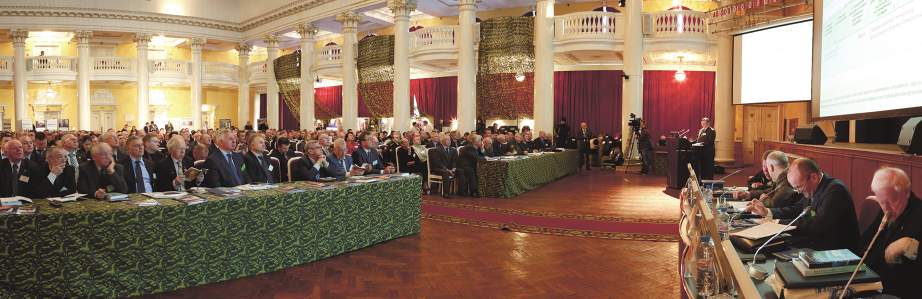
As in previous years, the conference brought together about a thousand participants from most regions of Russia. It is planned to publish over 400 reports and messages in her Proceedings.
Plenary reports.