XX APZB Conference
Twenty years later
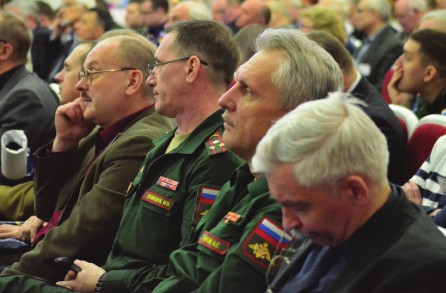
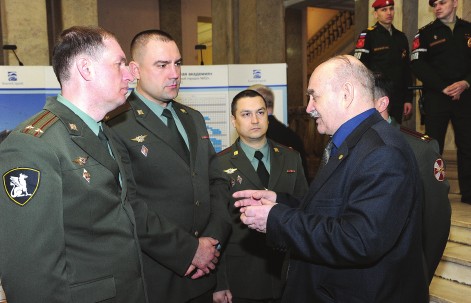
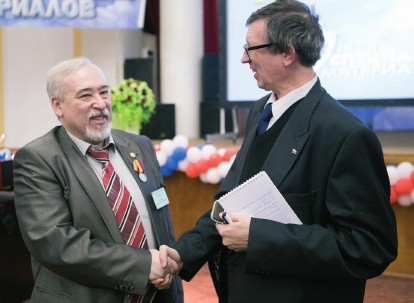
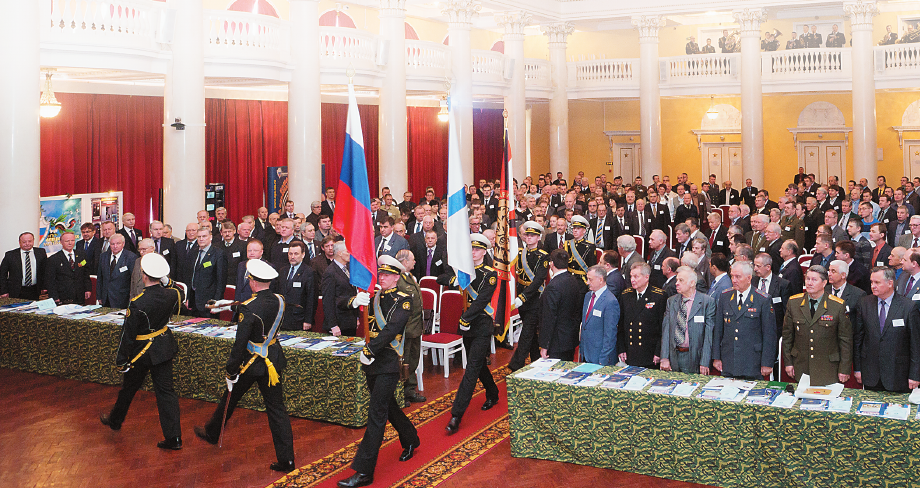
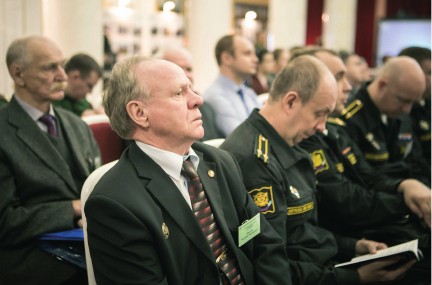
The Russian Academy of Missile and Artillery Sciences was held within the walls of the Naval Academy named after. Admiral of the USSR Fleet N.G. Kuznetsov annual XX All-Russian scientific and practical conference “Current problems of protection and security”
The content of reports, sectional messages and behind-the-scenes discussions indicate a qualitative change in the work of the forum: if over the past 20 years its participants discussed military threats mainly in a theoretical aspect, then the events of recent years have prompted us to relate these issues to the present time.
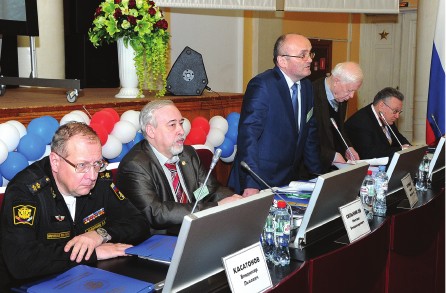
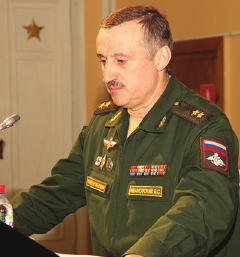
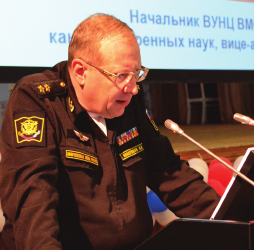
Opening the conference, the head of the Military Training Center of the Russian Navy “Naval Academy named after. Admiral of the Soviet Union N.G. Kuznetsov” Vice Admiral Vladimir Kasatonov emphasized the high probability of further aggravation of military-political tensions, which is associated with the strategy of managed crises and conflicts adopted by the United States and NATO countries as a doctrinal one. Relying on their financial and economic power and advantages in the military-technical sphere, these countries continue to act within the framework of a unipolar world order model, imposing on other states the idea of their dominant position in geopolitics.
To this end, NATO armies are constantly updating their arsenal of weapons and military technologies, including actively developing methods of conducting psychological operations and information warfare, which are used to overthrow unwanted governments. Under these conditions, the activities of international organizations and international legal institutions, such as the UN and the OSCE, are becoming less and less effective. As a result, local armed conflicts are blazing in various countries in the instability zone: Afghanistan, Iraq, Syria, and in the last two years - southeast Ukraine.
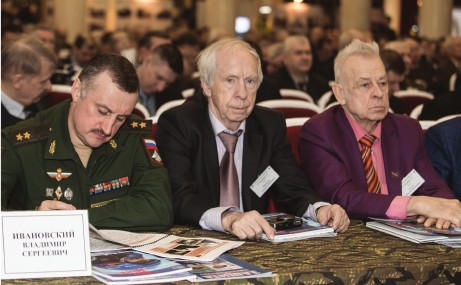
We did not become a turtle without a shell
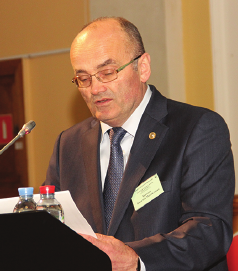
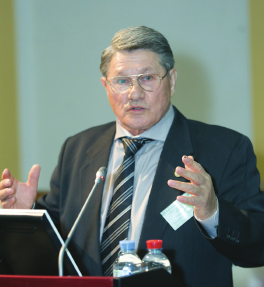
A detailed report by Corresponding Member of the Russian Academy of Sciences, Academician of the Russian Academy of Sciences, was devoted to a detailed analysis of changes in the content of the goals and objectives of the conference, as well as its official body, the journal “Protection and Security”.
Mikhail Silnikov.
He recalled the situation that developed in the military organization of the state in the second half of the 90s, when the Armed Forces entered one of the last stages of their decomposition. The number of combat-ready units and formations has decreased to almost zero. For months, officers who had not received pay were forced to earn extra money on the side. Conscription plans regularly failed, and hazing undermined understrength units. New equipment practically did not reach the troops, since the state defense order, already insignificant in volume, was not fulfilled. Defense-industrial complex enterprises were scattered into small isolated production facilities, the results of scientific developments and design and technological documentation were thrown onto the farthest shelves. Unique scientific schools that had been formed over decades disappeared one after another, and the engineering and technical corps was rapidly dying out: young specialists went anywhere,just not to factories and design bureaus. Under these conditions, the leitmotif of the first conferences was the development of measures aimed at the survival of the Armed Forces and the military-industrial complex as a whole.
The speaker recalled the figurative expression of one of the outstanding military leaders of that time: “We cannot and should not allow our country to become like a turtle without a shell.”
Soon after the completion of the first conference, Igor Dmitrievich Sergeev, the only military commander with the rank of Marshal of the Russian Federation, became Minister of Defense. His first steps to save the army were clearly visible in the recommendations made from the podium and on the sidelines of the conference. A year later, the journal “Protection and Security” published the flagship article by I.D. Sergeev, which, in particular, said: “Russia faces an objective and urgent need for military reform.” There, the minister outlined the contours of the upcoming “radical transformations of the entire military organization of the state” and justified the need to complete the rearmament of troops (forces) no later than 2025.
The time for pacifism has not yet come
The situation was dramatically changed by the Second Chechen War, provoked by the invasion of Dagestan by detachments of the Republic of Ichkeria - a quasi-state formation with the so-called deferred status. At the same time they began
terrorist attacks in the southern and central regions of the Russian Federation, including Moscow. The long-term response to new challenges and threats was the development and implementation of comprehensive plans for restoring the combat capability of all branches and branches of the Armed Forces. The difficulties and problems that arose in this work were reflected in the conference materials. Frank and sometimes heated discussions ultimately led to the development of optimal decisions, which were communicated to the leaders of the state and its military organization, including the leadership of the Ministry of Defense. Let us note that participants in a number of conferences in the 2000s and, following them, the authors of the journal “Protection and Security” sharply and justifiably criticized the activities of Defense Minister Serdyukov, whose activities jeopardized military development in Russia.
With the appointment of S.K. Shoigu as Minister of Defense, the situation in the army and in the defense industry began to improve. By the end of 2016, 99 percent of the launchers in the Strategic Missile Forces were in combat-ready condition, of which more than 96 percent were in constant readiness for immediate launch. The number of combat training sorties of fighter aircraft has increased by more than 60 percent, and strategic bombers are operating in global airspace as planned and without failures. The flags of the Russian Navy fly freely in all seas and oceans. About 85 percent of the flight personnel of the Russian Aerospace Forces received real combat experience during missions in Syria. Individual units of special operations forces have proven their effectiveness in the climatic and geographical conditions of the Middle Eastern theater of military operations, which are unusual for our troops, where some new types of weapons have been tested,military and special equipment. Everything is heading towards the fact that by 2021 the plans for rearmament of the army will be fulfilled: the Armed Forces of the Russian Federation will be equipped with new weapons and equipment by more than 70 percent.
Events that had already become military history were annually monitored by participants in the “Current Problems of Defense and Security” conferences and discussed on the pages of the magazine of the same name. At the same time, new challenges and threats to the country were recorded and predicted, and bottlenecks in military development and the work of the defense industry were identified. For example, back in the early 2000s, articles were published that by the end of the 20s of the 21st
century, NATO will complete the rearmament of its armies and at the same time, with the increase in large-scale terrorist threats, it may create several hotbeds of local wars and armed conflicts in the southwestern and southern strategic directions. A little later, the attention of the country's leadership was drawn to military threats in the Arctic zone, as well as in the southeastern direction.
In 2010, from the forum’s rostrum there was a forecast that an armed conflict in Crimea and south-eastern Ukraine was inevitable - at that time, in the once fraternal neighboring state, the shoots of neo-Nazism were just sprouting.
The next, XX conference analyzed the state of the Armed Forces and the military-industrial complex, the experience of the Syrian campaign, alarming trends in the development of the geopolitical situation and the tasks of the security forces and the military organization of the state as a whole arising from today’s threats. Based on the materials of the extended meeting of the Board of the Ministry of Defense on December 22, 2016 and the results of their own research, a number of speakers called today’s military-political situation extremely dangerous. However, in an informal setting, forum participants spoke like diplomats without a tie - directly and frankly: the war has already begun for Russia, and its transition to the nuclear phase is just a matter of time.
How, with whom and with what will we fight?
What opponents do General Staff specialists count on when planning combat operations in a war that has already crossed the threshold of our home? What are the features of theaters of war, what will the battlefield look like, what factors
will they dominate it? It is impossible to give unambiguous answers to these questions - there are too many uncertainties. But one thing is clear: today we should not prepare for tomorrow’s war based on ideas about yesterday’s war.
The scenario of the so-called hybrid war is very likely. It can do without the classic massing of troops in strategic operational directions, but include the simultaneous conduct of information and cyber attacks and the deployment of separate sabotage and reconnaissance units, including those infiltrated in advance into the territory of upcoming hostilities, including deep rear areas. Needless to say, successful defense in such a war is no longer a question only and not so much of technology, but of total mobilization, coordination and operational interaction of all components of the state’s military organization without exception.
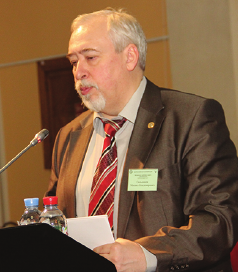
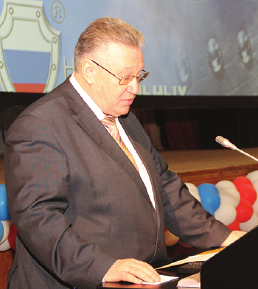
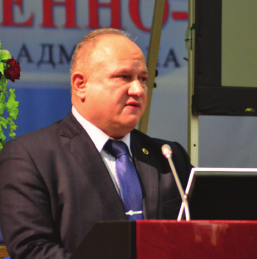
The above scenario is far from the only one. But whatever the characteristics of armed conflicts, the role and reliability of forecasting in planning the activities of the defense industry and in the development of new methods of conducting combat operations has recently increased incredibly. RARAN President Vasily Burenok devoted his report to this issue.
“It is necessary to change the approach to the formation and assessment of tactical and technical requirements for new types of weapons, military and special equipment,” he said. “Otherwise, we will, figuratively speaking, continue to create the T-34, only with stronger armor, a more powerful gun and engine, instead of changing the concept of the tank itself based on new military realities.
The most promising technological principle today is the creation of modular structures. A kind of children’s game “Lego”, which allows you to quickly assemble the desired unit from many standard elements that meets the requirements. At previous conferences, I remember, there was talk about boats and combat robots being created on these principles. The creators use the same idea
new armored vehicles on the Armata platform. But, apparently, we are only at the beginning of this path, but even here more questions have accumulated than positive technical solutions have been found.
A new tank, for example the T-14, will perform well in parade formation and successfully complete all exercises at the training ground. How will it behave on the battlefield, where it will have to interact with other combat assets in a common control system? After all, these tools and this system were developed by completely different departments. They had their own regulatory documents, their own standards, concepts and approaches. Not all of this was always agreed upon with the creators of the new tank. And what will happen when several different “new products” meet in one battle formation, in a real situation, when all types of radio-emitting means are operating, characteristic interference is created, artificial camouflage is used, aerosol formations arise from explosions and fires, and many other factors are at work. Will it turn out that the new combat vehicles and communications equipment “do not see or hear each other”, or even at all?interfere with each other? Will it not turn out that under these conditions our “best in the world and unparalleled” weapons systems will turn out to be useless pieces of iron? Or worse, armored hearses?
It is clear that fundamental changes are needed in the military-technical field. The essence of the necessary changes is the formation of a unified scientific and technical policy in the field of creating weapons and equipment, their unification and standardization, and the meaningful development of the test site. And, as a consequence, the elimination of inconsistency, due to which “Lego cubes” created in different departments do not add up, turning out to be incompatible with each other. Solving the relevant problems is not a matter of one year. But the first step has already been taken - the Council of Chief Designers of leading defense industry enterprises has been created and its leadership has been approved.
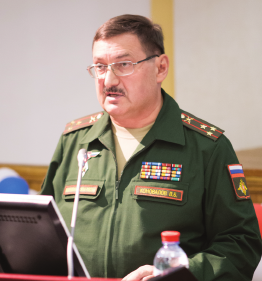
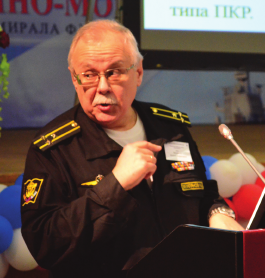
The lack of a systematic approach to the development of new products was convincingly demonstrated by RARAN academician Vladimir Kutakhov, who devoted his report to the problem of combating UAVs. The secrecy regime allows each scientific and technical institution to “plow its own garden” without sharing the “harvest” with colleagues. As a result, there are many duplicating each other and often
ineffective work for which huge public money has been spent. Yesterday we still got away with it - the enemy was predictable and understandable. And today it is changing faster than we have time to think and rebuild. Working in the old way means inevitably “shooting after.” That is, guaranteed to fail.
Meanwhile, the use of drones for military purposes is rapidly growing. The ultra-fast, explosive nature of the development of this type of military equipment is simply amazing. There are dozens of companies around the world that successfully design and produce a variety of UAVs. About half a million of these devices were sold in the USA alone last year!
Recently, the Americans demonstrated an episode of combat operations involving UAVs: 103 UAVs landed from a carrier aircraft, formed a battle formation, reached the target, successfully attacked it, and then dispersed to gather at a designated point, from which they returned to their home base.
Real methods of countering this more than serious threat are still being developed. To detect and identify such a small target as a UAV, special radars are being created, and the capabilities of optical-electronic, laser and acoustic systems are being tested. For destruction they are trying to use anti-aircraft artillery, lasers, interceptor UAVs (including those with mechanical capture in the form of a grid), as well as radio jammers.
The success rate of these tests has not yet been made public. But regardless of their outcome, doubts remain: it is quite possible to solve the problem of destroying one, two, and finally a dozen drones. But if there are several hundred of them in the attacking flock? And of different types, with different characteristics and separate control systems?
“We are facing completely new challenges that require a qualitatively new philosophy of action, conceptually different approaches to the creation of military equipment,” the speaker concluded.
The North is our land
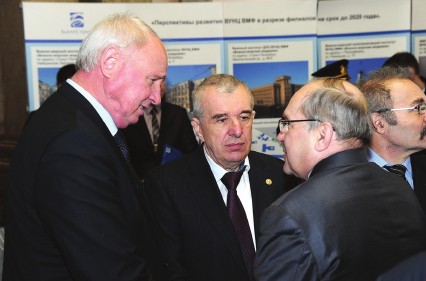
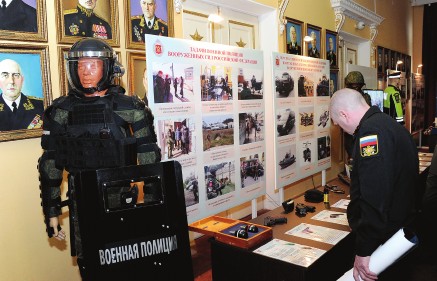
The deep cause of modern wars is not battles for semi-mystical hegemony on a planetary or regional scale, but, according to the combined Lenin-Clausewitz formula, the achievement of economic superiority by means of armed struggle. In relation to modern conditions, this is a struggle for natural resources or for monopoly control of their distribution. Since the end of the 19th century, the Arctic zone has become the arena of non-military confrontation. Among the possible sources of danger, forum participants paid special attention to it. A number of states are not averse to declaring the Arctic “no man’s land, belonging to all humanity,” but at the same time establishing their own rules of the game there. However, Russia is based on the position of the UN, where the state is assigned not only a 200-mile zone of economic interests, but also a 150-mile space from the shelf associated with the mainland territory of the country.Russia carried out the necessary studies, measurements, examinations and evidence and submitted an application to the UN to include shelf zones under its sovereign jurisdiction. Meanwhile, NATO’s activity in the Arctic has been increasing for several years now, which was the subject of thoughtful analysis at almost ten previous conferences.
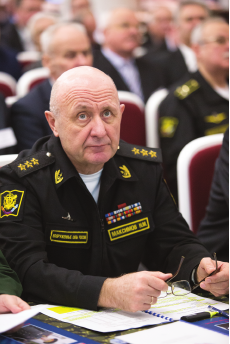
Operational changes in the northern strategic direction were analyzed by Lieutenant General Vladimir Sukhoruchenko. In his report, he assessed military threats and risks in the Arctic region and shared promising developments. Their range is quite extensive. Only Canada conducts at least two military exercises a year in the Arctic Ocean. Without touching here on specific projects of weapons, military and special equipment, we note the “civilian line” - from the use of hydroacoustic systems of nuclear submarines to monitor ice conditions to a whole family of vehicles adapted to the conditions of the Arctic.
The conference participants scrupulously examined military threats in all strategic directions and proposed real measures to adequately counter them. It was emphasized that actions to protect the Fatherland must be systematic and comprehensive.
The progress of military development, certain aspects of the rearmament of the army and navy and the level of their combat capability, as well as an analysis of military operations in Syria and other zones of armed conflicts were reflected in reports and discussions.