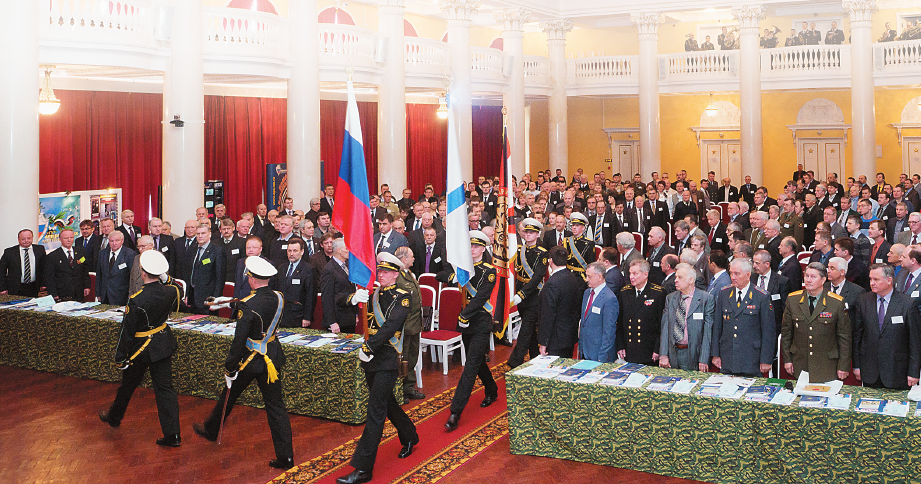
XXI APZB Conference
THE SMELL OF WAR IN THE AIR
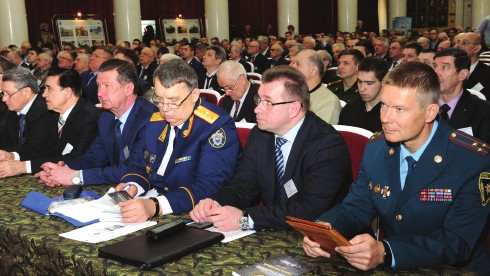
In the two decades that have passed since the very first conference, we have never recorded such uniformity of views on the military-political situation in the world. The opinions of our interlocutors, expressed on the sidelines, were practically the same: Russia is just a step away from a military conflict with the United States and its allies, which with a high degree of probability will escalate into a full-scale war with the use of nuclear weapons. Almost every second person recalled the key provision of the Military Doctrine of the Russian Federation, which states that “Russia reserves the right to use nuclear weapons in response to the use of nuclear and other types of weapons of mass destruction against it and (or) its allies, as well as in the event of aggression against Russia using conventional weapons, when the very existence of the state is threatened.”
One of the conference participants drew our attention to a little-known statement by V. Putin, published on March 7 on the social networks VKontakte and Odnoklassniki. The President of the Russian Federation noted that in the event of an attack on Russia, a retaliatory nuclear missile strike would be launched.
“Yes, for humanity it will be a global catastrophe, for the world there will be a global catastrophe. But I, as a citizen of Russia and the head of the Russian state, want to ask the question: why do we need such a world if there is no Russia in it?” - Putin said.
The so-called political scientists and armchair experts, both our home-grown ones and the Atlantic ones, for some reason ignored this most important military-political statement. Let us venture to guess the true reason for such rare unanimity: everyone is simply scared! And how can one not be afraid when the president is a nuclear superpower - and Russia, of course, has retained second place in the world in the combat potential of strategic nuclear missile weapons! - portends the end of the world for humanity. And the foreshadowing is not at all joking.
Convincing evidence of the seriousness of V.V.’s statement. Putin is the content of the latest (2018) Address of the President of the Russian Federation to the Federal Assembly of the Russian Federation, in which the
development of the domestic defense industry to create new highly effective types of weapons, including torpedoes and missiles with nuclear propulsions, the RS-28 Sarmat - a fifth-generation silo-based strategic missile system with a heavy multi-stage liquid-propelled ICBM, etc.
Despite the overt threat of planetary catastrophe contained in these statements by Putin, they should be understood as a serious warning to those military-political bosses who are hatching plans for the combat use of tactical nuclear weapons in local (limited) theaters of military operations, including directly on Russian territory. It is quite obvious that any military confrontation between nuclear powers will end in the uncontrolled use of strategic nuclear weapons.
In military science there is an indicator called the threshold of permissibility of the use of nuclear weapons (TNAW). Initially, it was intended for the leaders of three or four nuclear powers and the main (general) headquarters of the corresponding armed forces for use in decision-making scenarios on the use of nuclear weapons. However, over time, this term has firmly entered into general civil circulation both in our country and abroad. We are talking about this because the events of the last few years undeniably indicate that the NPT has dropped below the maximum, minimum acceptable level.
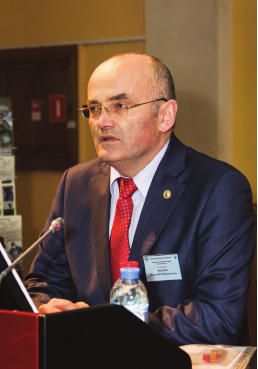
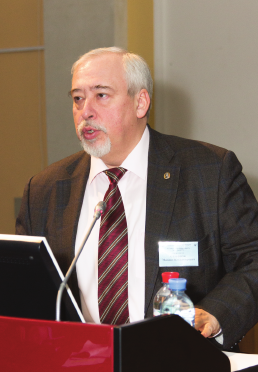
Some issues that were lively discussed on the sidelines of the conference were expressed in a detailed report by Corresponding Member of RARAN K.V. Sivkov, devoted to the analysis of the geopolitical situation of Russia and the nature of military threats. In his opinion, the essence of the current historical moment is the destruction of the previous paradigm of human development. A deep systemic crisis is deepening in almost all aspects of planetary civilization, generated by numerous disproportions and antagonistic contradictions. The agenda is to build a new world order, qualitatively different from the present. We should expect a significant redistribution of the roles of geopolitical centers of power.
The speaker recalled that the civilizational crises of the twentieth century, generated mainly by economic contradictions, became the cause of two world wars, and the global nature of the dominant modern imbalances predetermines the high probability of a Third World War, despite the fact that the subjective conditions for it have not yet developed. The leadership of the West is psychologically prepared for a planetary conflict, the purpose of which is to master natural resources. However, the population of Western countries is not ready and does not want war. In addition, there is an important deterrent - Russia’s nuclear missile potential. Be that as it may, the Third World War is unlikely in the medium term, and military threats in various regions will be determined by local, regional contradictions and imbalances, Sivkov concludes, noting that an alternative to the Westernmilitary power center, which is Russia.
An important part of the conference was a group of reports devoted to possible responses to near-term technological challenges.
A group of scientists from the Russian Academy of Missile and Artillery Sciences presented the concept of “intelligent weapons” based on artificial intelligence.
The term “artificial intelligence” was introduced into scientific use back in 1956, then various software packages for solving problems, automatically proving geometric and algebraic theorems, and numerous games appeared. But, despite some successes, it became clear that the problem cannot be solved by simply enumerating options, because the number of possible combinations, for example in chess, is 10120, which is many orders of magnitude greater than the number of elementary numbers in the visible part of the Universe, which today is estimated as 1089.
Modern methods are based on complex theorems and reliable experimental data and are already widely used in practice, from the simplest household appliances to complex logistics systems, as well as robots used in high-tech manufacturing and highly complex medicine.
At this stage, there was a transition from the concept of “thinking like a person” to the concept of “doing like a person.” As a result, concepts such as smart ammunition, smart drone, unmanned aerial vehicle (ground, surface, underwater) have become familiar. Then “smart machines” mastered the learning function and, finally, the self-learning function. Today, it is important to determine the boundaries of artificial intelligence and develop an algorithm for making decisions in an unlimited number of different situations with constant self-learning.
Biotechnologists are actively involved in the research. On the agenda is the transfer of a person’s personality to an intangible basis, for example, to the hard drive of a combat robot, and the creation of automated combat operations control systems.
Although the question is: “Will technology replace humans on the battlefield?” While this sounds rhetorical, we should consider the increasing participation of modern information systems in reconnaissance, situation analysis, decision-making and, of course, in protecting people from risk in the event of a direct clash. The Ministry of Defense is seriously involved in these problems; information about regular conferences on artificial intelligence is contained on the website of the defense department.
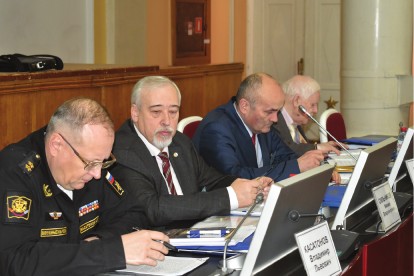
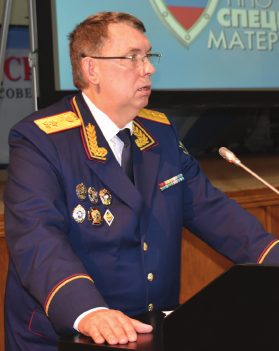
Modern information technologies are actively used in creating groupings of the Russian Armed Forces with specified high operational capabilities. The head of the VUNC devoted his report to this area
Navy "Naval Academy named after N.G. Kuznetsov" Vice Admiral V.L. Kasatonov.
An objective need has emerged for combining the system of military districts with interspecific groupings (IVGs) in various theaters of military operations, which increases the efficiency of the use of the Armed Forces. The conducted studies show that in the future we can even talk about the transition to MVG, since the concentration of forces, competencies, potentials and capabilities creates a synergistic effect in solving combat missions.
A linear build-up of forces and assets is ineffective even when their actions are coordinated. According to scientists, this extensive path of development of the modern army is not suitable. The maximum efficiency is achieved through rational use of the most advantageous aspects and areas of responsibility of each element. A synergistic effect is achieved when elements with sufficient volume and quality of information find themselves at those points in space where they will exert the greatest impact on the enemy or on the surrounding conditions necessary to solve the assigned tasks.
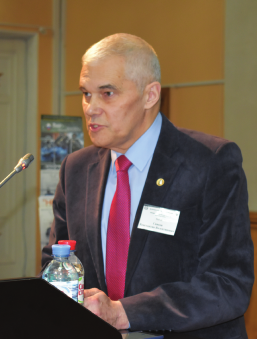
Of course, this requires a unified and automated system for information exchange and management of reconnaissance, the combat potential of strike forces and the defense complex, logistics and logistics support for the group. Moreover, a single information “umbrella” should act like a clock and ensure coordination in real time.
In the process of forming the MVG, the composition of weapons and equipment will be optimized with an eye to modern high-precision high-tech models with the active use of drones. At the same time, the range of material and technical support will be reduced, energy efficiency will increase while mobility improves. However, it should be emphasized that only clear coordination will ensure maximum resonance of the combat potentials of the components of the MVG for combat use at the right time in the right place.
In accordance with new approaches, the branches of the Armed Forces and branches of the armed forces are being modernized. This follows from the report of Lieutenant General S.A. Bakaneeva from the Mikhailovsky Military Artillery Academy “The development of missile forces and artillery weapons is the most important factor in strengthening Russia’s military security.”
The dialectical opposition between means of destruction and defense arose at the dawn of civilization and manifested itself with varying success in all wars of world history. The eternal antagonism between armor and projectile was involuntarily recalled at the beginning of the speech of Corresponding Member of the Russian Academy of Sciences, Academician of the Russian Academy of Sciences M.V. Silnikov, who reported on the creation and successful testing of samples of plasmadynamic installations designed for throwing anti-projectiles in active protection systems of both stationary and moving objects. The relevance of creating such types of defensive weapons is due to the fact that there are a number of objects on which it is impossible to place a sufficient mass of armor for passive protection, and the use of active protection using explosives for throwing projectile elements is prohibited due to the purpose of the protected object.
In the installations, photographs of which the speaker presented, a new physical principle of energy generation is used to bring it into the reciprocal trajectory of elements striking attacking ammunition. For this purpose, pulsed electrical discharges (PED) in a condensed medium are used. Features of the throwing of striking elements due to ESD are a high concentration of energy, a high rate of its release in the discharge channel and a high pressure of gas-discharge plasma with a temperature of up to 30,000 K.
In most cases, to initiate ESD, either a high-voltage breakdown of the discharge gap or an initiating conductor closing it was used.
The initiating conductor makes it possible to create an electric discharge through long discharge gaps, as well as to form a nonlinear shape of the discharge channel in a condensed medium at relatively low voltages compared to a high-voltage breakdown of the same gap.
M. Silnikov noted the pioneering and breakthrough nature of the research carried out and the prospects for their practical application. Currently, a complex of R&D and OTP is beginning to create and master the serial production of several modifications of plasma-dynamic throwing systems for various types of protected objects.
The report of the head of VNIItransmash OJSC O.A. was devoted to solving a similar problem related to the active protection of armored vehicles from damaging systems such as the Javelin ATGM. Usov, who spoke about a method of countering an attack by firing a counter-projectile that sprays an aerosol cloud along the trajectory of a missile aimed at a protected object. Currently, this development is at the stage of full-scale testing of prototypes.
As at previous conferences, several reports were devoted to Arctic problems. They mainly concerned issues of ensuring various aspects of security.
It was noted that the hands of those whom we would not like to see there are reaching out to the “Arctic pie”, which is delicious for many countries. Under the banner of globalization, the idea is being actively promoted that the resources of the Arctic region are the property of the world community. At the same time, efforts to challenge Russia’s rights to a section of the Arctic shelf that belongs to us continue unabated. Against the backdrop of these claims, military tension is growing in the Arctic Ocean region and adjacent waters. A group of NATO naval and air forces is literally “grazing” near the borders of our territorial waters. There is a real threat of losing Russia's leadership in this region.
The People's Republic of China is not far behind. There is even a new term in world politics - “Ice Silk Road”. This is a global program to expand the capabilities of the Northern Sea Route and adjacent areas. Exploration and development of resources, creation of coastal infrastructure, and optimization of logistics are necessary. This requires crazy investments, including in automated control systems, telecommunications and communications. Long-term projects with long payback periods.
The delays in the adoption of the Arctic Doctrine of the Russian Federation, which has been developed for 15 years, are puzzling. Perhaps it is simply impossible to create such a full-scale legal act today, because politics, economics, ecology, demography, and a military-strategic component must be interconnected in it. And each of these areas still contains many uncertainties.
Experts say that the security of the Arctic region is coming to the forefront today. The development of a vast territory located in the most difficult climatic zone involves a lot of risks. On average, up to 100 natural emergencies occur here every year - landscape fires, squalls, tornadoes, heavy snowfalls, thawing of permafrost.
There has also been a steady increase in the number of man-made emergencies: transport accidents, explosions, fires of technological equipment. But here are located nuclear power plants, bases for nuclear icebreakers and nuclear ships of the Navy, chemically hazardous and fire and explosion hazardous facilities, gas and oil pipelines. Increasing the intensity of shipping along the Northern Sea Route naturally increases the risk of accidents in the field of maritime transport.
In addition, in recent years, various types of tourism, including extreme tourism, have been gaining popularity in the Arctic. These include ski trips, parachute jumps to the North Pole, sailing along the Northern Sea Route, all-terrain crossings to the Far North and hot air balloon flights. Emergency situations often occur with extreme sports enthusiasts. Over the past five years, about 100 search and rescue operations for tourists have been carried out here, and assistance has been provided to over 7.5 thousand people.
In these conditions, the accuracy and timeliness of information and the speed of making management decisions are crucial. To provide them, joint space monitoring centers of the Ministry of Emergency Situations and Roscosmos are being created. One has been operating in Murmansk since 2015, the other two - in Dudinka and Anadyr - should be opened in the near future. The orbital constellation of spacecraft is being expanded. This year, it is planned to launch the first civilian radar spacecraft, Condor-FC, which will be ready to conduct space surveys at any time of the day and in any weather.
True, as it turns out, not always even the fastest and most accurate management decisions can be quickly implemented. According to the deputy head of the North-West Center of the Ministry of Emergency Situations A.I. Bondar, the total number of emergency response forces (Ministry of Emergency Situations plus resources of various departments) in the Arctic zone is 18 thousand people and 1845 pieces of equipment. Is this enough? Apparently not. In any case, the forces of the Ministry of Emergency Situations cover only less than 40% of the territory. It should only reach 100% coverage of the Russian Arctic in 2020.
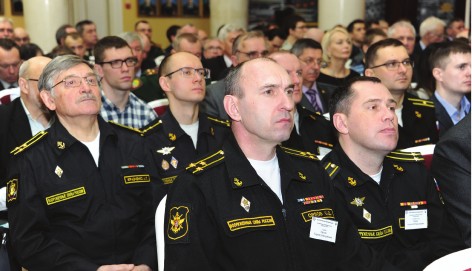
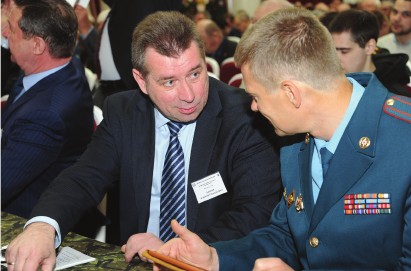
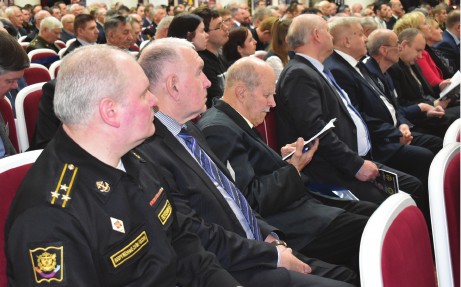
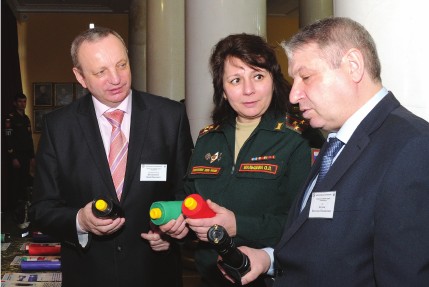
Only a small part of the plenary reports is described here. There were twenty of them in total. As part of the work of ten thematic symposia, participants and guests of the conference were presented with about four hundred reports and short communications covering the problems of weapons and military equipment, technical means of countering terrorism, armored vehicles, various issues related to the Navy, the theory and practice of the combat use of missile defense, logistics of the Armed Forces, features of ensuring comprehensive security in transport, humanitarian problems of modernization of the Armed Forces.
Three years ago, the Supreme Commander-in-Chief of the Russian Armed Forces stated that Russia would not have another chance to secure its future if it failed to implement plans for a radical restructuring of the defense industry, thereby providing the Armed Forces with modern types of weapons, military and special equipment (M&S), as well as technologies for their combat use. President V. Putin said just that: “We won’t have another chance!”
Time has confirmed the prophetic nature of this statement. However, there is nothing supernatural in this, since there were objective prerequisites for the above opinion. Let us repeat, let us not remember once again that in the early 20s the NATO countries will complete the rearmament of their armies, unprecedented in scale, intellectual and financial costs. China is breathing down their backs, planning to complete similar processes by the middle of the third decade. Modernization and significant growth in the military potential of the Japan Self-Defense Forces are planned for approximately the same period. Let us add to what has been said the absolutely unpredictable policy of the so-called rogue countries, which have either already acquired nuclear weapons (DPRK) or are developing them (Iran), and growing military tension in the regions of the Near and Middle East, Central Asia, and in the states of North and East Africa. Military conflict potential is growing inareas directly adjacent to our borders. The latter primarily applies to Ukraine, which is slowly but steadily increasing the combat capability of its armed forces. Let's add to this the Arctic - a region of collision of multi-vector geopolitical and economic interests not only of the circumpolar countries, but also of the leading authors of world politics, geographically very far from the northern seas. Threats of local wars of varying intensity loom along the entire perimeter of Russia’s borders.
It should be emphasized that the deterrent factor of nuclear missile weapons is rapidly decreasing and it can be predicted that the presence of such forces and means in Russia in the near future will not be able to play its previous role in preventing military aggression.