
XXIII APZB Conference
THE ARMED FORCES AND THE DEFENSE INDUSTRY CALCULATED THE WATCHES. PROBLEMS OF PROTECTION AND SAFETY HAVE BECOME EVEN MORE RELEVANT
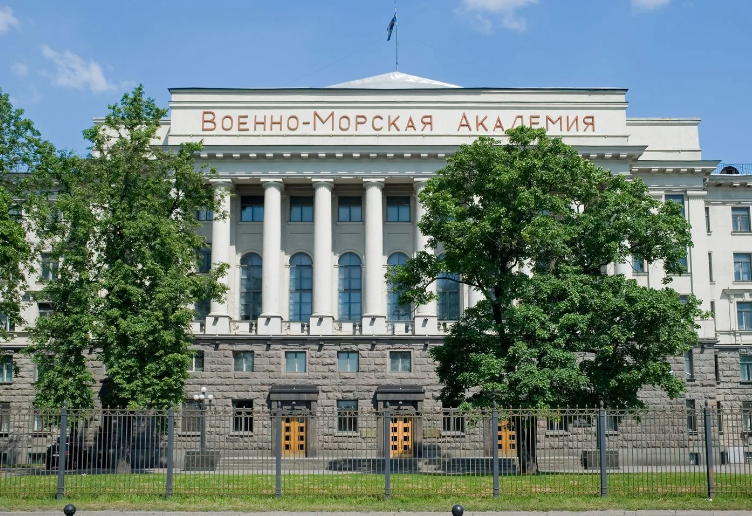
The XXIII All-Russian Scientific and Practical Conference “Current Problems of Protection and Security” was held for the first time in absentia due to the difficult epidemiological situation in the country. Despite this, the organizers are the Russian Academy of Missile and Artillery Sciences (RARAN), the Naval Academy named after Admiral of the Fleet of the Soviet Union N.G. Kuznetsova and JSC "Scientific and Production Association of Special Materials" (JSC "NPO Spetsmaterialov") - did everything in their power to ensure that the forum participants - representatives of law enforcement ministries and departments, higher educational institutions and research organizations, as well as more than one hundred and fifty enterprises and organizations of the military-industrial complex - had the opportunity to present their reports, familiarize themselves with all the conference materials, ask questions to colleagues, and exchange opinions.
The key words of most of the speeches, the texts of which the participants sent to the forum secretariat, this year were: drones and robots, new materials and technologies, promising designs, artificial intelligence, integrated problem solving, high-precision systems, increasing the invulnerability of objects and equipment, new types of military conflicts, interaction between science, production and end consumers, adaptation of specialists to work (service) in various conditions, saving people on the battlefield and in the rear, environmental safety. And all this applies to all types of the Armed Forces and branches of the military, special services and law enforcement agencies, scientific and production developments and enterprises.
And among the bottlenecks this (alas, not the first) time, the following were most often mentioned: the training of highly qualified specialists, the lack of long-term cheap loans for defense industry enterprises, the increasing role of the leading industry institutions, the low speed of introducing advanced developments into production and putting them into service, an insufficiently effective system of state protectionism, problems of cybersecurity, ensuring information security, civic-patriotic education, insufficient counteraction to actions aimed at destroying Russian statehood in the first place, from the inside.
The geopolitical situation is invariably deteriorating on the eve of the US elections. There is very little time left until November 3, when we will find out whether Donald Trump will remain American president or not. But even after this milestone, it is unlikely that the overseas militaristic flywheel will slow down.
The US military budget in 2020 will reach almost $750 billion for the first time. This is comparable to the annual military budget of all countries of the world combined and exceeds Russian defense spending by 16 times. In 2018, Russia was in seventh place in military spending among the states of the planet, in 2019 it was in eighth place, and this year it is already in ninth place.
The North Atlantic bloc has begun to implement the US anti-Russian initiative “four by thirty”. It is planned to achieve thirty-day readiness of 30 mechanized battalions, 30 aviation squadrons and 30 warships by approximately 2022. And NATO plans to reduce the readiness to use nuclear weapons of carrier aircraft from 10 days to 24 hours.
American air defense radars are deployed in the Baltic states. They allow us to control our airspace to a depth of 450 kilometers. Compared to 2018, the intensity of air reconnaissance near our borders has increased by 33%, and sea reconnaissance by 24%. And the number of NATO exercises near Russian borders in Europe alone is approaching four dozen per year.
The problems of Russian-American cooperation in the field of arms control were analyzed in his article by the hero of Russia, Chairman of the State Duma Committee on Defense V.A. Shamanov:
“The monopolar, America-centric world has outlived its usefulness. Today, it is not only Washington and its immediate circle that determine the rules of the game in international relations. Of course, it is extremely painful and unusual for the aging geopolitical “hegemon” to admit this fact. It is much more common to use all available resources to counter states that claim real sovereignty.
Making, in particular, a key bet in an attempt to maintain its global dominance on the world stage on military force, the United States of America is taking consistent steps to dismantle the international treaty framework that has ensured global and regional security for decades.
Washington’s torpedoing, first of the ABM Treaty, and now of the Intermediate-Range Nuclear Forces Treaty, creates risks of dismantling the entire treaty architecture in the field of nuclear missile arms control.
A separate aspect of this activity is a complete disregard for its negative consequences not only for global stability, but also for the national interests of its own allies. In general, there are real prerequisites that already in February 2021 the world will be left without the most important international treaty instrument for mutual control over the strategic offensive weapons of the two largest nuclear states.
At the same time, the US intention to significantly expand the range of low-yield weapons in its nuclear arsenal, including the development of such munitions for strategic delivery vehicles, is of serious concern. This erases the already rather conventional line between strategic and non-strategic weapons, and also clearly leads to a lowering of the “threshold” for the use of nuclear weapons.
Another important act of international security is the Treaty on the Non-Proliferation of Nuclear Weapons (NPT). An unhealthy environment is also clearly visible around its practical implementation.
Russia is ready to go its part of the way. We are firmly convinced that even on the most difficult issues, it is possible to find a solution without compromising the fundamental interests of the parties if there is good will and readiness to negotiate and cooperate on the basis of the principles of equality, mutual respect and consideration of each other’s interests, as well as awareness of responsibility to the peoples of the world for maintaining global stability.”
Threats to Russia's military security in outer space and efforts to prevent and counter them were assessed by Corresponding Member of RARAN, Deputy General Director of the Roscosmos State Corporation O.P. Frolov:
“The deployment of various weapons systems in outer space is one of the ways to establish military-political dominance in the modern world, an indicator that can clearly demonstrate the true intentions of states, which may be hidden behind the declarative statements of politicians and diplomats.
Space is currently not legally protected to the full extent from being a possible area for the deployment of weapons, so as not to become, under certain conditions, an arena of armed struggle and a potential theater of military operations.
Having analyzed the historical precedents for the militarization of outer space, the views of the top military-political leadership of the United States and its allies on the potential forms and methods of using space assets for military purposes, we can identify the following main threats to Russia's military security:
militarization of outer space;
multiple superiority of the information capabilities of space systems and military and dual-use complexes of foreign countries, their multitasking and capabilities for integrated use, the presence of a developed infrastructure and reserves for their rapid deployment (replenishment);
deployment of strategic non-nuclear weapon systems based on new physical principles, with the potential to destroy (functionally suppress) critical spacecraft of the orbital group;
conceptual development and testing of new means of attack from space and countering spacecraft. Countering threats to the military security of the Russian Federation in outer space involves the development of effective measures to counter existing dangers, or proactive measures based on scientific forecasting of such threats:
development of spacecraft launch vehicles, including the creation of rocket and space complexes for the operational replenishment of the orbital constellation;
formation of a stock of critical spacecraft intended for expanding (replenishing) the orbital constellation;
creation of active means of countering threats in near-Earth space, including means of kinetic and radio-electronic destruction.”
As one of the elements of a comprehensive counteraction to anti-Russian threats in all physical environments (on land, in the air, in outer space, in water and under water), Deputy Commander-in-Chief of the Russian Navy, Vice Admiral V.L. Kasatonov substantiated the effectiveness of creating interspecies groups:
“The combined operational capabilities of the army, air force and navy exceed the potential of individual formations. Interspecific grouping, when choosing the right organizational form, is more consistent with the basic principles of military art.
Firstly, the creation of an interspecies grouping is an objective necessity given the commonality of goals, the intersection (coincidence) of the areas of responsibility of the original species groupings and the need to maintain long-term continuous interaction in the course of decisive actions. Secondly, the successful functioning of an interspecific group was achieved in cases where the formation was preceded by military development activities. Groups created urgently during a war need time to achieve the required effectiveness of their actions. Thirdly, the competence of management must extend to all types of planned actions, both at sea and on land. At the same time, during the advance construction, the group must acquire operational qualities that will ensure the ability to implement the principles of the art of war - first of all, such as activity and determinationactions, concentrating efforts on the chosen direction, decisive maneuver with troops and fire, comprehensive support for the group’s actions.”
“In a wide range of research and development of a new generation of military equipment - to increase range, firepower, etc. “The key role will be played by the intellectualization of military equipment and, more importantly, military large-scale technical systems,” noted in his report the director of the project complex “Robotic Aviation Systems” of the Federal State Budgetary Institution “National Research Center “Institute named after N.E. Zhukovsky”, Academician of RARAN V.P. Kutakhov. It is intellectualization that can provide a breakthrough in combat potential, in shaping the appearance of weapons and even the philosophy of creating and using military equipment and weapons systems.
We have already made a significant step in the intellectualization and informatization of individual combat units - aircraft, ships, unmanned vehicles, fighter equipment, etc., but a major step remains to be taken in the systematic use of this awareness, in combining and processing information, making decisions and managing groups of intellectualized combat assets. It is in the intellectualization of the actions of groups, and in the future of large-scale groupings of heterogeneous deeply information-connected technical means, that breakthroughs in the combat power and combat capabilities of troops will be achieved.”
One of the trends in the development of military equipment and weapons has been the creation of heterogeneous systems, in particular, heterogeneous high-precision weapons (HPE). Its prospects were substantiated by the General Director - General Designer of JSC NPP Radar mms G.V. Antsev:
“We can distinguish three main directions in the creation of heterogeneous systems. The first is related to the development of robotic complexes capable of operating in various environments. The second direction is designed to provide the possibility of unified control for robotic systems operating in a group, including in different environments, achieving the required synchronization and commonality of control of heterogeneous robotic systems in real time during a combat operation. The third direction transforms the current “individual” robotic systems into a group OBE with the implementation of the necessary corrections and adaptations during operation.
Heterogeneous robotic systems are an example of group weapons capable of simultaneous fire with high-precision weapons (from two to a full load of ammunition in a salvo) against one or several targets.
Undoubtedly, such heterogeneous robotic systems are intended to become a qualitatively new weapon, capable of making a significant breakthrough in the strategy and tactics of using unmanned military systems, especially during network-centric operations and wars.”
The need to create and use an interspecific information and control reconnaissance and strike system of the RF Armed Forces was revealed by corresponding member of RARAN V.P. Tsukanov:
The general plan - the transformation of the RF Armed Forces into a single reconnaissance and strike (fire) complex, all subsystems of which are located in a single information space - provides for the destruction of the enemy immediately after its detection, with the help of those forces and means that can do this with the greatest efficiency at the moment. To do this you need:
have sufficient forces and interspecific reconnaissance assets to detect the main types of enemy targets at the tactical and operational levels of command and control;
monitor the target situation of the area (zone) of combat operations in close to real time in order to forestall the enemy in fire damage (mode: “reconnaissance-defeat-effectiveness assessment”);
quickly identify goals, determine parameters, prepare goal forms and transfer them to a data bank in close to real time;
ensure a reconnaissance depth of up to 450 km or more (to the depth of reach of strike and fire weapons) in order to create conditions for conducting systematic fire attacks on critical enemy targets (objects);
have a unified intelligence and information space, at least for the corresponding zones of responsibility of troop groups.
And most importantly. The functionality of the work of officials and intelligence control points along the entire chain must be worked out: “organization of reconnaissance - monitoring of targets - preparation of a target form - dumping into a data bank - damage control.”
The head of the academy, corresponding member of RARAN, Lieutenant General S.A., introduced modern research and development to the Mikhailovsky Military Artillery Academy. Bakaneev.
The problems of personnel training, taking into account the experience of the Syrian campaign, were outlined by the head of the VA MTO named after. A.V. Khruleva, Advisor to RARAN, Lieutenant General A.V. Toporov.
Aspects of the effective entry of Russian industry into the new technological structure were analyzed by the chairman of the intersectoral council on IT standards of the Russian Union of Industrialists and Entrepreneurs S.A. Golovin.
General Director and General Designer of JSC Scientific and Production Association of Special Materials (JSC NPO Spetsmaterialov), Corresponding Member of the Russian Academy of Sciences, Academician of the Russian Academy of Sciences M.V. Silnikov introduced the military scientific community to developments in the field of comprehensive protection of special facilities from precision weapons and portable weapons.
All advanced developments on the problems of developing the ground component of general purpose forces are accumulated by the Russian Academy of Missile and Artillery Sciences. RARAN, as the leading scientific organization, annually carries out 30–50 research projects in the interests of the Ministry of Defense and the military-industrial complex of Russia. President of RARAN, Major General V.M. Burenok reported on the main directions of the academy’s activities to increase the country’s defense capability in modern conditions, on the work of the Council of Chief Designers in the interests of creating a balanced weapons system for the ground forces, the Russian Guard, airborne and coastal forces.
The forum's topics cover all issues of defense and security of the country with an analysis of historical experience, the current situation and an eye to the future. The reports presented at the thematic symposiums of the conference - “Armament and military equipment”, “Security problems of special-purpose infocommunication systems”, “Humanitarian problems of modernization of the RF Armed Forces”, “Problems of logistics support for troops (forces) in modern operations” and others - have already aroused the interest of both representatives of law enforcement ministries and departments, as well as specialists from organizations and enterprises of the military-industrial complex.
All reports, articles and communications of the XXIII All-Russian Scientific and Practical Conference “Current Problems of Protection and Security” will be published.