XXIV APZB Conference
Preparing for war, strengthening peace
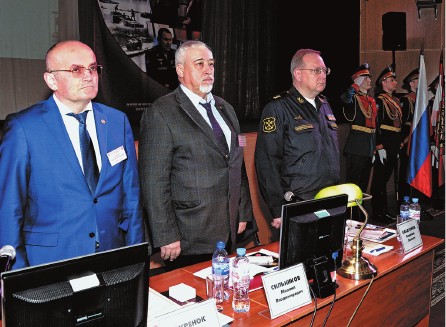
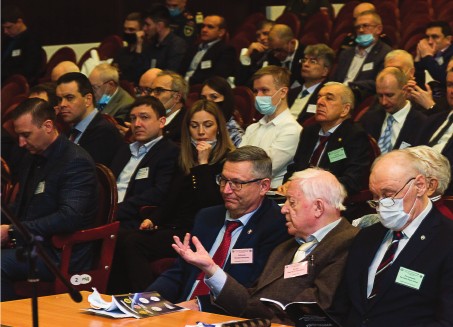
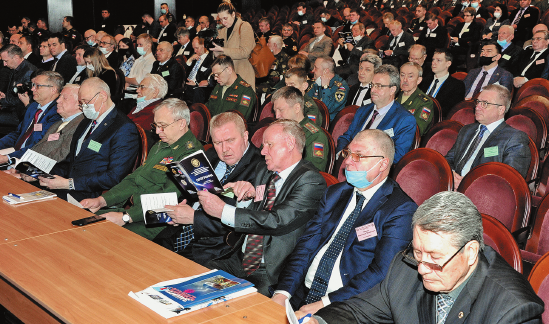
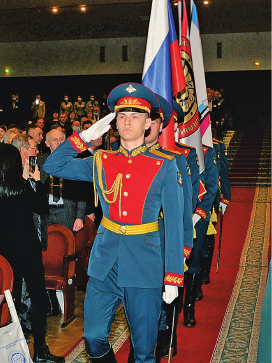
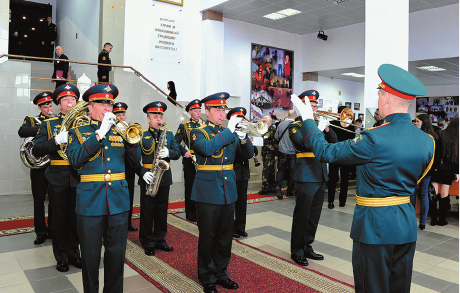
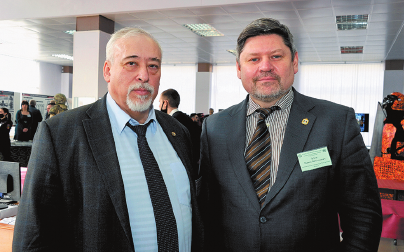
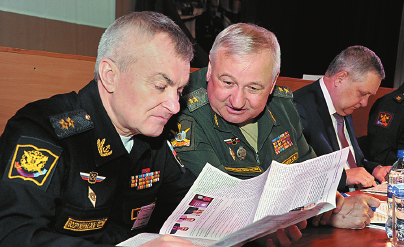
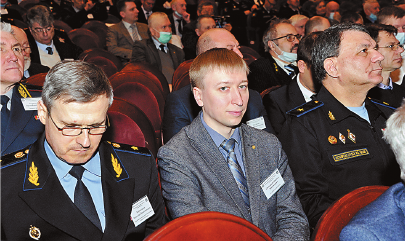
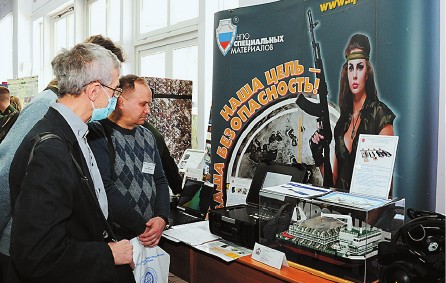
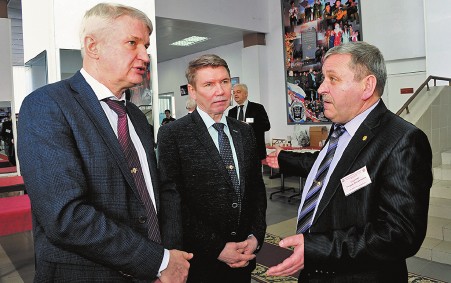
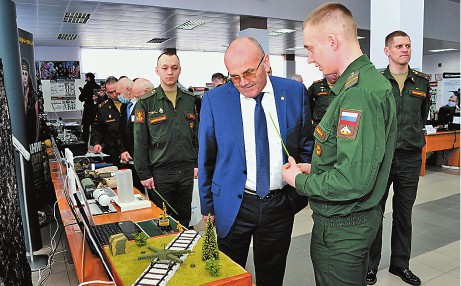
In early April, the annual XXIV All-Russian Scientific and Practical Conference “Current Problems of Defense and Security” took place in St. Petersburg. Traditionally, it brought together representatives of more than 150 scientific and research organizations, defense industry enterprises, military formations, and law enforcement agencies. A distinctive feature of this conference was the variety of venues where it was held. If the plenary meeting took place at the Military Institute (Railway Troops and Military Communications) of the Military Academy of Logistics and Technical Support named after. A.V. Khrulev, who celebrates 110 years since its founding this year, the Naval Academy opened its doors for participants in thematic symposiums. N.G. Kuznetsov, BSTU "Voenmech" named after. D.F. Ustinova, Mikhailovsk Military Artillery Academy, St. Petersburg University State Fire Service EMERCOM of Russia, St. PetersburgState University of Civil Aviation, JSC VNIITransmash, JSC NPO Spetsmaterialov - that is, the entire flower of military universities, research centers of the Northern capital. The topics of discussion at the symposiums included breakthrough scientific research, promising directions for the development of weapons and military equipment, theories and practices of the combat use of missile forces and artillery, armored weapons, the Navy, transport security, countering terrorism, etc. But even from the reports heard at the plenary session, it was possible to get an idea of the main trends prevailing in the field of military construction and military art, about the priorities in creating breakthrough technologies for the defense industry. The criterion for their relevance can be considered the demand and effectiveness of weapons and military equipment in the context of confrontation with the NATO bloc.
The current geopolitical situation is not conducive to relaxation. Back in the late 90s – early 2000s, at the first conferences “Current Problems of Defense and Security,” the question was raised that we had a short period of time to strengthen the country’s defense capability until the beginning of the 2020s, when NATO countries completed the rearmament of their armies and, moving close to the Russian border, would try to grab pieces of its territory. And now that time has come, and the forecasts seem to have begun to come true.
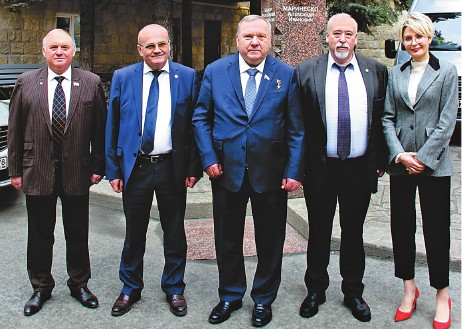
In a report presented by the Chairman of the State Duma Committee on Defense V.A. Shamanov, provides excerpts from speeches by American politicians and military leaders, which openly state that Russia must be forced to obey: first, limit, or even deprive the right to control its territorial waters in the Northern Sea Route, drive its troops out of the Kaliningrad region - and, if necessary, use nuclear weapons to achieve its goals. They hide behind, of course, words about Russian expansion, a threat to neighboring countries, etc. The rhetoric is followed by concrete actions: the concentration of NATO troops to the western borders of the Russian Federation, an attempted coup in Belarus, and increased frequency of exercises of the fleets of Western countries in the Arctic region. What are Russia's chances of surviving the imposed confrontation? Yes, taking into account the recentrearmament of the army, the emergence of high-tech weapons, it will most likely withstand the first onslaught, but if the conflict drags on, then given NATO’s numerical superiority in aviation, ships and missiles on the western borders, the outcome may not be in our favor. In search of an adequate response to the looming threat, military theorists even put forward, among others, the thesis of the need for a preemptive strike. History repeats itself: before the start of the Great Patriotic War in Poland, just as now, German troops were accumulating under plausible pretexts, and when they launched an attack on June 22, 1941, it was no longer possible to stop this avalanche immediately. And again they are going to use Poland as the main battering ram against Russia. But this is the worst scenario, and our task is to prevent it by all means: diplomatic, political, economic and military, including by creating a beltstability along the external contours of Russian borders.
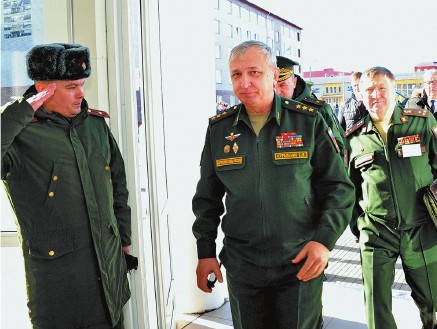
In any case, serious tests and provocations cannot be ruled out in the near future, which will have to be responded to instantly. A way of such a response could be the transfer of an interspecific group of troops/forces to remote theaters of military operations, as happened in Syria, and from NATO in Iraq, Libya, Yugoslavia. From a material, supply and logistics point of view, such an operation requires thorough preparation. Lieutenant General A.V. spoke about its features. Toporov, head of the Military Academy of Logistics named after. Army General A.V. Khruleva. In the works of its scientists, the Syrian experience received comprehensive coverage. In order to transfer personnel and weapons in the shortest possible time and over long distances, it is necessary to deploy a logistics support system on site already 2-3 months before the start of hostilities. In constant readinesswarehouses must contain a reserve of necessary funds designed for 30 days of operation already in block modules, containers suitable for transportation: mobile modules for living, sanitary and hygienic modules, climate control equipment, kitchens, military equipment, weapons, spare parts for their repair - taking into account the different brands of products in different branches of the military, shells, fuel and the like. Such a large-scale transfer of forces/equipment requires expanded transport capabilities. With the massive aging of support vessels for the auxiliary fleet, the solution is seen in attracting large landing ships and a private fleet to the operation. The transfer of personnel and weapons in the shortest possible time is limited by the capabilities of transport aviation. The high wear and tear, capacity and overall number of long-distance delivery vehicles require immediate steps in building up a new fleet. We need an integrated systemwhich coordinates all types of transport. Already on the spot, after the transfer of troops, other problems arise: the group will have to act autonomously, in a changing operational situation, moving from a reinforced to a combat mode, and in addition, carry out humanitarian activities, helping the local population. As the experience of Syria has shown, it is advisable to establish a base camp near the air group, and give the system of warehouse reserves on the territory of the host country an echeloned character. In order to maintain control and respond flexibly to changing situations, it is optimal to focus on daily planning and use simplified document circulation. And although in Syria many elements of building a logistics system were introduced for the first time and were successfully tested, many unresolved problems remained - for example, with the convoy and maintenance of prisoners of war. The main conclusion can beboil down to the following: since the Armed Forces, the Navy, the military police, and the National Guard operate in operations in remote theaters of operations, there is a high risk of discrepancies in their actions. To prevent them from arising, interdepartmental military contingents must have integrated supply structures.
The scientific director of the FSUE “Krylov State Scientific Center” V.N. presented his view on ensuring the national security of Russia and preserving its territorial integrity from maritime directions. Polovinkin. This is not just about disputed land areas. To date, about 300 claims have been made against our country for marine areas. And these are enormous natural resources: commercial fish, offshore oil and gas, and in addition a certain guarantee of security: foreign warships cannot enter the state border. However, the navies and aviation of NATO countries constantly test the strength of the corps of the Russian Coast Guard, the forces of the fleets: in peacetime, ships of the Second, Fifth, Sixth and Seventh American fleets, as well as the fleets of their allies, cruise near the borders of the Russian Federation. Hypothetically, 85% of Russian territory is under the gun of their precision weapons. Forcomparison: the American Navy is capable of carrying 12,000 cruise missiles, ours - 3,200. And given that America has resumed its program to develop sea-launched cruise missiles with a nuclear warhead, the damage from a potential massive attack is difficult to even imagine.
The size, equipment, and technical excellence of the Navy are an indicator of the strength of the state, the level of its ambitions and the reliability of its position in the international arena. Now that the model of a unipolar world is coming apart at the seams, it is not surprising that many countries are building up and modernizing their navies, and doing so in accordance with a new concept of its composition and use. Thus, from 2020, the emphasis is on the predominance of uninhabited vehicles in the future (in the ratio of 70 uninhabited to 30 ships with a crew), on the construction of ice-resistant ship hulls. Long-range precision weapons have reduced the need for the aviation component directly to strike: the time of large aircraft carriers is passing, they are being replaced by light aircraft carriers with vertical take-off aircraft, converted from amphibious landing ships. In accordance with the new concept of fleet dispersalThe composition of the groupings is changing: the predominant combination will be one large ship and three or four medium-tonnage ships. A new subclass is emerging among submarines—submarines with air-independent power plants. And the main focus of the Navy’s efforts also changed the vector: the fleet will fight not against the fleet, but against the coast. All these innovations must be taken into account when implementing the domestic shipbuilding program, so as not to give in to confrontation at sea in the near future.
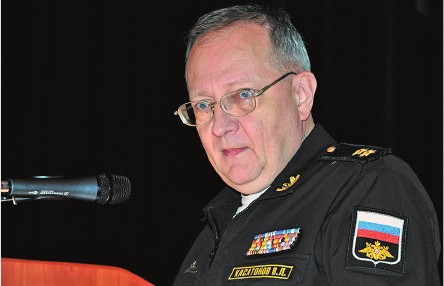
It is interesting that until now military theories have arisen mostly empirically. The experience and common sense accumulated in battles helped formulate such principles of military art as maintaining constant readiness of troops, surprise in actions, decisive maneuver, creating reserves and others. Each of them is important, and in theory, if an operation did not follow several fundamental principles, then according to science it should be doomed to failure, but in reality everything often happens differently. Or vice versa: an ideally conceived operation failed - the role of chance turned out to be too great. In other words, military science is not yet capable, moving from the general to the specific, of deducing unshakable laws of confrontation cast in formulas, although in certain areas - such as the theory of combat potentials, simulation modeling - military theorists have achieved impressive successes.The work of “verifying the harmony” of the battle with algebra was undertaken by the Deputy Commander-in-Chief of the Navy, Vice Admiral V.L. Kasatonov. In his speech, he spoke about a new understanding of the principles of military art from the standpoint of identifying the objective laws of their action and the relationship between them.
But no matter how perfect the principles of combat are, without competitive technology they are doomed to failure. Many types of military equipment require armor. Modern armor is diverse and complex, it consists of
special types of steel, polymer, composite and reinforced materials, can be passive and active. In this context, two reports presented at the plenary session are particularly indicative. V.V. Semenov, representing the Central Research Institute of Chermet named after. I.P. Bardin, drew the attention of those present to the fact that in our country, since the collapse of the Soviet Union, the development and production of new grades of armor steels has practically ceased, although previously they were created and cast in dozens. Partly the negative role was played by the passion for combined protection, which, of course, contains great opportunities - primarily in lightening the weight of the product, but is also associated with significant disadvantages. The main one is its high cost: ceramics are 30 times more expensive than armored steels, although they are inferior to them in terms of survivability and maintainability. If we could get rid of the overweight of lightly armored vehicles, thiswould save the developers from many problems and allow them to organize mass supplies to the troops. By participating in the Interindustry Program for the Production of Armor Steel for the period 2021–2024, TsNIIchermet has already achieved impressive results in this direction. Superior imported steel grade analogues have been created to reduce the weight of the vehicle: with anti-fragmentation armor - by 10%, and with bulletproof armor - by 20%. Naturally, while maintaining all other characteristics. The Magnitogorsk Iron and Steel Works has already mastered the technology for producing these steels, which involves out-of-furnace processing of the metal. Innovative technologies for cutting, welding, and bending sheets have been created for the new material - and all this together represents a qualitative leap in the development of domestic steels and new classes of lightly armored vehicles.
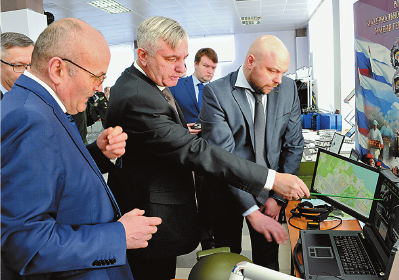
The possibilities of passive and active armor protection of mobile objects were also touched upon in his report by the General Director of NPO Spetsmaterialov M.V. Silnikov.
While passive armor copes with bullets and shrapnel, it is powerless when hit by missiles or attacked by a swarm of combat drones, and active protection relies mainly on heavy armored vehicles. What to do if there is no way to strengthen the protection of a mobile object? The solution is to create an insurmountable barrier of destructive elements at a safe distance from the protected object, a kind of air dome. NPO Spetsmaterialov has developed special throwing devices, the operating principle of which is based on the energy of an electric explosion, which, turning into a plasma state, accelerates the throwing element (guided missile or unguided defensive ammunition). The active protection complex can be placed not only at the protected site, but also on a specialized mobile carrier located as part of the mobile weapons complex. The complex is turned on with one movement of the switch and has a highcombat readiness.
If for a large production association or research institute the promotion of its developments, products, participation in the State Defense Order is at least somehow solvable, then companies of a lower rank will face almost insurmountable difficulties along this path. But this is if they act alone. Recently, scientific clusters have been created in the country to help promising startups. In the defense industry, three years ago, in 2018, the Military Innovation Technopolis (VIT) “ERA” was established - an infrastructure project to promote advanced ideas and breakthrough technologies. It was headed by Lieutenant General V.S. Ivanovsky, whose report was presented at the conference, and the Technopolis Council included Deputy Chairman of the Government of the Russian Federation Yu.I. Borisov, President of the Kurchatov Institute M.V. Kovalchuk and other significant scientists. In addition to the Ministry of Defense, state corporations Rostec andRosatom, leading universities of the country, 216 industrial enterprises and scientific organizations of the country. Ten enterprises in the country have already received participant status.
Cooperation with ERA has many advantages. Technopolis has a testing and laboratory base equipped with the latest technology, a data processing center that is in demand for any of the 16 priority
areas of research: among them, artificial intelligence technologies, nanotechnologies, robotics, small spacecraft, biotechnical systems, automated control systems, etc. Participants in his projects have the opportunity to inform about their discoveries at monthly conferences and seminars, as well as in the journal “Bulletin of the Military Technopolis “ERA”, participate in all-Russian military-technical exhibitions, and get into state weapons programs with their developments. Thus, such developments as a complex for remote sensing of the Earth, a complex for autonomous control of UAVs, an electronic bracelet for remote monitoring of a soldier’s health, a software package for automatic facial recognition, the “Smart Garrison” system and many others have already received recognition and gone through the full cycle from idea to implementation in the final product.
The material base of ERA was replenished with the Lomonosov microelectronics design center and the Kulibin research and production building. Eight microelectronics design centers are expanding their work in the Lomonosov building. Work to create a domestic element base is carried out using computer-aided design systems. The Kulibin building is an experimental production center designed for the production of prototypes, mock-ups, components and mechanisms within the framework of scientific directions implemented in the technopolis. It also finalizes design samples of enterprises that are partners of the technopolis. The mini-factory has special workshops where 3D printing technologies with plastic, photopolymer, and metal will be used, as well as carbon processing and molding of experimental products. Technopolis trains not only discoveries, but also scientific personnel. In order toto get into scientific companies, university graduates had to endure a competition of 27 people per place, since now “ERA” is a social elevator for gifted youth.
And for that matter, RARAN can also be considered a similar scientific cluster. In addition to the function of an expert and developer, the Academy took upon itself the work of selecting and supporting scientific projects. In 2017, an Innovation Center was opened as a branch of RARAN, created on the basis of the Research Institute of the Military Academy of MTO. Professor V.I. spoke about his activities. Babenkov. Over the three years of its existence, in collaboration with 20 industrial enterprises, the center has completed 14 research projects. Some of them are focused on creating military infrastructure in the Arctic. To provide for small contingents in polar conditions, a full range of complexes has been created: residential, sanitary, food, energy. At the research and innovation competition for the Arctic in 2020, this work was awarded a prize. Another important area was the creation of a set of technical means for universal
mobile and aviation commandant's office of the VKS. The mobile aviation engineering support complex allows you to remotely manage elements of the airfield infrastructure. At the same time, work is underway to create forces and means for emergency delivery of fuel to hard-to-reach areas by UAV. It must be emphasized that the scientific evidence base available at RARAN is superior to all existing analogues. After concluding an agreement with the enterprise, RARAN creates methods for evaluating its products and conducts state tests to accept the model for service. She also works with young people, holding competitions among aspiring scientists and nominating them for state awards.
We talked only about a small part of the reports given at the conference and the topics raised in them. But even these examples show how dynamically the processes of digitalization, robotization, intellectualization, and the introduction of breakthrough technologies in the creation of weapons and military equipment are proceeding. In fact, now there is a race for survival: Western countries, which missed the growth of Russia’s military power in the 1910s, are now moving on to obvious provocations in order to suppress, if not economically, then militarily, the independence of our state, to force Russia to turn away from its chosen path. The country's political and military leadership and diplomatic corps are making enormous efforts to prevent the outbreak of hostilities and to give our defense industry time to complete the rearmament of the Armed Forces. But, on the other hand, every new model of weapons and military equipment is difficult to challengean argument for peaceful coexistence. And, paradoxically, by preparing for war, we strengthen peace.
All reports, articles and messages of the XXIV All-Russian Scientific and Practical Conference “Current Problems of Protection and Security” will be published.