
XXVII APZB Conference
SCIENTIFIC OUTPOST OF VICTORY
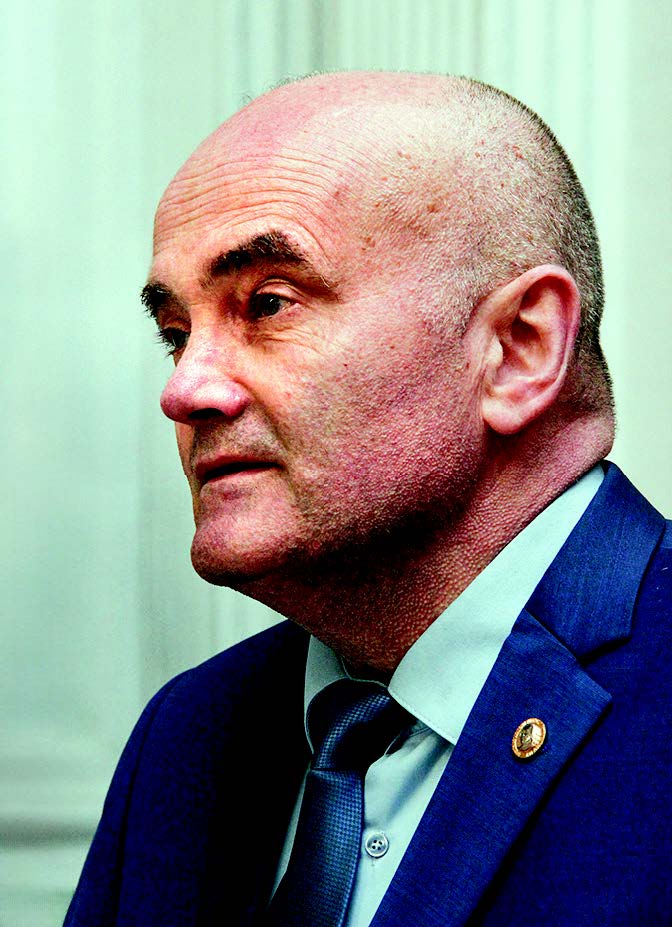
The XXVII All-Russian Scientific and Practical Conference “Current Problems of Defense and Security” once again brought together within the walls of the famous Mikhailovsky Military Artillery Academy the color of military science, the defense industry, and representatives of the country’s military leadership. The strength of this forum, held under the auspices of the Russian Academy of Missile and Artillery Sciences, lies in the inextricable connection between theory and practice, and its authority is evidenced by the fact that its recommendations become the basis for making important government decisions in the field of defense. And, let’s say, many of the proposals voiced in reports at conferences in 2022–2023 have already been implemented. And their authors received memorable diplomas and certificates of honor from the hands of the President of RARAN Vasily Mikhailovich Burenko.
This year, too, the discussion centered around, as expected, questions and problems related to the conduct of a special military operation and the confrontation between Russia and the West. Over two years, the North Military District managed to overcome many crisis moments, increase military and economic efforts to achieve Victory, and also more clearly understand the role and place of the special operation in Ukraine in the process of global reformatting of the world, and strengthen its own sovereign position.
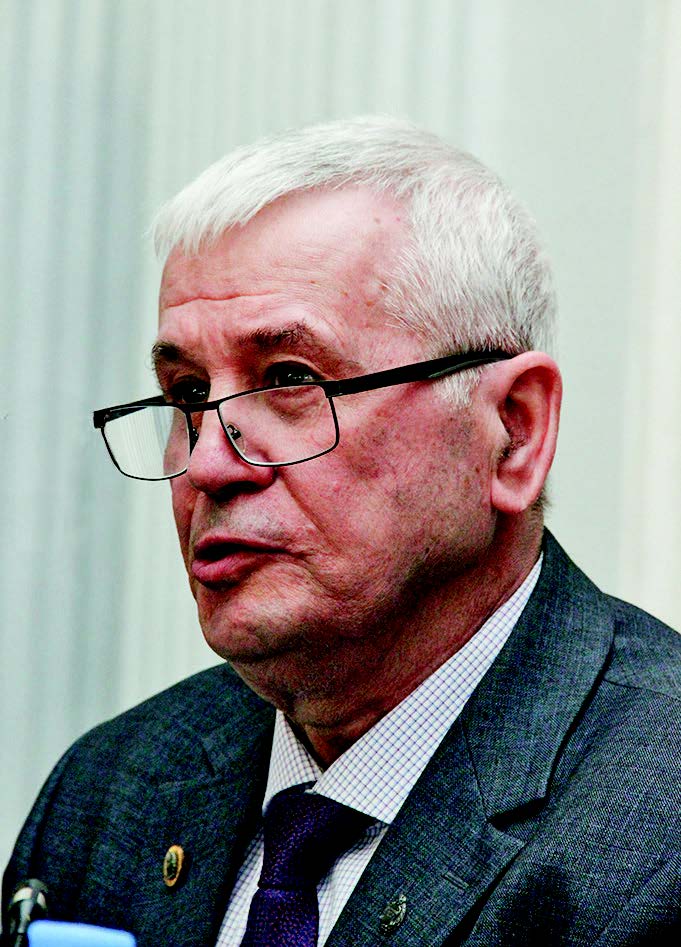
President of RARAN, academician of RARAN V.M. Burenok
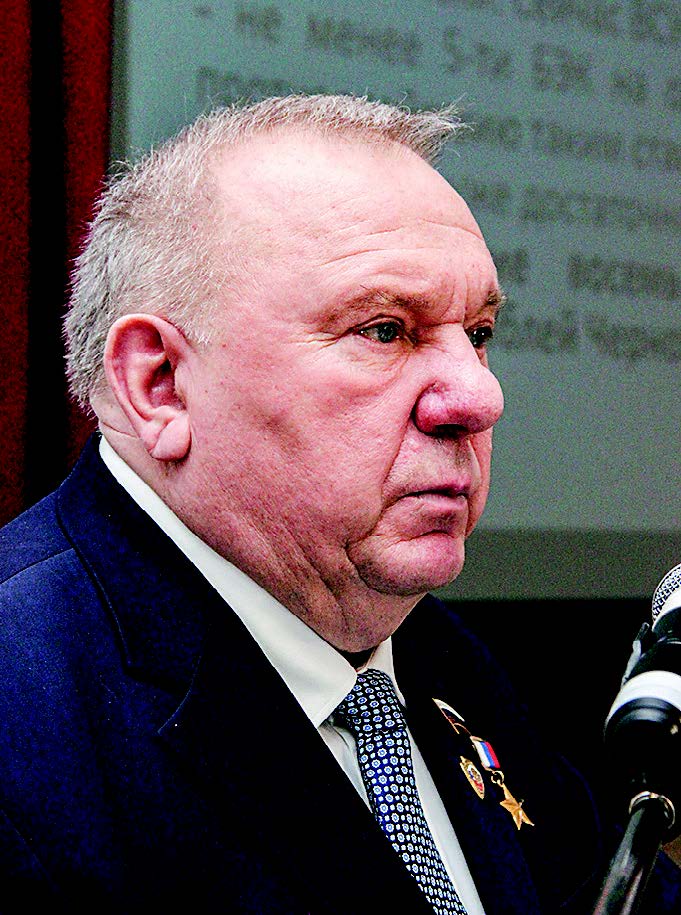
The first three reports at the plenary session represented just such a “view from above.” Each from their own point of view, together they created a kind of stereogram of the landscape of war and peace stretching both into the past and into the future. And the vision of the disposition gives a certain stability: at last year’s conference, according to V.A. Shamanova, “we had less optimism, less understanding of what was happening, and there were more questions than answers.”
Colonel General Vladimir Shamanov considered it important to explain why the conflict in Ukraine was called a special military operation. After all, it was this political decision that determined the vector of further events. The modern hybrid military conflict, which is the Northern Military District, is characterized by the fact that it is carried out in a complex, changing environment, the political background of which sometimes turns its meaning inside out. Let us remember the confusion of the Ukrainian leadership and their foreign “friends” after the successful landing of Russian troops in the Gostomel area - then it seemed that the capitulation of the Kyiv regime was already close. But then there were peace negotiations in Turkey, agreements under which Ukraine immediately violated at the prompting of the overseas “regional committee”. And then the NATO-backed offensive of the Armed Forces of Ukraine, mobilization in Russia. After each of these significant events, the nature of military operations underwent changes: within a radiusIn addition to the military units themselves, infrastructure facilities - energy, communications - began to be hit more and more often; partisan and underground movements emerged; sabotage in the rear became more frequent; pressure on the foreign policy field is increasing. The struggle is also going on for the consciousness of the population of the liberated territories, and of all of Ukraine as a whole, as well as the world community. All these are markers of hybrid warfare. It is more convenient to respond to her calls more quickly in the CBO format.
What points, in the opinion of the speaker, should be paid special attention to? Due to the lack of forces and means, our border areas in the Belgorod and Kursk directions are in a difficult state. There is no end to armed provocations and shelling: civilians are dying, children have to be evacuated. It’s time to transfer efforts deeper into the territory of Ukraine, creating a security belt around our border territories, the military leader believes. The second is the protection of significant military structures (airfields, ship parking, docks, control posts, etc.), fuel storage facilities, communications, transport industry, energy and other particularly important facilities that directly affect the provision of the front. Moreover, this applies not only to the zone close to the line of combat contact, but also to the territory in the deep rear, because they are also subject to planned attacks - the collapse of spans is an example of thisCrimean bridge, UAV raids on Severstal, airfields in Engelsk, Pskov and other strategically important objects. All this brings to the fore the demand for air and missile defense systems. As is known, the protection of front-line groups is entrusted to air defense units of the ground forces, marines and airborne troops. And object-based air defense and missile defense are based on the aerospace forces and, above all, air defense forces. And although the probability of hitting incoming ammunition and drones reaches 80–90%, even a small number of them breaking through the barrier is enough to cause serious damage. Shooting them down with missiles is like hitting sparrows with a cannon: they are incomparable in both caliber and cost. At first, an old forgotten grandfather's weapon model can come to the rescue - this is a twin ZU-23-2 cannon, a laterZSU-23-4 “Shilka”, during a raid with radio-controlled ammunition - electronic warfare equipment, with which it is necessary to saturate both the LBS and important territories in the rear.
Corresponding Member of RARAN V.A. Shamans
An equally pressing task is to protect transport facilities from attacks from the latest weapons: precision-guided munitions, laser weapons, surface, underwater and aircraft. The task is multifunctional; it requires activity from all types and branches of the military. First of all, in terms of saturating them with reconnaissance and detection means. When the enemy attacked ships and coastal objects of the Black Sea Fleet, in a number of cases it was only thanks to the vigilance of external surveillance soldiers that the attack was repelled, and this is far from the most reliable way. Ships must be equipped with all the equipment necessary to identify threats, and until this happens, it is necessary to reduce the practice of individual ships moving to their destination and being on duty in roadsteads to launch surprise attacks, which can also be carried out from a protected place.
Further: given that the West has armed Ukraine with long-range missiles that reach the Crimean Bridge, there is an urgent need to restore the old railway that leads from the Taman Peninsula to Crimea by land directly through Kharkov - especially since the successes of our troops in the Kharkov direction contribute to this.
Measures to repel attacks and protect our equipment should be developed taking into account not only current threats, but also those that may appear in the near future with further escalation of the conflict. For example, the Ukrainian Tochka U missile systems, which have a range of up to 120 km, theoretically, with the assistance of their Western sponsors, can be adapted for tactical nuclear weapons. Large reconnaissance and strike unmanned vehicles (MIDI class - weighing up to 1 ton and MAXI - more than a ton) have proven their ability to hit large ground and surface targets (11 Black Sea Fleet ships were disabled in 8 months).
Scientific expert councils (not only for the Navy, but also for other branches of the military - artillery, aviation, etc.) need to prepare approaches, form working groups to assess and develop counteraction to those threats to our troops and the civilian population that are already in effect or may arise in the future.
“Moreover, it can be assumed with a high degree of probability that somewhere in June and July, the General Staff may create the prerequisites for launching a decisive offensive by our troops, reaching the line along the Dnieper River, all the way to Kyiv. At least, as a military man, I see that this task is quite achievable. The time has come,” summarized Colonel General V.A. Shamanov.
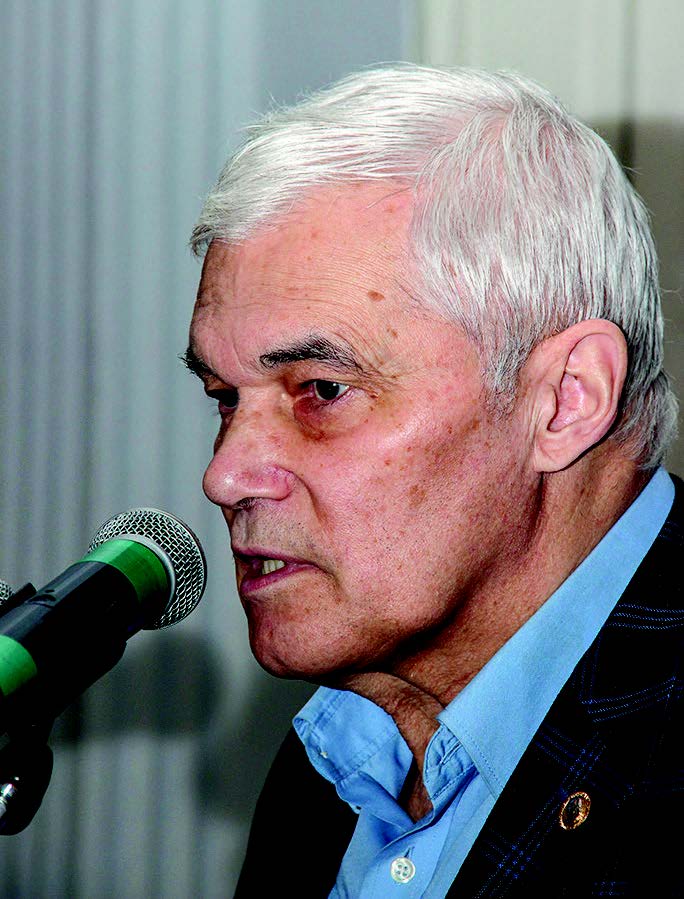
Deputy President of RARAN K.V. presented an in-depth analysis of the reasons why reconciliation with the West is impossible, as well as a breakdown of options for further confrontation. Sivkov.
He sees the origins of the sense of exclusivity and superiority that fuel the ambitions of the elites of Western countries in the era of geographical discoveries, which began the robbery of peoples and colonial oppression, which degenerated into racism. Moreover, even changing the method of robbery from colonial to neocolonial did not change the essence. And now, after 400 years of the dominance of Western civilization, it is deprived of access to the colonial presence, and therefore the source of its wealth. If at the beginning of the 20th century Britain had such colossal industrial potential that it could oppose the power of its fleet to the fleets of any two states, today their fleet is not even able to provide parallel sanctions. Existence in a polycentric multipolar world for Western civilization is a path of extinction and degradation, and the current contradiction in terms of severity immeasurably exceeds those that causedthe previous two world wars. In 2021, at the Davos Forum, two fundamental positions were announced: a course towards a global world, in which transnational corporations, rather than countries, will dominate, and 70-80% of the population will be destroyed as unnecessary, Klaus Schwab announced, and our President Vladimir Putin spoke in support of a polycentric world. Moreover, the divide between supporters of one and the other model also occurs within the countries themselves, as can be seen in the presidential race in the United States.
Academician of RARAN K.V. Sivkov
By what means does the Western world intend to ensure its dominance? The strategy of controlled chaos, which in the early 2000s, after the provocation-terrorist attack in New York on September 11, was continued with the wars in Afghanistan and Iraq, did not justify itself. The situation in the occupied territories was changing too quickly: the American military was not ready to fight for years against the partisans for control of the territories, suffering constant losses. Soft power - through loyal proxies - also did not produce results: they could not hold out for long. As a result, without losing a single battle, NATO lost both wars. So, brute military force did not bear the expected fruits. Economic instruments have lost their effectiveness because the economies of the countries of Southeast Asia, China, and India began to step on the heels of the United States and Europe. The ideological image of the city on the hill faded, and failures in the information war followed.In fact, the only way to maintain dominance for the modern Western world remains nuclear blackmail. But it is hampered by Russia with its nuclear potential, which is also the initiator of the construction of a multipolar world. Taking control of Russia is key to the survival of global Western elites. Moreover, they are terribly limited in time by the steady buildup of China’s nuclear potential. This is the true reason for the total aggression against our country.
But how can a well-fortified and armed fortress under siege be forced to fall? The method has been known for a long time: to find a spy in it, which is our fifth column. It is she who Konstantin Sivkov considers to be the main striking force in Western plans of aggression against Russia. Regular troops, economic sanctions, information warfare all together solve a single task - to create favorable conditions for the fifth column, designed to overthrow the current government. Thus, the Russian-Japanese and the First World War became triggers for the start of three revolutions in the Russian Empire, a change in the political regime and subsequent intervention; the Americans took this experience into account and tried to repeat it.
Before the start of the Northern Military District, almost all of Ukraine’s then combat-ready forces—about 150 thousand people—were concentrated on the borders of the Donetsk and Lugansk People’s Republics. According to the plans of the Western leaders, most likely a powerful blow was planned against the Donetsk and Lugansk People's Republics with the complete defeat of their militia, the killing of the local population and their mass flight to Russia, which would immediately be accused of all mortal sins. The West hoped that Russia would not take open action in response and that the rating of the current president within the country would collapse, which would lead to his overthrow. But the counterattack that marked the beginning of the Northern Military District mixed everything up and forced them to adjust their geostrategic plans, increasing pressure on all fronts and methodically raising the stakes in arming the Armed Forces of Ukraine. Inexplicable, at first glance, turns in the course of the Northern Military District (agreement to peace negotiations in the midst of an offensive, then voluntaryabandonment of occupied positions) were dictated solely by political motives - and not least of all the fear of drawing military contingents of other countries into the armed struggle before it was possible to transfer Russian industry to a war footing. By the end of 2023, it became clear that the enemy had suffered severe damage, meaning not just the defeat of Ukraine in the Northern Military District, but also the complete collapse of the so-called hybrid blitzkrieg undertaken by the West against the Russian Federation. Therefore, today we are conducting a cautious, limited offensive in certain areas. But at the same time, signs of preparation for a large-scale strategic offensive operation are clearly visible: at present, the RF Armed Forces are capable of carrying it out on a group of fronts, corresponding in number to the fronts of the Great Patriotic War.
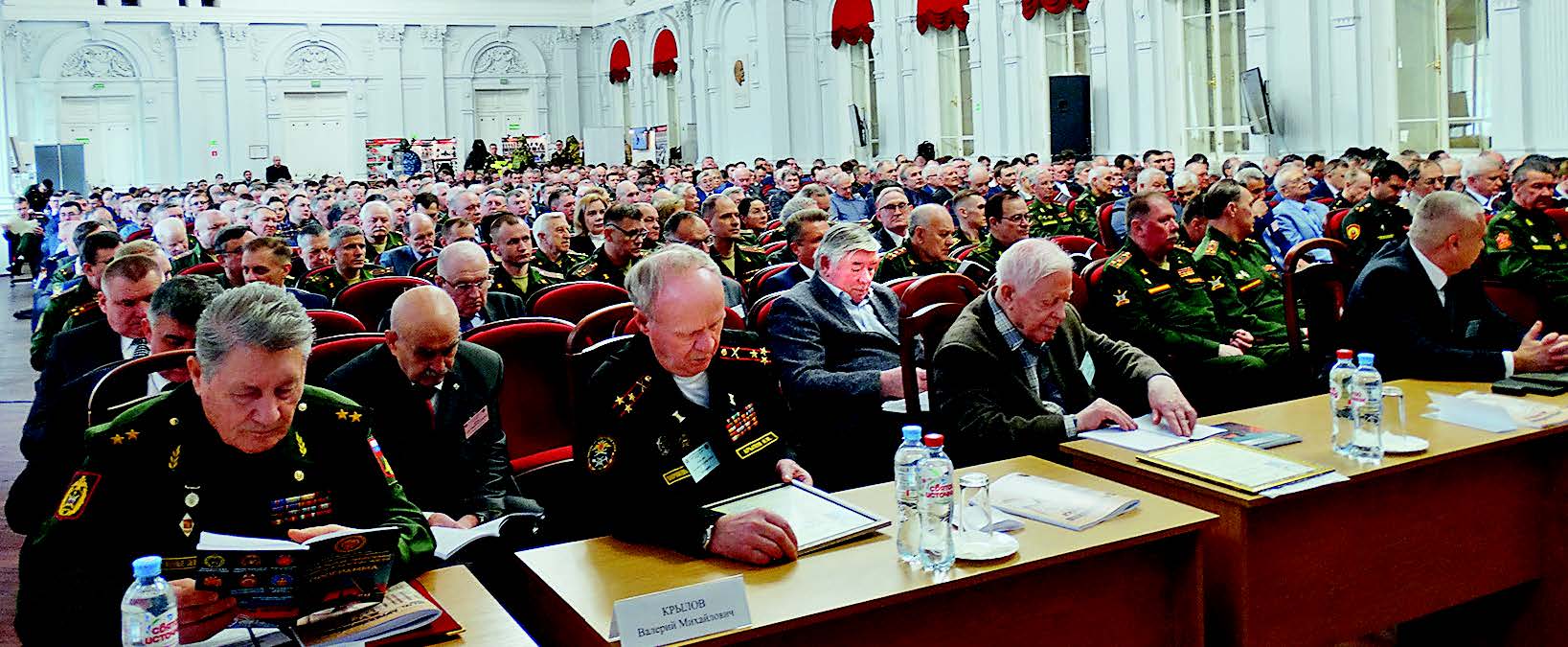
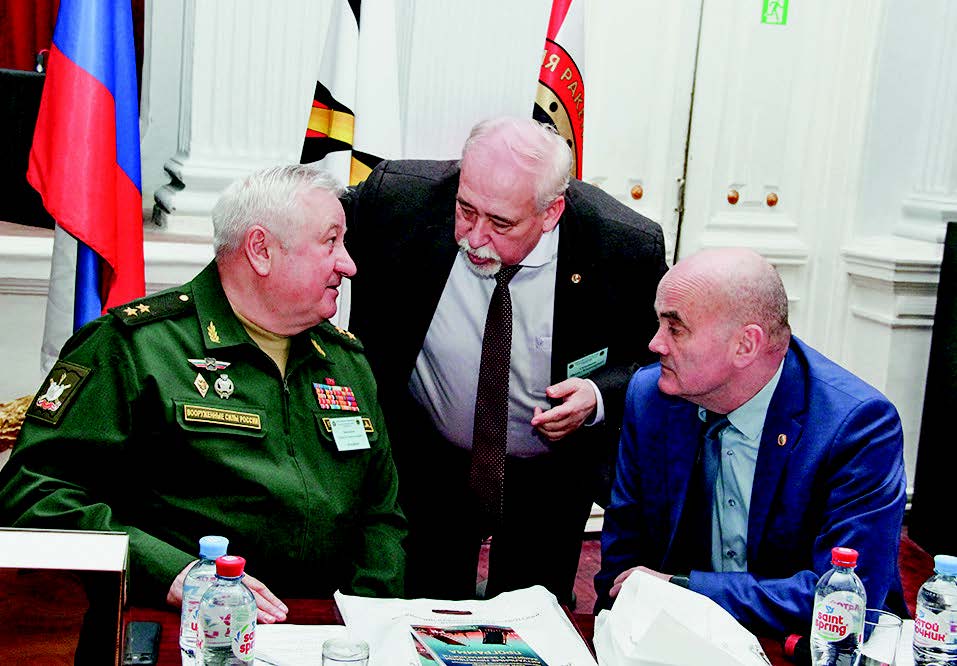
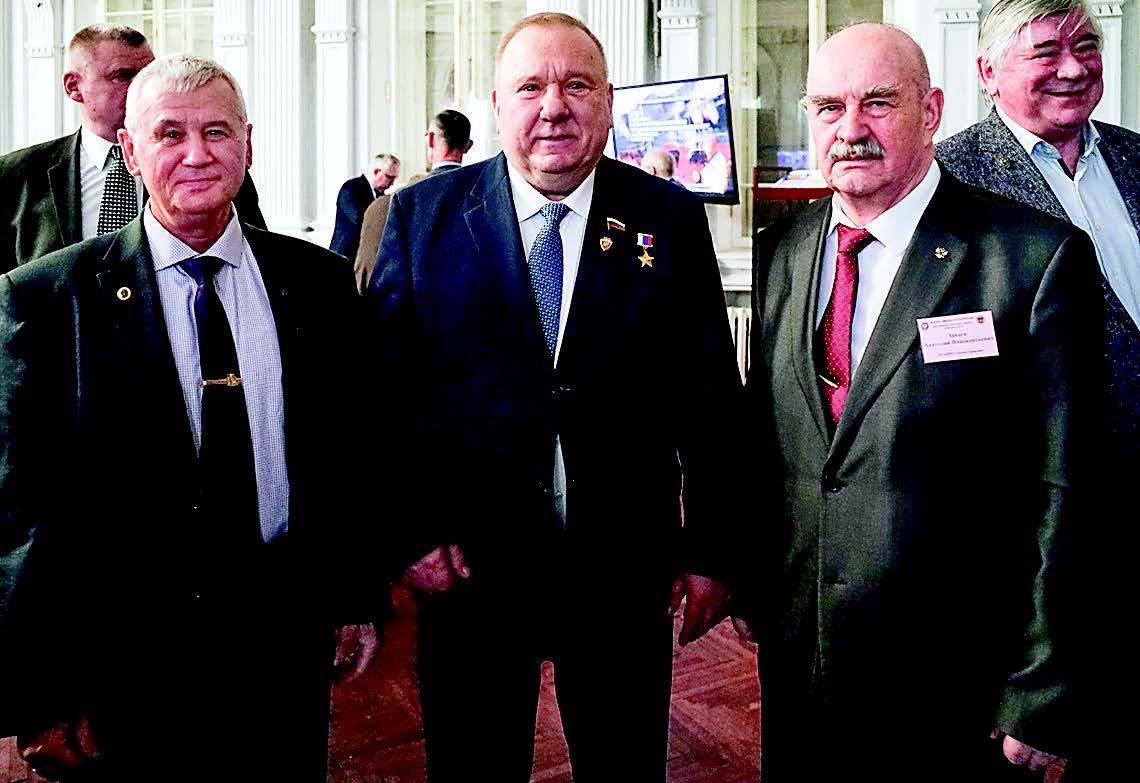
Conference participants
According to all formal signs, the Third World War is taking place. While it is in its hybrid phase, the initial stage. But today we are already witnessing a transition to the stage of demonstrative participation, when NATO troops will begin to appear on the territory of Ukraine. The next step will be their combat use. Therefore, a special military operation occupies a key place in Russia’s system of hybrid defense measures to repel Western attacks. And at this stage, the speaker believes, Russia is performing quite successfully at the geopolitical level.
But what will happen if the nuclear card is finally pulled out of the sleeve? It sounds phantasmagorical, but the vice-president of RARAN, Lieutenant General A.A. Rakhmanov takes this option for the development of the conflict very seriously, because he is sure: the basis of today’s albeit shaky peace for 70 years, since 1949, has been based on strategic nuclear deterrence (SNF). In recent years, as chairman of the RAS expert council on military science and technology, Alexander Alekseevich notes with regret that we have virtually no theoretical work related to the development of strategic nuclear forces and the criteria for its sufficiency. Although not only in the Soviet era, but also during the collapse of the USSR, it was a priority: no expense was spared for its maintenance.
Academician of RARAN A.A. Rakhmanov
If we look at the history of rivalry and the formation of strategic nuclear forces, then for the first 35–40 years, right up to the 1980s, we were catching up with the Americans. In 1962, when the Cuban Missile Crisis broke out, we had only 300 nuclear launch vehicles, while the Americans had 6 thousand. However, despite the twenty-fold superiority, a nuclear disaster did not take place. And all because even with a limited number of missiles we could cause “unacceptable damage” to the United States. This term was coined and filled with content by the then American Secretary of Defense Robert McNamara: he considered the loss of more than 25% of the population and 75% of industrial potential unacceptable, and even considered the presence of several nuclear missiles in the enemy’s possession as a sufficient basis for deterrence. He considered it pointless to accumulate a nuclear arsenal capable of causing damage far in excess of these indicators, since the costs of weapons would significantly exceed the effect ofadditional damage. The question then arises: what is nuclear parity? This is by no means an equal balance of sides, McNamara believed, in every possible way initiating arms control and the establishment of clear rules. His credo was clear: nuclear weapons are not for war, they are weapons of deterrence and prevention of war. However, despite the signing of the SALT I and SALT II treaties, the accumulation of arsenals continued and reached its peak in 1985, when Russia and the United States each had 11 thousand nuclear warheads in their arsenal. It was already clear to everyone that this was very excessive: to cause unacceptable damage, as experts considered, only 400 combat megaton salvoes were enough. Since the 90s, the levels of nuclear stockpiles have gradually been reduced, and today the United States and the United States each have 800 nuclear weapons carriers and approximately 1,550 nuclear warheads on them. Thus, the nuclear race led to a uselessspending of funds on both sides, which is especially sensitive in times of crisis or war.
“And today I ask the military and industrialists a question: what is considered a priority in the matter of maintaining nuclear parity? And no, this is not the number of carriers of nuclear doses, but unacceptable damage,” A. Rakhmanov is sure. There are many factors to take into account here. For example, geography: the Americans have a territory three times smaller, the population density is much higher, and the industrial belt is more concentrated than ours. Then it turns out that for parity we only need the number of speakers that we already have. But it can also be revised based on additional criteria of sufficiency to the level of continuous strategic defeat. Thus, our president stated that up to 90% of the Russian nuclear deterrent forces are equipped with the latest systems, in which we have surpassed the Americans. In addition, we were able to create and deploy a new class of nuclear delivery vehicles that cannot be hit in flight by a retaliatory strikeand which NATO does not have. This is a much more reliable reserve than we had just a few years ago. It would seem that according to McNamara’s concept, recorded in many international documents, there is no need to fear for the future of the world.
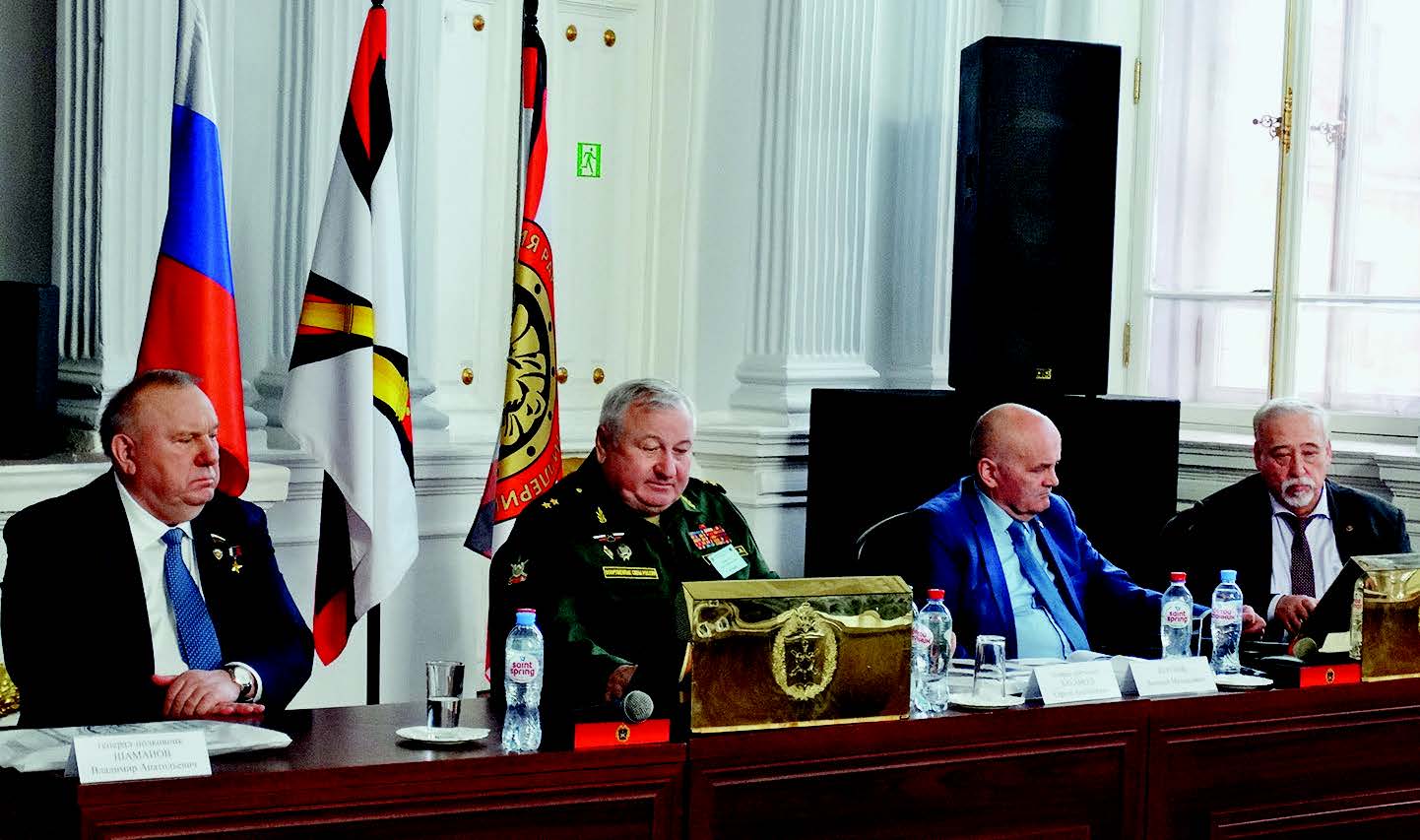
Conference Presidium Conference Participants
And yet, for many years the Americans tried to turn nuclear weapons into military weapons. It all started with an attempt to create a missile defense system, which was technologically unsuccessful for both them and us. At negotiations in 1972, both sides agreed to abandon further work in this direction. But already in 1983, the Americans returned to their old ways, starting to deploy the SDI system - the same missile defense system, but multi-echelon, based on new physical principles, new weapons. Their long-standing dream is to use technological superiority to create an impenetrable defense that will allow them to repel the first preemptive strike and protect their territory and population. But this time too, our opponents were forced to admit that it is impossible to create an impenetrable missile defense system in the next 50 years - anyway, a significant part of the missiles overcome the barrier and cause unacceptable damage.
However, the desire to test the waters for new nuclear games did not generate trust and created enormous risks. Back in the 60s, in order to respond in a timely manner to the degree of danger, scientists developed a ladder of conflict escalation: in the USA it had 44 steps, in the USSR - 17. But the logic of the development of events was the same everywhere: first come informational steps to prepare for war (political speeches, publications in the media). Then comes the stage of hybrid war, which gradually turns into local. The nuclear conflict begins to activate only from the 12th stage. If we compare all previous events in Ukraine with this scheme, the thought inevitably arises that the Americans are testing the limits of Russia’s patience on this ladder. At each turn, Western partners provide Ukraine with increasingly powerful and deadly weapons, tanks, and now aircraft, and provide its needs for positioning, reconnaissance,management. It seems that they are provoking Russia to use tactical nuclear weapons. Although, in spite of everything, it is hard to believe that the conflict will escalate into a nuclear one. Indeed, according to a large study conducted in the mid-80s by Europeans and Americans, the use of only one and a half thousand nuclear warheads will lead to the loss of 5-7 million people in Western Europe, not to mention those affected by radiation, and today each side has approximately five and a half thousand nuclear warheads, including those in storage. Nobody needs such a war on the territory of Western Europe. But then where are they going?
The Americans are trying to win the war with the help of technological superiority by all means. It is alarming how they today demonstrate the ability to hit targets with high-precision projectiles - we saw this in Syria, during the Northern Military District. The liquidation of high-ranking generals, military equipment, and defense industries is carried out with very high precision strikes. Therefore, the issues of their protection and survival are now acute. And in order to find the most effective approaches that give quick results, it is necessary to discuss these topics among the military and scientists, and adjust plans. It took us almost 3 years to increase the number of conventional weapons and launch their production. Our main documents on planning the armed forces - the strategic development plan of the Armed Forces, the state weapons program - require discussion and clarification of many tasks. For example: American precision weapons throughpositioning, control, and communication systems are based on space. If the Americans are deprived of superiority in these systems, then the entire threat from precision weapons will be greatly exaggerated. Therefore, one of the solutions today is seen to be strengthening our space group and demonstrating its capabilities to counter and suppress NATO systems.
But let’s return to the ladder of conflict escalation—it’s not us who are forcing the climb up it, it’s not us who are raising the stakes. Responsibility lies with the true instigators. This must be spoken about publicly, because in a hybrid war, truthful information is also a weapon. It must be repeated again and again that strategic deterrence is the most important issue of our time. All these questions should become the topics of future doctoral and candidate dissertations, on the basis of which decisions will be made at the state level.
While world peace is teetering on the scales of nuclear deterrence, military operations are taking place on earth. Success in them depends to a large extent on the quality of conventional weapons and the provision of troops with them, which is difficult without an established repair system. According to the chairman of the scientific and technical committee (weapons development) of the Russian Defense Ministry, Major General S.N. Smolinsky, in 2023, repair and restoration units and subdivisions restored 66% of equipment that was out of order, including equipment damaged on the battlefields across the entire range. The work of mobile repair teams at enterprises of the military-industrial complex was effectively organized, which made it possible to restore another 22% of equipment requiring complex specialized repairs. Involving citizens called up from the reserves in repairs made it possible to increase the share of restored equipment by another 5%. Repair of the remaining 7% is organized at enterprisesindustry. The production capabilities of military repair agencies have increased by one and a half times.
There is an endless flow of military equipment to the front: the production of tanks has increased by 5.6 times, infantry fighting vehicles and armored personnel carriers by 3.5 times, unmanned aerial vehicles by 16.8 times, and artillery ammunition by 17.5 times. In 2023, the Russian Armed Forces received 237 aircraft and helicopters, 67 radar stations, 86 units of mine-missile weapons, 1,530 new and modernized tanks, 2,015 infantry fighting vehicles and armored personnel carriers, 4 modern multi-purpose submarines and 8 surface ships.
However, at the same time, the North Atlantic Alliance is intensively pumping up the Nazi Kiev regime with ever more powerful weapons and military equipment, putting unprecedented pressure on its satellites, which do not want to reset their own arsenals to please Ukraine. Thus, today 54 countries provide support to the Armed Forces of Ukraine, which have already spent more than 200 billion dollars on this. Over one and a half thousand missile and artillery weapons systems, 200 units of anti-aircraft missile systems, 5,000 units of armored vehicles, and 23 thousand unmanned aerial vehicles were supplied. Modern high-precision weapons, communication systems and automated control systems are being transferred to Kyiv.
Academicians of RARAN V.M. Burenok and M.V. Silnikov.
To fend off their impact, you need to know what you're dealing with. In the process of scientific research and experiments with captured foreign weapons, military special equipment (VVST) and military-technical equipment (MTE), the design, operational, and technological solutions inherent in them are identified, and tactical, technical and other characteristics are also clarified. The guideline in this endeavor was the system for studying captured equipment, established in the USSR in 1941–1943. Military structures were specially created for it, which, under the control of the operational departments of the fronts, were engaged in reconnaissance, evacuation and collection of trophies. Thus, after the Battle of Stalingrad, the reconnaissance department of the front was assigned 7 separate army companies, 5 army battalions, a separate front brigade, an evacuation brigade, 7 army missile depots, 3 separate working battalions, evacuation andevacuation diving teams. The study of captured equipment was carried out both in the People's Commissariats of the USSR and at industrial enterprises, with the involvement of the Academy of Sciences and higher education. And after the war, not only special groups, but also entire laboratories and institutes were created to study German rocket technology. And this is not surprising - a common practice for technologically developed countries. Design and technological solutions used abroad are being actively studied in China, the USA, leading countries of the European Union, as well as in Japan, North and South Korea, and Taiwan. Ukraine is also actively trying to develop this direction. The benefits of such research are obvious.
Based on the study of the technical characteristics of foreign models of military equipment and technical equipment, their design features and methods of combat use, approaches and tactics are developed to counter and reduce their effectiveness, which are then communicated to military units through methodological recommendations and instructions. Thus, it was possible to quickly spread the experience of organizing mounted protection, shelters, camouflage from anti-tank missile systems attacking the upper hemisphere of armored vehicles, various types of drones (anti-drone visors, electronic warfare equipment, etc.). Further, the use of real tactical and technical characteristics of foreign military and military equipment in calculation methods gives tangible results in the creation, modernization, modification and testing of domestic models. And the design and technological solutions used by foreign military-industrial complexes have already contributed to the development of domestic unmannedaviation, means of fortification, evacuation and much more. When conducting applied search research, the study of captured equipment, which has no analogues in Russia, can help create samples of military equipment that are not inferior in technical level to foreign ones. We have already gained unique experience in creating unmanned vehicles and weapons, especially in terms of robotics and technologies based on artificial intelligence. Based on the results of studying foreign military equipment, regulatory documents are being developed on the specifics of production, operation, use, and repair of weapons, taking into account advanced domestic and foreign experience. All effective solutions implemented in this area abroad are closely monitored: standards and requirements for domestic military equipment are clarified, individual elements are borrowed, organizationally standardized approaches are adopted, the cycle is shortenedcreation and production of weapons. The acquired knowledge and technologies are used in educational programs of higher and secondary technical education. Repair specialists are trained to use foreign components to repair and improve domestic equipment, a system for introducing their experience into industry is being established, and the distance between the troops and educational institutions is being reduced. Fundamentally new weapons are being developed: kamikaze UAVs, reusable drones with the function of dropping a warhead. Traditional types of weapons, means of protecting armored vehicles, high-precision weapons, and communications equipment are being modernized and improved. Fundamentally new models are being created, tactics and operational art are being improved. At the same time, the effectiveness of the work done is reduced by a number of factors. This is the lack of a unified interdepartmental research management systemforeign military equipment and technical equipment, insufficient cooperation between defense industry enterprises and higher education, competition between participants in the process of studying foreign military equipment and technical technology for the results of their activities, shortcomings of legal regulation in the field of organizing research.

To overcome them, firstly, the creation of a single authorized body to manage research processes is required. Involving corporations and holdings in its work on a one-stop-shop basis will reduce the number of participants in the process of interdepartmental information exchange, as well as create a hierarchical management model. Secondly, it is necessary to determine specific powers, responsibilities, procedures, forms and methods of conducting research, as well as approaches to implementing their results. The easiest way to do this is to extend the experience of the Russian Ministry of Defense and the regulations it developed to other federal bodies and defense industry organizations. Thirdly, it is necessary to create a unified information environment for the exchange of research results of foreign military equipment and technical technologies, which will both increase the controllability of the processes of exchanging results and reduce the time for their implementation. Fourth condition -select ways to stimulate defense industry enterprises, combining market and command-planning mechanisms, which ensures the flexibility of the research system in various conditions of the military-political situation. And finally, fifthly, to complete the development of a regulatory and methodological framework for conducting research on foreign military equipment and technical equipment, which will clarify the procedure for competitive procedures for determining the sole contractor, as well as intellectual property issues.
Conference participants
Military operations are a test for any military body, and often the most unexpected and unforeseen. The special military operation also presented many surprises for our Armed Forces. The head of the Research Institute of Shipbuilding and Weapons of the All-Russian Scientific Research Center of the Navy “Naval Academy” O.V. spoke about what the Navy had to face there and how to translate this experience into concrete steps for the development of weapons of the Navy. Tretyakov. Pursuing the goal of maximally weakening the Black Sea Fleet, combat aviation, air defense, and other high-tech units of the Russian Armed Forces, NATO countries placed space and naval reconnaissance assets at the service of the Armed Forces of Ukraine and provided them with high-precision weapons. Thanks to this assistance, Ukraine, which had actually already lost its fleet, was able to inflict damage on Russian ships, acting primarily in two ways: simultaneously carrying out massive attacks by sea and airunmanned/unmanned vehicles and using mine weapons. The first tactic, sooner or later leading to the depletion of air defenses, was repeatedly crowned with success, disabling ships and coastal infrastructure.
Also, conducting reconnaissance in advance with satellite navigation, communication, and positioning systems, such as Starlink and Iridium, the Americans immediately detected the movement of ships from ports and anchorages and transmitted their exact location to the Ukrainians. And using long-range rocket systems and missiles (Neptune, Storm-Shadow, and from this year Taurus), the enemy was able to strike at the Fleet before it entered the retaliatory strike zone. To more successfully counter shelling, the developers and manufacturers of our missiles need to improve guidance accuracy, noise immunity and achieve a higher salvo density.
Uncrewed boats (BECs), which are both supplied to Ukraine from abroad and produced domestically, due to their relatively low cost and the possibility of large-scale replication, have become increasingly used in flocks - just like UAVs. Anti-aircraft weapons and heavy machine guns armed with our ships show insufficient effectiveness in hitting small targets. The situation could be corrected by a set of measures. Firstly, in order to identify them in a timely manner, it is necessary to combine information from all operating radars in a single information space. Secondly, urgently create ammunition with increased fragmentation and put it into service with the Navy. Anti-aircraft weapons would also operate more coherently and efficiently, being in a single information field.
Threats to our Fleet come not only from the air, the surface of the earth and the sea, but also from its depths. For reconnaissance purposes, NATO has long been using autonomous uninhabited vehicles (ANFA), and in Ukraine they produce underwater kamikaze vehicles “Marichka”. We also have similar robotic systems, but for the safety of our ships from mines and ANFA, their capabilities need to be expanded, as well as improved anti-mine weapons. The implementation of these areas, which can be combined with factory repairs, will reduce the severity of the situation. In general terms, it comes down to two sets of measures: improving weapons and creating a complex information system with an open infrastructure.
Interestingly, manufacturers came to similar conclusions. The report, prepared by employees of the Almaz Central Design Bureau, talked about air-cushion landing ships, which also participate in the air-cushion air defense. The idea was voiced there that without receiving fresh information from the Ministry of Defense about modern military equipment and enemy tactics, and without cooperation with equipment development enterprises, it is difficult to move things forward. Thus, landing ships were initially equipped with means of illuminating the upper hemisphere, but this was not enough
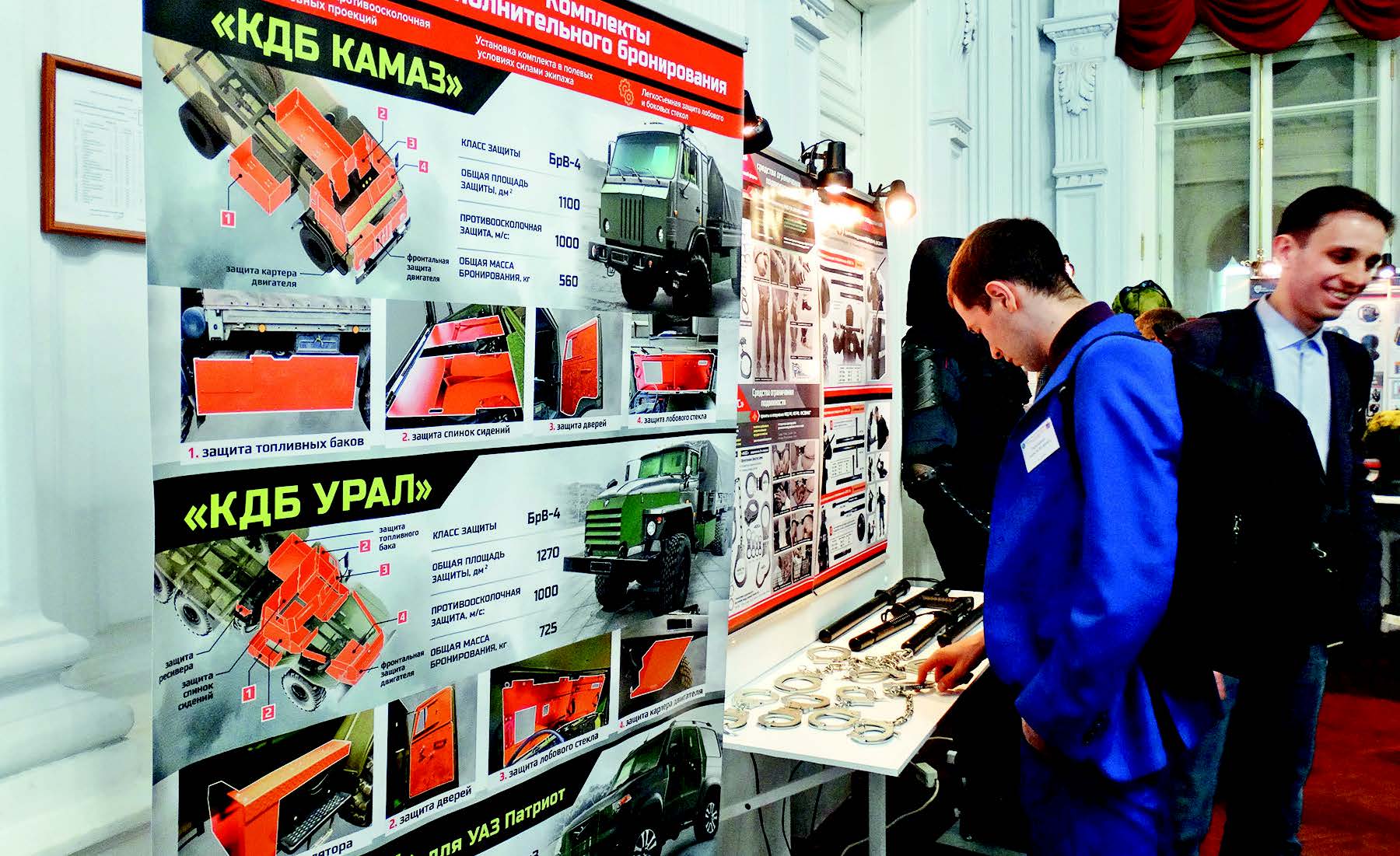
Exhibition of special equipment
- therefore, it is necessary to reasonably decide what other detection means are required. In any case, ships must operate in a single information system with aviation and ground forces. Also, when approving the weapons system of landing ships, they did not take into account the possibility of an attack on them by a “wolf pack” of a dozen BECs. What kind of weapons will be sufficient in this case also needs to be decided and delivered as soon as possible. Then it will be possible to quickly move on to the production of those projects that will ensure the dominance of the Russian Navy in the naval theater of military operations.
Well, when the task is set and specified, domestic developers quickly and enthusiastically solve it. Moreover, many topics are taken up proactively, focusing on the opinion of the military members of the North Military District. Let's give two examples.
Today only the lazy do not talk about network-centrism and the need to create an open system of surveillance, warning, and shooting adjustments. But how can it cover hundreds of kilometers of front? The joint project of NPO Spetsmaterialilov JSC and the Mikhailovsk Military Artillery Academy provides one of the possible answers, created on the basis of robotic systems. This is a reconnaissance and fire adjustment complex consisting of two complementary systems: the ground-based Silkar and the air-based Bekas UAV. From one ground point, the Silkar operator controls 2 km of territory and, if a trigger occurs there, can accurately determine its location and transmit the coordinates to the command post. Launched in a given direction, Bekas is capable of finally clarifying the situation, adjusting artillery fire, and even independently attacking an object by droppinggrenade. It is important that it is impossible for the enemy to detect the operators of both complexes, as well as to forcefully land the UAV - it can fly in a mode in which electronic warfare is powerless. However, we wrote in detail about these complexes in previous issues of the magazine.
The second interesting development was reported by the deputy head of the Mikhailovsky Military Artillery Academy S.V. Bug. It concerns the equipment of decoys, which, as is known, mislead the enemy and save real equipment. The novelty lies in the fact that instead of inflatable mock-ups, which are expensive and not very convenient to use, the Academy proactively developed flat-layer photo mock-ups of guns. They are several times cheaper in execution, are easily installed by the military personnel themselves, and during reconnaissance from the air they convincingly reproduce the outlines of real equipment and guns. Four stages of testing were carried out, when flat printed models were installed next to T-90 tanks and 152-mm howitzers, and UAV operators were asked to determine where the real one was and where the false one was - in almost 75% of cases they did not guess. For greater reliability, if the positionswill be observed at night by a camera in the infrared range; to simulate the thermogram and the emission of exhaust gases, a discretely operating heat-smoke simulator is attached to the model. The most amazing thing is that flat-tiered layouts can be built using improvised means, simply by checking a paper diagram. As they say, we have a lot of ingenuity - but how much equipment has been preserved and the lives of the military personnel assigned to it! Close attention was also paid to the protection of stationary and mobile facilities.
Speakers from the MTO Academy named after. Khrulev, BSTU "VOENMEH" named after. D.F. Ustinov spoke about the improvement of military education, scientific work on generalizing the experience of the North Military District and introducing it into the educational process, preparing graduates for work at defense industry enterprises.
Traditionally, after the plenary session, scientific symposia were held, at which experts were able to discuss in more depth certain topics, such as the prospects for breakthrough scientific research, directions for the development of military equipment, security problems of special-purpose infocommunication systems, the future of the Navy and its weapons, directions for improving missile, artillery systems, armored vehicles, countering terrorism and much more. The conference is a scientific outpost designed to select the best, most technologically advanced, modern equipment to support our Armed Forces, achieve its production and delivery to the troops, and thereby bring our common Victory closer.