V APZB Conference
HERE THE ARMOR SHIELD OF THE HOMELAND IS CREATED
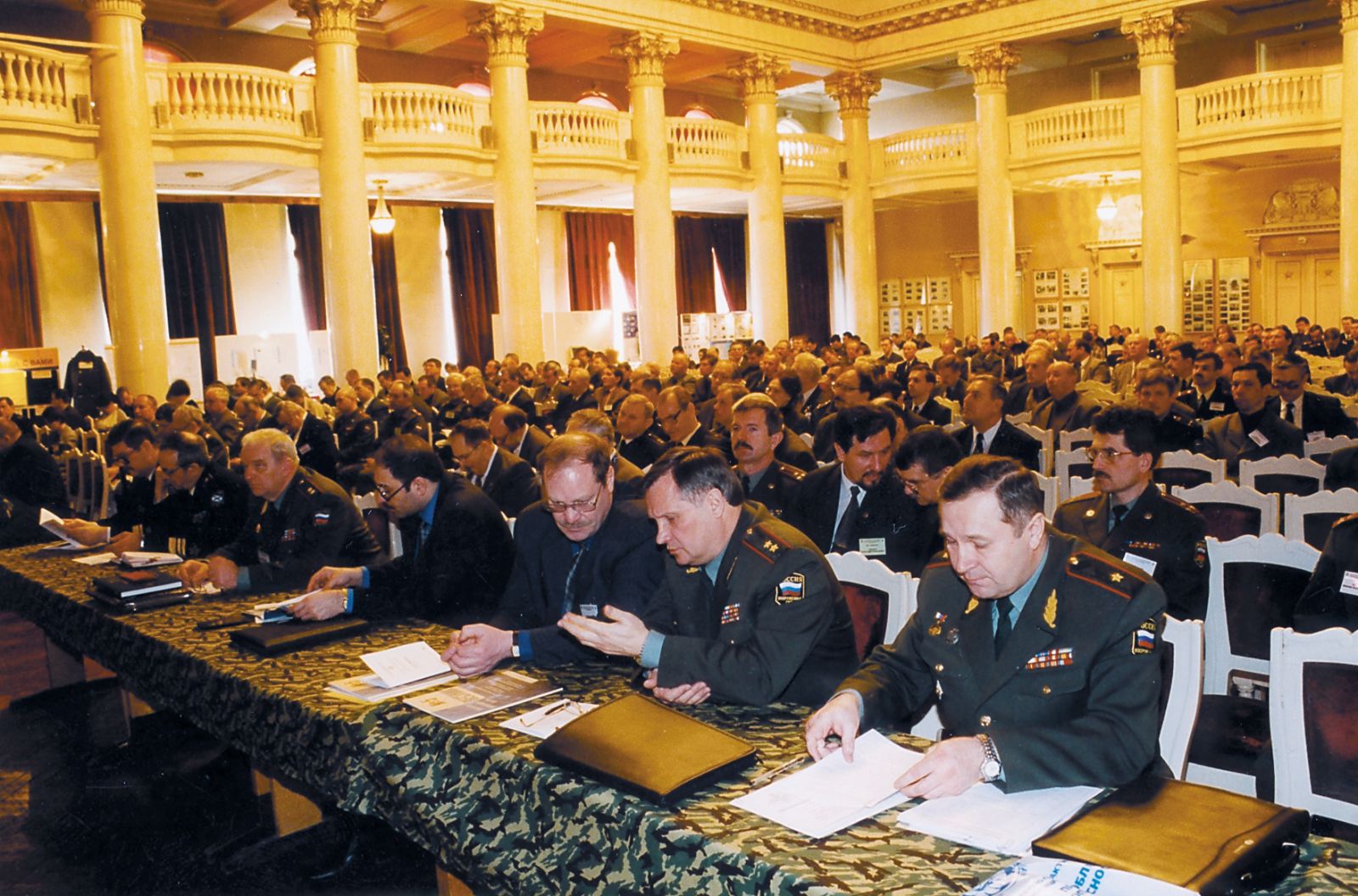
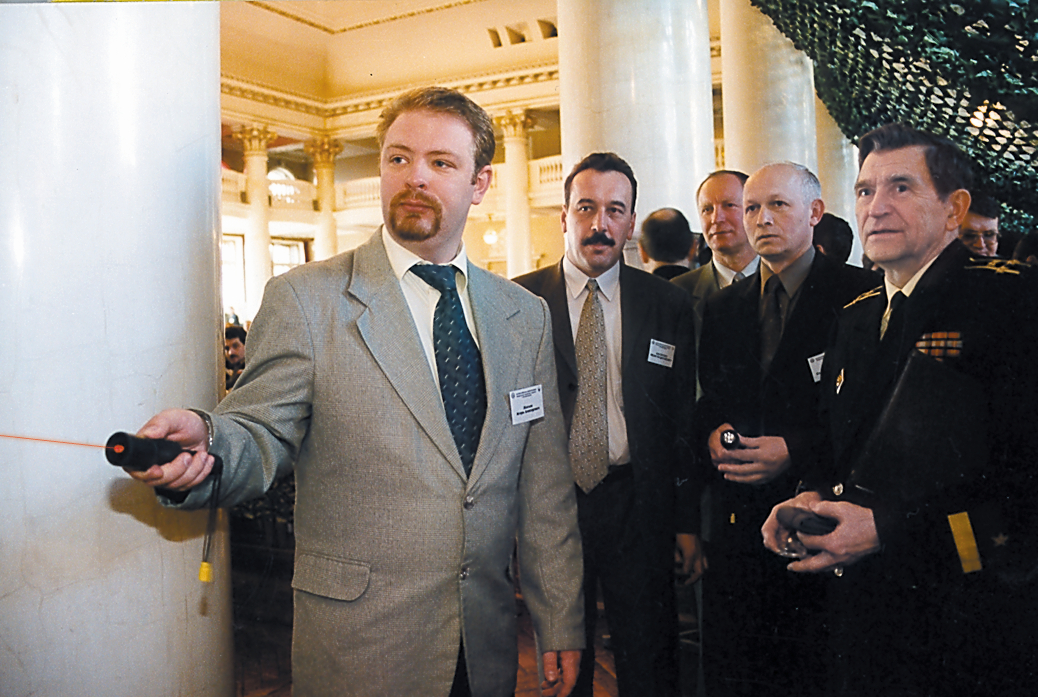
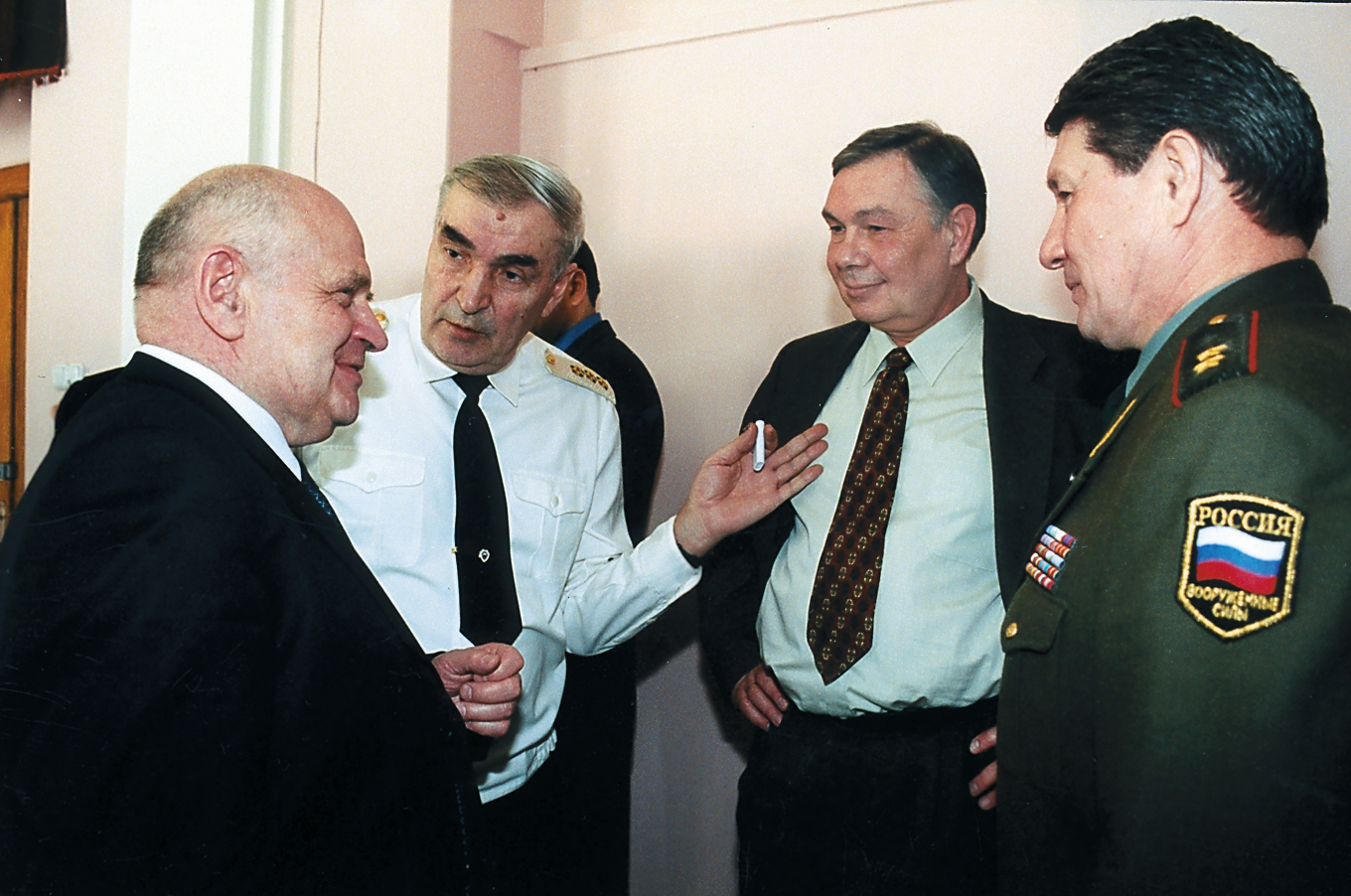
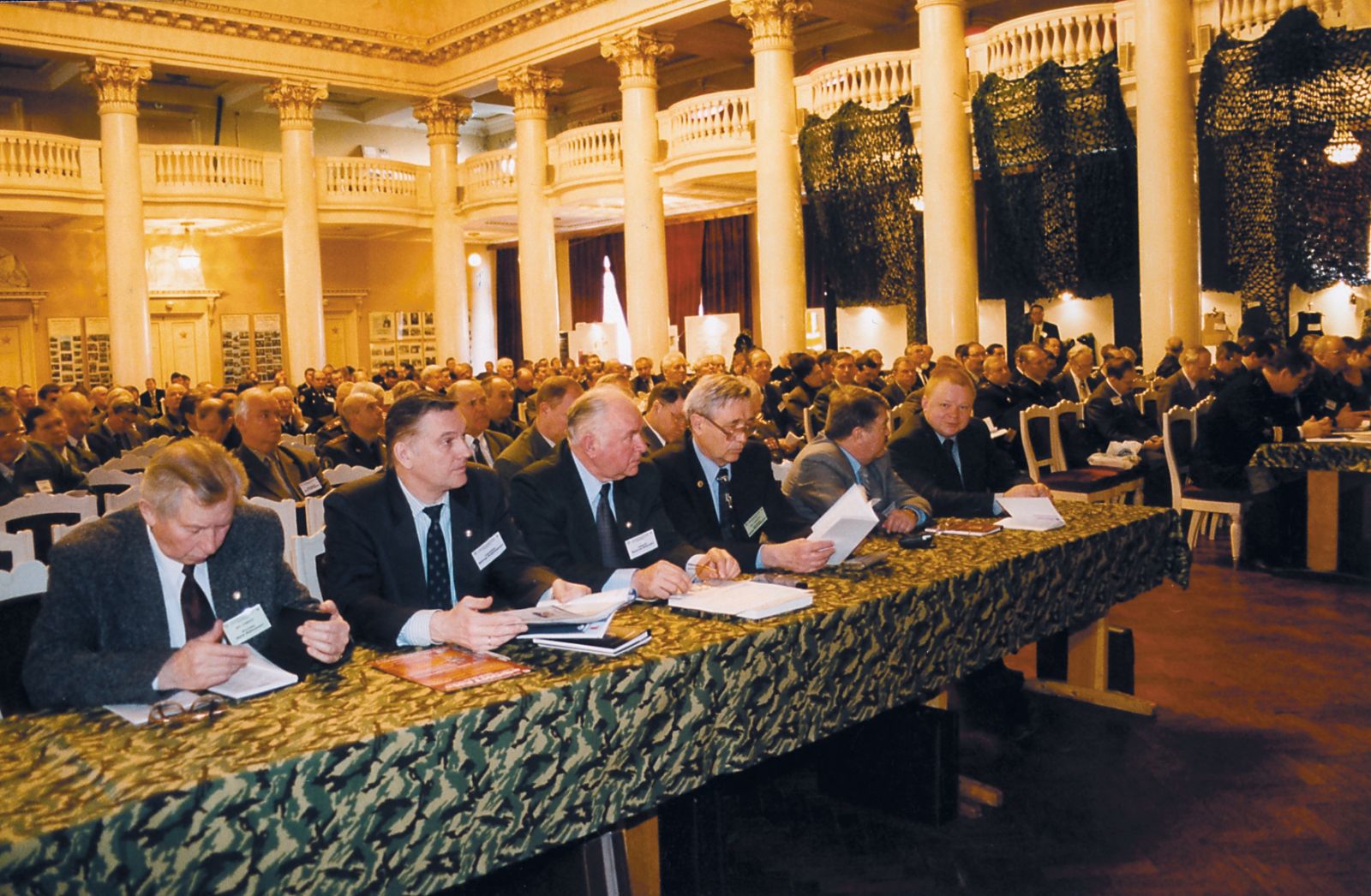
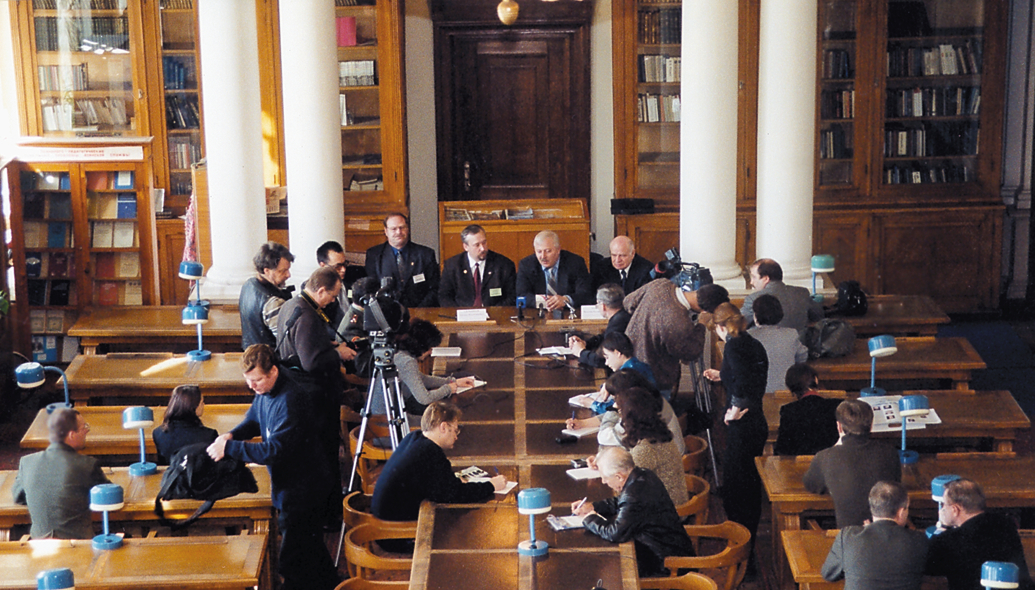
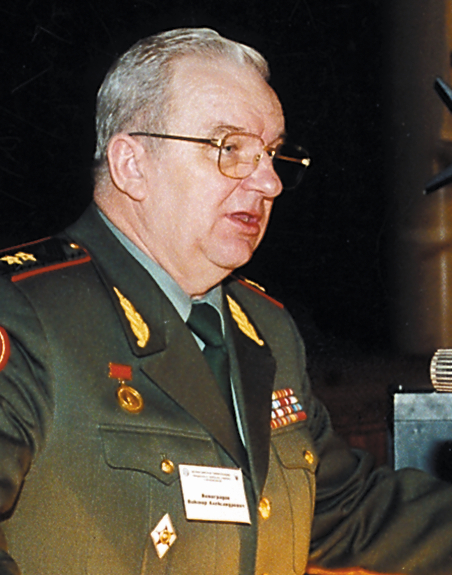
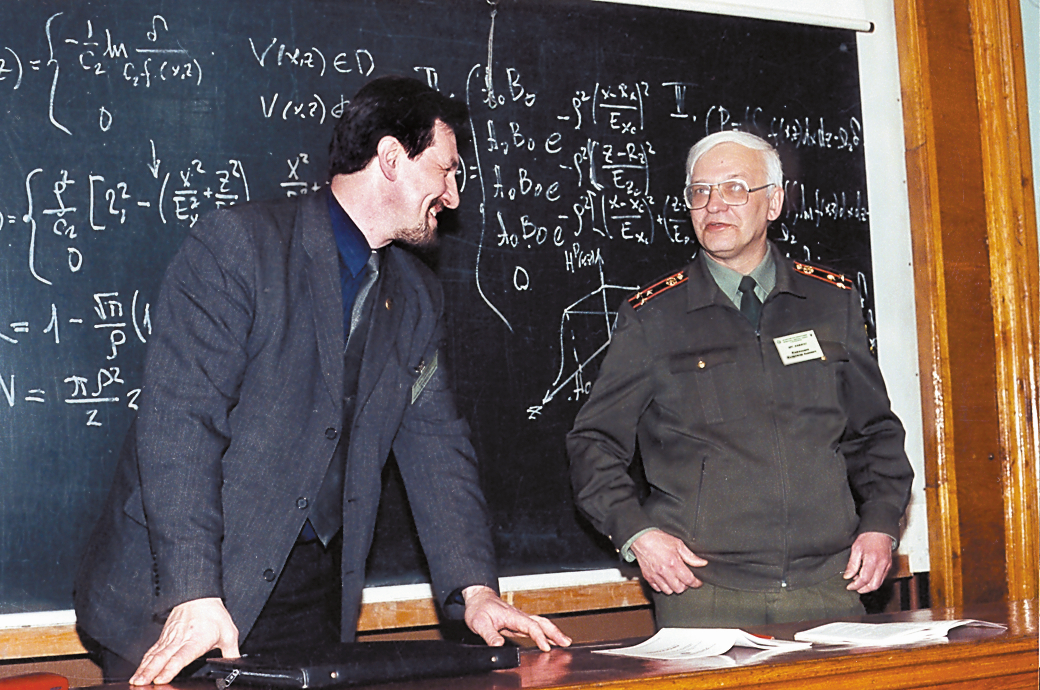
The V All-Russian Scientific and Practical Conference “Current Problems of Defense and Security” was held in St. Petersburg. Its organizers, as before, were the Russian Academy of Rocket and Artillery Sciences and NPO Spetsmaterialov. Within the hospitable walls of the Naval Academy named after. N.G. Kuznetsov brought together more than 800 scientists and specialists from defense industries, enterprises developing weapons, special equipment and protective equipment, as well as those who use weapons, military and special equipment in everyday service and combat activities.
356 reports and messages from 567 authors from 125 organizations and institutions of the Ministry of Defense, Ministry of Internal Affairs, FSB, FSO and other law enforcement ministries (departments), as well as higher military and civilian educational institutions, research organizations and industrial enterprises of the Russian military-industrial complex were presented at the plenary and sectional sessions.
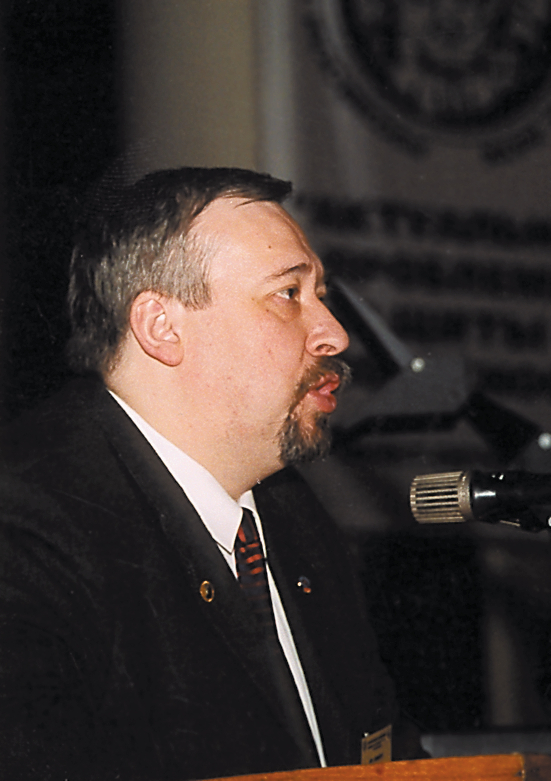
The atmosphere of the conference was undoubtedly influenced by its serial number: many participants and guests were meeting for the fifth time.
– Five years is a very short period of time, but during this time our scientific and practical conference has become a kind of discussion platform for everyone,
who, through their work, strengthens the defense capability and law and order of Russia, who is concerned about the problems of equipping law enforcement agencies with modern weapons and means of defense, emphasized in a conversation with your correspondent Deputy Chairman of the Organizing Committee M.V. Silnikov. – There is not and cannot be departmental disunity here: scientists, specialists and practitioners conduct conversations and discuss the most pressing problems in a simple language that is understandable to everyone.
Indeed, the reports and speeches reflected almost all the factors that make up such comprehensive categories as the national security of Russia and the protection of the rights and legitimate interests of its citizens.
In the five years that have passed since the first conference, the understanding of these categories has been significantly enriched, they have been filled with new content, and have acquired an established scientific form. Today, the term “national security” describes diverse areas of activity of the state and society - from outer space to electronic communication systems.
In recent years, we have realized with particular clarity the truth of the statement that Russia has only two allies - its Army and Navy! But at the present time, this very pillar of statehood itself needs allies and protection.
In the recently approved Armament Program for the period from 2001 to 2010, the issues of financing the development and industrial production of the required amount of individual and collective defense equipment, weapons and military equipment (V and VT) have not been fully resolved. Meanwhile, this is the current situation. The optimal rate of equipment with new (last ten years) equipment is about 50%. In reality, for different positions, this figure in the troops ranges from 2% to 70%, tending more toward the lower limit. According to the forecast of Deputy General Director of the Russian Agency for Conventional Arms A.A. Pistunova, while maintaining the recent trend of an annual increase in state defense orders by 40 - 50%, the most intensive equipping of aircraft with new types of aircraft and military equipment will begin after 2005. This means that the wait will not be long, andHere's what to expect - the conversation is ahead.
AT THE FRONT...
Armored combat vehicles BMP-2 and BTR-80 are vulnerable to mines and anti-tank grenades. Building up defenses is not the answer. Creating fundamentally new cars is time-consuming and expensive. What remains? What remains is their modernization, which is what specialists from VNIItransmash and NPO Special Materials propose, since new high technologies make it possible to put long-standing ideas into practice.
Thus, to destroy the warheads of anti-tank grenades, lightweight (tubular) lattice screens are installed on the vehicle body; their weight is 3.5 times lighter than traditional steel gratings. Attachable elements of composite armor protect against large-caliber armor-piercing bullets and fragments of high-explosive shells. Inside the vehicle there are anti-fragmentation screens and linings made of high-strength woven materials, which will withstand the fragmentation flow in the event of penetration of the armor. The bottom in the area where the crew and troops are stationed must withstand a mine explosion due to overhead sheets and support platforms, and the crew’s lethality can be reduced due to shock-absorbing mats underfoot. Particular attention to the fuel compartment, isolated from the habitable compartments; tanks in fire and explosion-proof design; emulsified fuel, whichdoes not ignite in case of combat defeats. And finally, the installation of optical-electronic countermeasures
will increase the survivability and protection of crews by 1.3 - 1.6 times, and reduce irretrievable losses by 1.5 times. Here is a clear example of the implementation of an integrated systems approach.
Life itself turns scientific thought in the right direction - to where the most blood flows. The alarming coordinate system gives the exact location - Chechnya, where 30% of our total losses are caused by radio land mines, where every day 5 - 7 people are injured by mines. Head of the 15th Central Research Institute named after D.M. Karbyshev of the RF Ministry of Defense, Major General A.M. Averchenko painted the following picture: 83% of the explosive devices dotting the fields of Chechnya are landmines, 14% of them are homemade, 60% are activated by radio.
This territory of death is “tested” every day by mine engineers, going out to dangerous work without any special aids, all equipment is a mine detector and bare hands. And we need to examine huge areas, which may again be littered with traps next night. How long can this continue? The question of creating a mine clearance vehicle on a wheeled base has long been overdue. Now the main elements of such a machine have already been tested, and soon it will appear in its final form.
We started with choosing the chassis. Of the entire abundance of the domestic car fleet, the Ural turned out to have the most explosion-resistant chassis. The structure was further strengthened, and then they began to equip it. First of all, search equipment was installed - mine and bomb detectors; then - demining kits. The main working element was crane equipment and a manipulator with a hook and gripper (developed by Uralmash), with the help of which dangerous cargo is removed from the soil, loaded into a container and localized using the Fontan explosion suppression device (NPO Special Materials). If explosive devices are set to non-removable (as at the Severny airfield in Grozny, where mines were rammed into the runway), they are also covered with Fontan and exploded on the spot. This is how the kilometers go bythe highway along which our convoys follow. And the sapper sits in the cockpit safe and sound.
Problems of personnel protection were discussed at all past conferences, starting with the first. And to the General Director of NPO Special Materials M.V. Silnikov was not very pleased to cite from a high rostrum the data of military doctors that 98% of wounded soldiers did not have body armor. Scientists are working on the designs of new body armor - they are already used to swim, dive, and fly in the air. There's only one problem left - don't forget to put it on!
...AND IN THE REAR
However, where is the rear now, when it is known that a house can be blown up, a plane can be turned into an incendiary projectile, a letter into a bacteriological weapon, an ordinary e-mail into a bomb for a computer network, even from your own shadow you can expect an attack?
Any state tries to predict where terrorists and saboteurs are most likely to attack. Obviously, these should be such centers, the decommissioning of which would either destroy the administrative and political system of the country, or cause irreparable harm to the environment (nuclear power plants, enterprises of the chemical, mining, processing industries, energy and transport), or paralyze communications and telecommunications, or cause damage to the country’s defense capability.
Analysis of existing access control systems and organization of resistance to attacks on particularly important objects shows that with the existing
access mode, almost any of them can be successfully attacked by terrorists, for whom the guards at the entrance or along the perimeter are simply slow-moving targets.
We must not forget that in addition to the internal threat, there remains an external one: the bombing of peaceful targets by NATO aircraft in Yugoslavia and the Middle East is a threatening warning to this. Research conducted by scientists from the 2nd Central Research Institute of the Ministry of Defense showed that it is impossible and prohibitively expensive to provide reliable protection against high-precision weapons only by engineering strengthening of buildings. Nevertheless, one must be prepared for attacks in advance. And this means carrying out camouflage, simulating the vital activity of objects in order to mislead enemy intelligence. Counteract the guidance systems of high-precision weapons through electronic, functional, and force suppression.
Directly cover objects with means of active dynamic protection - hit projectiles on the flight path. In general terms, this all seems convincing. However, to develop real projects for the comprehensive protection of especially important objects, long work by teams of specialists from various fields of science and sufficient funding are required.
No less a tangle of problems and contradictions exists in the field of information security of communication systems. Speakers from the Military University of Communications consider the priority areas in this area to be preventing the interception of information from premises and objects, unauthorized access to stored or processed information, as well as its leakage through technical channels, identifying electronic interception devices installed on objects, countering special software and hardware attacks, etc. All this has yet to be created, although it is clear in advance that virtual attackers will find a new way around each countermeasure.
It turns out that you need to be ready for defense no less than for work. But the very nature of it must change in the near future - even in the case of street brawls, mass fights and riots, when the intervention of law enforcement forces is required. Already now, military weapons are being replaced by new ones - non-lethal ones. It is based on a variety of physical and chemical principles: laser, electromagnetic radiation, the use of electric current, etc. But the essence of the impact is the same - to temporarily disable the offender without causing real harm to his health.
IN SCIENTIFIC LABORATORIES
After the key problems and ways to solve them were identified in the reports at the plenary session, the conference participants began working in sections. The topic of these hearings has already become established over the past years. These are “Combat equipment and personal protective equipment, materials, tests”, “Weapons, including non-lethal action, systems for detection, guidance, communications, navigation and control of units”, “Fighting terrorism, detection and neutralization of explosives and radioactive substances, weapons. Legal issues”, “Safety of particularly important facilities, nuclear centers, credit and financial institutions”, “Medical and biological problems and new medical technologies”. Although, as the discussion at the final meeting showed, these topics sometimes come into such close contact that it is impossible to separate themalmost impossible. Thus, it is useless to talk about fire wounds without considering the features of modern weapons, as well as to try
The materials science component of the work takes one of the first places in importance. However, it is alarming that the capabilities of the domestic industry for the production of raw materials for personal protective equipment are far from being exhausted, while NIB manufacturers purchase imported materials. All this leads to underutilization of Russian industry and higher prices for final products. At the conference, there was even a proposal to submit a petition to the Federal Agency for Conventional Weapons in order to coordinate the actions of law enforcement agencies on the preferential purchase of products from domestic manufacturers. The electronic component of the stated topics was also not widely represented, although the future lies precisely in this direction.
Perhaps two things are characteristic of this fifth conference. The proportion of completed work increased significantly when products were brought to the stage of prototypes or batches. The participants received special approval from the works of specialists in fundamental sciences, which substantiated the laws of one or another phenomenon underlying the invention, provided a method for mathematical assessment of the quality of homogeneous products, and system analysis in the design of weapons or equipment.
We also remembered the recommendations of the last, fourth conference. There were two of them. Take an initiative on the need to create a Unified Anti-Terrorism Center, which was carried out within the CIS. And organize a scientific and practical seminar on the topic “Methods and means of protection against explosions,” which took place in January of this year in St. Petersburg with a wide representation of Russian and foreign scientists.
In a separate line, it is necessary to mention the symposium “The Navy and its weapons in solving problems of protecting the national interests and security of Russia” that took place within the framework of the conference. Symposium participants expressed deep concern about Russia's lagging behind in the creation and development of such weapons systems and military equipment as lightweight automatic artillery mounts; ultra-small torpedoes and missile-torpedoes; miniaturization of components for V and VT; target designation for the use of high-precision naval weapons. The symposium's proposals concerned the reform of the military education system, the unification of naval weapons, and the transformation of the command system of submarine and surface forces of the Navy.
This was a very schematically outlined range of topics and issues discussed at the conference. Its regular participants have already been cemented not only by friendly, but also by creative working ties. It happened that entire directions grew out of disparate scientific works, which were then transferred to the technical support sections of government security programs. The path into depth, the thoroughness of the approach demonstrate the degree of responsibility that these people are ready to take upon themselves, selflessly and unselfishly serving their Fatherland, each of whom lives by the principle: “If not me, then who?!”