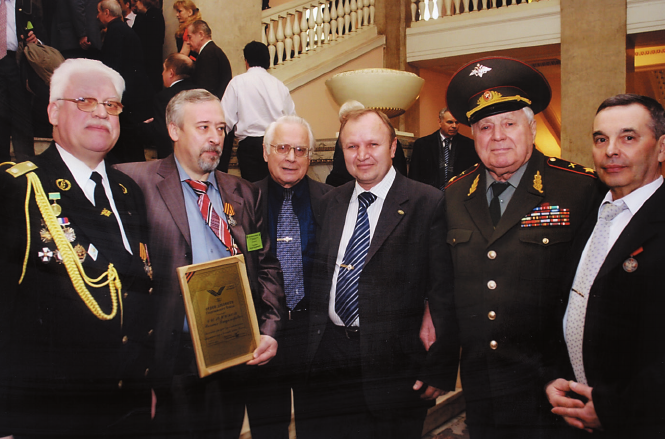
XI APZB Conference
OUR ARMOR IS STRONG!
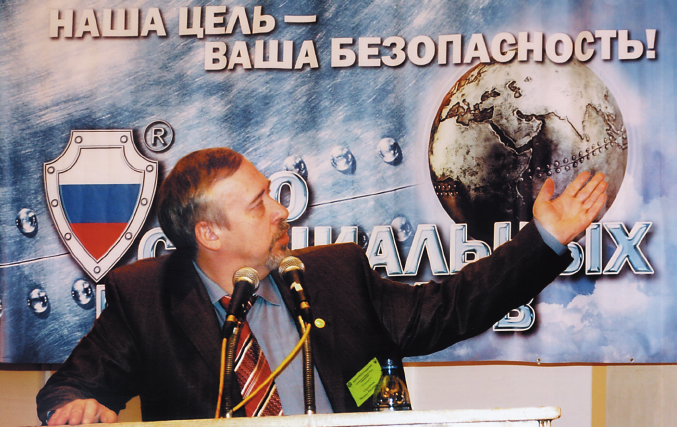
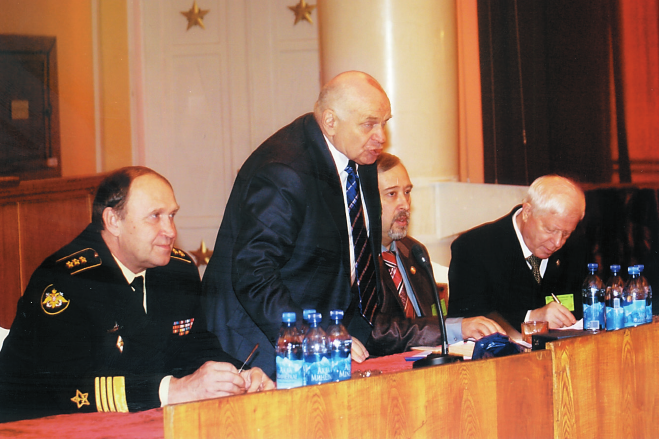
Within the walls of the famous Naval Academy named after. Admiral of the Fleet of the Soviet Union N.G. Kuznetsova hosted the next, XI All-Russian Scientific and Practical Conference “Current Problems of Defense and Security”, which brought together over seven hundred scientists, designers and specialists from enterprises of the military-industrial complex, as well as military leaders and senior officers of the Armed Forces, the Ministry of Emergency Situations, the Ministry of Internal Affairs, the Federal Security Service and other law enforcement ministries (departments).
Like several previous conferences, the current one began with a broad and heated discussion of the current military-political situation, as well as the military situation in the immediate vicinity of Russia’s borders and in those regions where our country has legitimate economic or political interests.
In particular, it was noted that the deployment of a third missile defense site launched by the United States in Poland and the Czech Republic, the ongoing expansion of NATO, including the plans announced in Bucharest to involve Ukraine and Georgia in the North Atlantic bloc, pose new and unprecedentedly difficult tasks for our country in the field of ensuring national security. The need to solve these problems places special demands on all components of the state's military organization.
Enterprises of the military-industrial complex are required to sharply accelerate the pace of development of new types of weapons and military equipment, reduce the time required to master their mass production, and increase the level of equipment of troops with modern, non-traditional means of warfare. Equipping the army and navy with modern types of weapons and military equipment forces us to accelerate the retraining and methods of combat training of personnel, to introduce effective and reliable forms of operational control of units, units and formations of troops and other military formations, to look for and find ways of their combat coordination that are adequate both to the tactics of modern combat and to the characteristics of potential theaters of military operations where Russia’s military power can be applied or demonstrated.
The most important, if not decisive, role in the multifaceted work to ensure the military security of the Russian Federation and protect its legitimate interests belongs to defense science and the military-industrial complex in
in general. The future of Russia, as one of the leading subjects of modern geopolitics, ultimately depends on the clarity and coordination in the functioning of all links of this complex organism. This thesis became a kind of Ariadne’s thread in the work of the Eleventh All-Russian Scientific and Practical Conference “Current Problems of Defense and Security.”
Opening the plenary session of the conference, the President of the Russian Academy of Missile and Artillery Sciences, Vitaly Valeryanovich Panov, reminded those present about the history of the All-Russian conferences “Current Problems of Defense and Security”.
If the purpose of the first conferences was mainly the issues of survival and preserving the potential of the military-industrial complex, and in the future - the development and strengthening of the defense industry, now the agenda includes issues related to the need to move to a qualitatively new level. This requires accurate forecast estimates. First of all, we need forecasts of changes in the geopolitical and strategic position of Russia in the modern world, assessments of the dynamics of the development of science and technology, taking into account the restrictions imposed by the economy. In order for forecasts to be accurate and reliable, it is necessary to carefully analyze the threats facing Russia or looming in the future. And the form and nature of these threats are constantly changing.
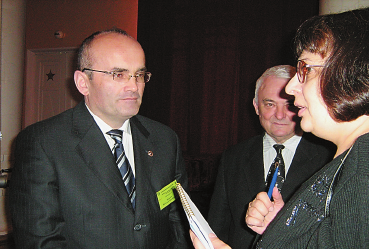
The mood of military and political circles in the West changes quickly and is sometimes difficult to predict. Thus, now many Western “strategists” are inclined to define the role of Russia as a buffer between the West and China. Then, according to their logic, the need for preemptive military strikes directly on Russian territory will fade into the background. However, they retain their intentions to bring under their control the natural resources of our country - primarily energy, and in the near future - water and biological resources.
To the traditional environments, in relation to which various aspects of ensuring the security of the state are considered - land, water, sky and space, new ones have been added - virtual space and means of mass communications. Dominance in these areas actually provides a significant advantage in any military confrontation, since its outcome largely depends on the results of psychological operations and special information activities that target the troops and civilian population of the enemy country.
Based on the definition of these threats, it is necessary to formulate in a new way the requirements for the weapons and military equipment systems being created, for the means of psychological and information warfare. The conference has always paid close attention to their development, as evidenced by more than 60 volumes of papers published. Earlier than others, conference participants started talking about non-traditional means of influence; specified the content of what an asymmetric response is, highlighting its military and non-military components. It is far from accidental, noted V.V. Panov that both military and civilian specialists have always taken part in the conference, working together on security problems.
The head of the 46th Central Research Institute of the Ministry of Defense of the Russian Federation, Vasily Mikhailovich Burenok, spoke in his report about the need to combine forceful and non-forceful deterrence measures. This institute, in particular, is entrusted with the development of program documents that determine the strategic directions for the development of the Russian Armed Forces. The main idea of the speech by V.M. Burenko can be reduced to the statement: the policy of containing a possible aggressor should be more active and offensive. It is necessary to influence public opinion more widely in NATO countries. Mechanisms can be very diverse – from diplomatic and political actions to forceful intimidation. We should not keep the development of new powerful weapons a secret, but constantly demonstrate them, of course, without revealing the technologies used, and also demonstrate the determination to use them. Generally speaking, deterrence through deterrence must be recognized as one of thethe most effective methods of protection in the modern world. In the event of extreme tension, when war is about to break out, it is permissible to launch a preventive strike on the most significant enemy targets, the destruction of which will not entail mass casualties. We are talking, for example, about power plants or television towers - that is, objects whose destruction would exceed the threshold of unacceptability for the aggressor.
The speaker named one of the priority tasks of RARAN as the creation of a unified information space for all law enforcement agencies, allowing interaction in real time. So far, each of the law enforcement agencies has been working separately on creating their own automated systems.
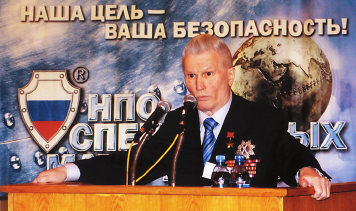
Traditional for conferences, the speech at the plenary session by the General Director of NPO Spetsmaterialov M.V. Silnikov was devoted to innovative developments of enterprises of the military-industrial complex and their promotion to the international market.
Thus, in the UK, India, and Australia, the latest modifications of the Fontan anti-explosion container were successfully tested. In it, the developers managed to solve the main problem for this class of protective equipment: what happens if the power of the explosive device turns out to be higher than that for which the container is designed. If it is made of hard material, then its fragments will turn into an additional damaging factor. In "Fontana" it was possible
circumvent this danger. A gas-liquid filler, a dispersant that fills the space inside the container, extinguishes all explosion factors: thermal, fragmentation, shock wave, etc. Moreover, it was so successful that even in aircraft for which a special modification of the “Fontana” was developed, the aircraft did not lose its airworthiness as a result of the explosion.
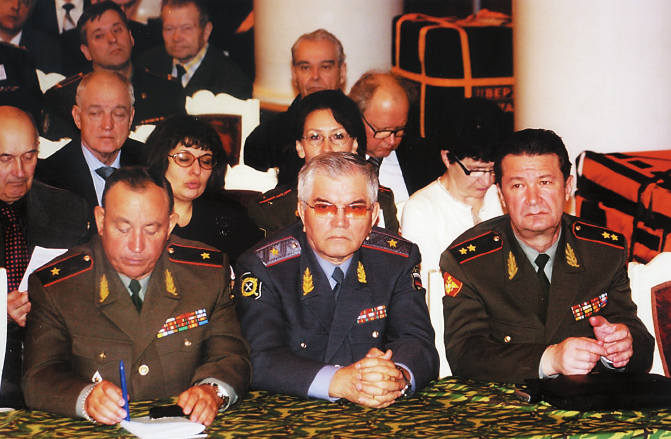
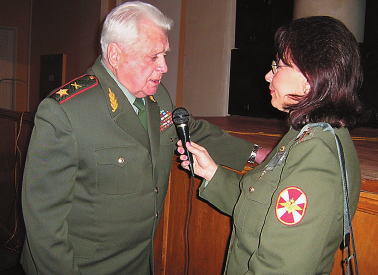
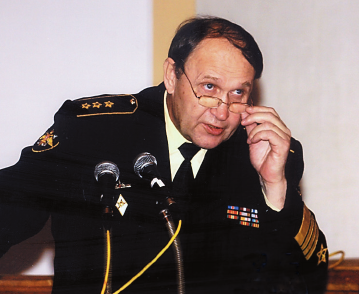
At the plenary sessions of the conference, reports are always presented that are conceptual in nature and determine the development of the entire military sector. This was the speech of the chairman of the section on naval activities under the Government of the Russian Federation, Rear Admiral A.P. Rudometkin on the topic “Naval activities in the system of protecting national interests and ensuring the military security of the state.” The main provisions of this report cannot be called optimistic.
The Navy, designed primarily to resolve issues of ensuring the sovereignty of the state, in the context of the increasing military presence of NATO naval forces in close proximity to the borders of Russia, faces a real threat that it will not be able to realize its mission. The main reason for this situation is the unacceptably low level of funding for the Navy over the past 15 years and planned for the future. Thus, during the period from 2001 to 2006, one third less money was spent on the construction of the fleet than expected. In other words, during this time the fleet received less than one annual budget! “As a result, we don’t have time to create new things, but we lose the old ones. In terms of quantitative characteristics, the combat strength of the general naval forces of the Navy has come very close to the minimum required to solve the assigned tasks,” bitterly
the speaker noted.
In particular, there is practically no reconnaissance naval aviation in the fleets, and naval missile-carrying aviation is in danger of disappearing. Due to the impossibility of flying, the level of training of flight personnel is falling. Scientific projects are stalled. In the creation of new naval weapons, we have not yet reached the stage of putting them into service. Meanwhile, in terms of their qualitative characteristics, the types of weapons and military equipment in the Navy, with the exception of individual models, are already significantly inferior to their analogues in service with the leading naval powers.
There is still no long-term shipbuilding program. Due to lack of funds, complex ships in the ocean zone, which still have a sufficient service life, are not repaired. Ships and boats in the near sea zone are being withdrawn from the Navy. Supplies of naval weapons are running low. An even more difficult situation occurs in the auxiliary fleet of the Navy, where the supply of ship repairs on average is about 10% of the need. The situation in the maritime coast guard forces of the border agencies of the FSB of Russia is no less alarming, where the rate of decommissioning of ships and boats significantly exceeds the rate of construction of new ones.
Among the positive aspects, the speaker noted that so far it has been possible to maintain the ability of the naval component of the strategic nuclear forces (NSNF) to solve the combat missions assigned to them, which is confirmed by the results of training launches of sea-based ballistic missiles. Currently, plans are being implemented for the construction of strategic missile submarines of new projects, which should become the main combat core of the Russian Navy's strategic nuclear forces after 2018.
The production of key elements of marine equipment and weapons has been transferred almost completely to the domestic scientific and industrial base. Measures have been developed to maintain the technical readiness of ships, other carriers and equipment of the Navy, and the composition of the permanent readiness forces of the Navy's naval personnel has been increased. The number of ships on combat service in various areas of the World Ocean has been significantly increased. In particular, it can be assumed that favorable conditions have been created in the Black Sea-Mediterranean basin for the military protection of Russia’s economic interests. In the Baltic Sea, it is necessary to ensure the protection of the facilities of the North European Gas Pipeline and the Baltic Pipeline System. Deposits of hydrocarbon raw materials, as well as biological resources in the areas of the Northern Sea Route and the Far East require special naval cover.
There is still no proper order in information support for the safety of maritime activities; the system of navigation and hydrographic equipment is in a critical state. The system for searching and rescuing people at sea needs significant improvement, for which it is necessary to resolve the issues of monitoring maritime activities within the framework of a unified state system.
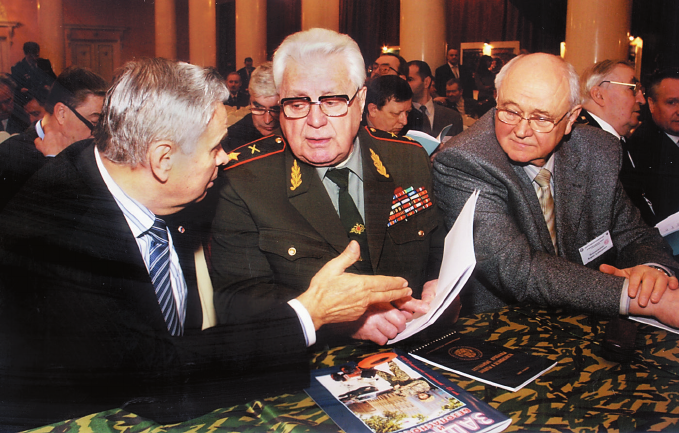
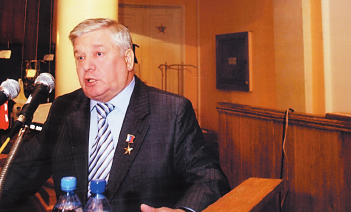
The relevance of this issue was illustrated by the report of Doctor of Military Sciences, Honored Scientist of the Russian Federation V.I. Potapov (N.G. Kuznetsov Navy), dedicated to the protection of our natural resources in the Arctic. Today,
In the context of a sharp rise in prices and shortages of hydrocarbons and other resources, the interest of states and transnational companies in their production on the sea shelf has sharply increased. In this regard, some countries (for example, Denmark, Canada) dispute Russia’s right to expand the far shelf zone along its northern borders.
There are even attempts being made to revise the status of sea routes in the North-West from Russian to international. Therefore, in the near future we may be faced with the need to protect our marine wealth. But with what? Nuclear weapons have ceased to be a priority, since they are in service with many countries, and their use will inevitably lead to a global catastrophe. Currently, new high-precision weapons have come to the fore, which so far only the armies of highly developed countries possess. Can we justify ourselves by saying that we can’t afford it yet? Of course not! Russia has paid off its creditors, forgives debts to other countries, and has accumulated colossal gold and foreign exchange reserves. In addition, in our country the structure of state revenues has been turned upside down. It should be like this: 75% of income is rent from natural resources, 20% is capital, 5% is labor. With us: 70% is labor, 17–20% iscapital and only 10–13% - rent. Thus, companies engaged in the extraction of natural resources receive up to 60% of excess profits.
Meanwhile, it would be more far-sighted to now reduce oil and gas production on land, mothballing some fields, as has been done, for example, in the United States, and increase hydrocarbon production on the Arctic shelf, where, according to some estimates, up to one-quarter of the Earth’s oil reserves lie. We must be the first to “stake out” this zone by providing oil production complexes with reliable security and combat systems, which must be installed simultaneously with the design and construction of the complex itself. This should include lighting and location systems above and below water; defensive warning systems against weapons, in which unmanned aerial vehicles, anti-missile systems, non-lethal weapons, and underwater robotic vehicles should be used. The main thing is not to waste time.
One of the leading domestic experts in this field, Academician of the Russian Academy of Sciences V.V. Selivanov (Bauman MSTU), spoke at the conference about non-lethal weapons (NLW), which were proposed to be used in the protection of maritime complexes. The development of OND raises many biomedical and humanitarian problems, which are solved differently in different countries. The most difficult trade-off is between the effectiveness of this
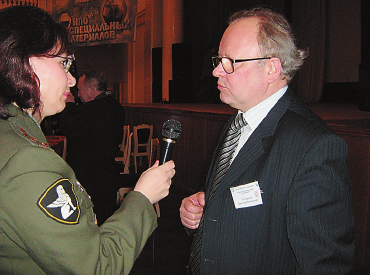
weapons and safety for human life.
In Great Britain from 1973 to 1994. 17 people died from the use of kinetic strikers (rubber bullets), after which, under pressure from public opinion, they were banned. However, after the development of a new type of strikers in 1994, not a single fatality was recorded. How did this affect efficiency? It is difficult to judge, first of all, because exposure thresholds are usually too high.
What does public opinion in Russia say about this? A special survey was conducted on the use of gas-fired explosive devices during the release of the Nord-Ost hostages. About 40% of respondents considered the 20% mortality threshold to be justified in this particular situation, and 36% considered the 50% threshold to be an acceptable figure.
The situation with acoustic weapons, which act either physically (by the power of sound) or psychologically (by choosing their sequence) remains uncertain - no standards have been developed in this area at all.
Electromagnetic microwave weapons should quickly heat the skin without penetrating into deeper tissues. The mechanism of its effect on vision and the human reproductive system requires additional research. It is difficult to choose a scenario for its application. It makes no sense to use such bulky equipment mounted on a truck against the military - it will simply be destroyed. To disperse peaceful demonstrations is also doubtful. There will be panic, a stampede, and casualties are very likely.
Laser blinding weapons are considered the most brutal among the OND. It is extremely difficult to find a power range in which only temporary blindness is achieved without further negative consequences - loss of vision, eye burns. One of the rare successes in this area is the “Potok” product, developed by NPO Spetsmaterialov.
So “humane” weapons do not at all guarantee one hundred percent safety for life and health. It is not for nothing that in the UK they call it not non-lethal, but “less lethal”.
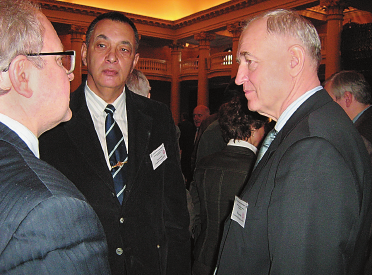
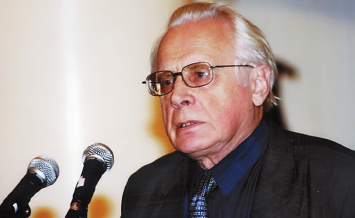
Of undoubted interest was the report of Doctor of Technical Sciences, Lieutenant General I. N. Torgun (FSUE Central Research Institute of Chemistry and Mechanics - TsNIIHM), dedicated to the use of nanotechnologies in the creation of energy-rich materials and
explosives. Their prospects are difficult to overestimate. Thus, aluminum hydride, developed back in the 80s in the USSR, when used as fuel for strategic missiles, increases engine power by 30%; this development still has no analogues in the world. By 2010, the High Technology Center at TsNIIHM will produce the first batches of nanopowders of boron, copper, iron, and aluminum. At the same time, detection systems are being developed that detect the presence of even ultra-small quantities of chemicals. Currently, developments have begun in the field of ensuring information security, which is especially important for organizing effective counteraction to intelligence agencies of foreign states, including when exporting, importing and selling products created using nanotechnology. To resolve these issues, a scientific and technical nanotechnology center has been created, leading information and analyticalwork with other domestic and foreign centers dealing with this issue.
TsNIIHM began intensive work in the field of training scientific personnel. One of the ways to solve this problem is to involve senior students in research work on a part-time basis. To ensure continuity in science, TsNIIHM operates a postgraduate course. Recent students who came to work have the opportunity to defend their candidate's dissertation by the age of 27, and their doctoral dissertation by the age of 35–40.
The baton in developing the topic of higher professional education was taken over by the head of the Mikhailovsky Artillery Academy of the Ministry of Defense, Lieutenant General V.A. Konstantinov. He gave a very impressive example. After World War II, the Americans conducted simulations of its battles, where absolutely all factors were taken into account. In 70–80% of cases, the results of simulated combat operations coincided with real ones. What was the cause of the deviation in the remaining 20–30% of cases? It turned out that the commanders were insufficiently professional!
Here's an example of the opposite. Our military researchers have already tried several times to simulate the Battle of Stalingrad. And every time it turned out that the Germans should have won. How can one measure what Soviet soldiers accomplished, the height of their spirit and the professionalism of their commanders?
The Mikhailovsky Academy raises the question of the possibility of managing the quality of professional training of officers. According to preliminary data, by training a specialist with above-standard knowledge, it is possible to increase the efficiency of artillery operations by 10% and reduce the consumption of shells by up to 30%.
Not all speeches made at the plenary session of the conference were reflected in this brief review. Some reports on the most interesting problems will be published in the upcoming issues of the journal “Protection and Security”, and the full work of the conference will be reflected in the Proceedings of the conference, published for the eleventh time and invariably attracting the close, interested attention of specialists.
The multifaceted themes of the conference were fully disclosed and detailed in the work of specialized symposia.
Scientists, industrial workers, military personnel, law enforcement officers and intelligence agencies expressed their professional and agreed opinions on topical issues of ensuring Russia’s security, protecting its interests in changing times and – what is there to hide! – not always a friendly world. There is no doubt that the Government and the President of Russia will listen to leading representatives of the military and defense-industrial community, and the fruitful scientific and technical ideas expressed during the meetings will be brought to life. And the sooner the better!