
XIII APZB Conference
WHEN DO WE START ARMING?
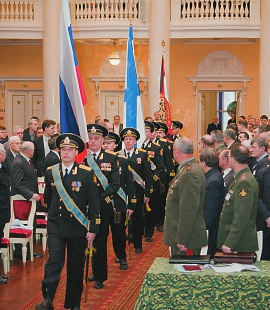
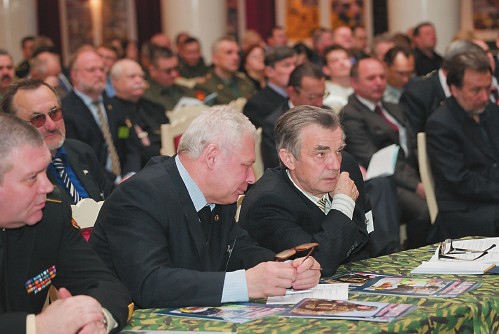
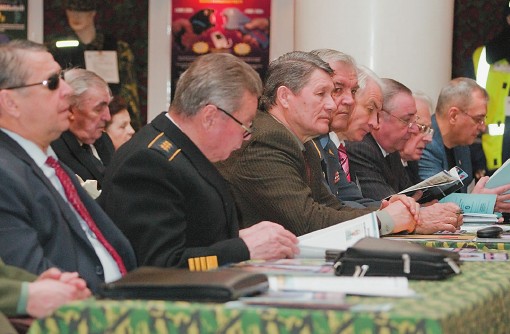
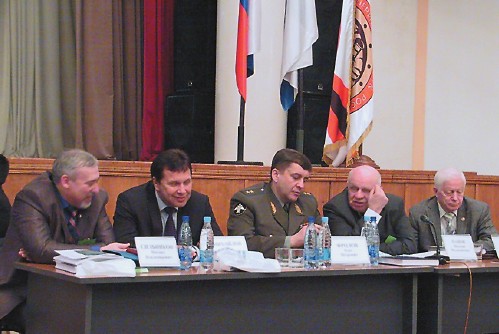
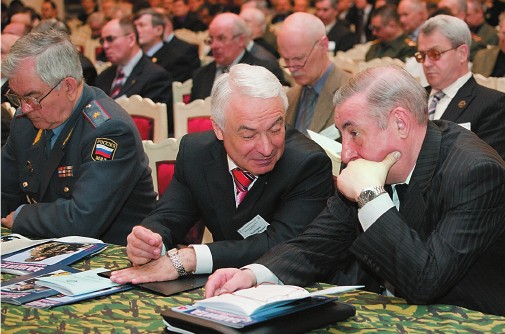
At the Naval Academy named after. Admiral of the Fleet of the Soviet Union N.G. Kuznetsova hosted the XIII All-Russian Scientific and Practical Conference “Current Problems of Protection and Security”, which brought together over seven hundred scientists,
designers and specialists from enterprises and research institutions of the military-industrial complex, as well as generals, admirals and senior officers of the Armed Forces, the Ministry of Internal Affairs, the Ministry of Emergency Situations and other law enforcement ministries (departments) of the Russian Federation.
The main topic of discussions and questions at the XIII All-Russian Scientific and Practical Conference “Current Problems of Defense and Security” was the adoption of the new State Armament Program for 2011–2020, which was delayed due to heated controversy around many significant issues - such as the choice of priority areas for the development of weapons and military equipment for state orders, the relationship between the customer, the Ministry of Defense, and the contractor - the military-industrial complex. They were the center of attention of the conference participants.
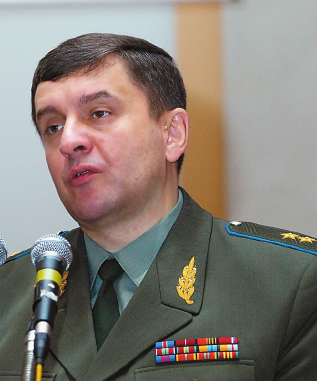
The plenary session was opened by the head of the Main Armament Directorate of the RF Armed Forces, corresponding member of the RARAN O.P. Frolov. He stated that the weapons system inherited from the USSR had finally exhausted itself. Since then, the nature of wars and armed conflicts has changed radically, and qualitatively new weapons based on new physical principles have appeared. The current Russian weapons program, adopted for the period from 2007 to 2015, does not sufficiently take these trends into account and, as usual, relies mainly on nuclear deterrent forces.
The new State Program for 2011–2020 is designed to correct these shortcomings, which fixed the need to update weapons, military and special equipment (military and special equipment): in 2015, new military and military equipment should account for 30%, and in 2020 – already 70%. Now the President of Russia and the Prime Minister are actively discussing measures to transition the Armed Forces to a new look, as well as the amount of funds allocated for this. The Ministry of Defense does not agree with the proposed amount of funding, which believes that it is impossible to replace weapons and military equipment by 70% by 2020 in such conditions. The final decision on this issue has been submitted to the Supreme Commander-in-Chief. He was offered several alternative options, developed jointly by the Ministry of Defense and the Military-Industrial Commission - and for the first time this was done according to rules pre-approved back in 2007. According to these rules, developmentThe concept of the State Armaments Program was preceded by preparatory stages of clarification and analysis of data. The concept has now been developed; 46 most important areas for the development of military and industrial equipment have been identified and approved, parent organizations have been identified for them, and 28 general designers have been appointed (the candidacies of the remaining 18 are still being discussed). For the examination, it is planned to create commissions with the involvement of general designers. But there are still many details that require clarification.
The baton from the first speaker was taken over by the Chairman of the Scientific and Technical Council of the Military-Industrial Commission, Yu.M. Mikhailov. He emphasized that the military-industrial complex has compiled a list of basic military technologies in Russia and abroad, as well as a forecast for the development of military and military equipment. This package of documents paved the way for the development of a systematic approach in drawing up the State Armament Program. For the first time in domestic practice, a structurally determining indicator related to the development of nanotechnologies appears there: out of 700 new technologies, their share is 10%.
Thus, there is an understanding of what we want to do, but there are a number of bottlenecks in answering the “how” question. In particular, the ability of our industry to increase production volumes of a number of
VVST by 3% in 2010, as planned. Problems arise with the licensed production of components on the basis of foreign companies, which, for the purposes of military-industrial security, should look for an alternative. The most difficult to fulfill seems to be the requirement to organize fundamental and applied research aimed at the rapid development of basic technologies. The creation of such a scientific and technical foundation under the auspices of the Academy of Sciences requires more than substantial government funding, which is not provided in the required amount.
Representative of the Government of St. Petersburg V.S. looked at the problems of industry from a different perspective. Sukhoruchenko, whose report was devoted to the problem of preventing man-made disasters. He noted that existing regulatory documents do not even have a definition of this concept. Only the National Security Strategy of the Russian Federation talks about technological security.
Meanwhile, the transition of industry to innovative development, changes in the contract system and the government procurement system have a downside. The desire to reduce the cost of products in any way leads to savings on precisely those things that ensure safety. The interaction of the once harmonious elements of the overall system is disrupted: worn-out equipment is not replaced; training in safety rules has been forgotten, which is why personnel errors have become more frequent and industrial injuries are on the rise; assistance is provided ineffectively in emergency situations. In other words, man-made disasters have social causes.
The scale of the disaster is indicated by the following fact: of all types of emergency situations that occurred in Russia in 2009, 64% were man-made disasters, the largest of which was the accident at the Sayano-Shushenskaya hydroelectric station. The danger from them increases especially in metropolitan cities, such as St. Petersburg. But thanks to the close attention of city authorities to this problem, St. Petersburg has become the safest city in Russia. If in 2006 55 emergency situations were recorded, then in 2009 - only 4. This became possible thanks to an integrated approach to ensuring the safety of the city, on which 28 commissions are working (among them a special emergency commission, an evacuation commission, etc.); rescue service, whose posts are concentrated near the ring road, in the water area, at particularly dangerous objects; medical disaster service. As a result of painstaking collection of information, aa database of more than a thousand potentially dangerous objects, including forecast and assessment of possible risks; A warning system has been created in hazardous areas and adjacent areas. An analysis of man-made disasters that have occurred over the past years has shown that in most cases they could have been completely avoided or the damage could have been minimized.
The protection of technologically dangerous and other particularly important facilities, as well as all types of transport, is inseparable from the problem of countering terrorism, and if, remembering Yugoslavia, we assume the darkest scenario, then also from the possibility of fire damage. A technical solution to the problem of ensuring the safety of lightly armored vehicles from portable weapons was proposed by the General Director of NPO Special Materials M.V. Silnikov. The new development of the association - a plasma-dynamic throwing device (experimental samples of it have already been manufactured) - is based on the principle of active protection. Refusal to use traditional ammunition, which can ignite the defended object itself, opens up wide opportunities for the use of a new product in the protection of cargo trains with spent nuclear fuel, mobile missile systems and other types of special transporttechnology.
“In what ways should military affairs develop?” – Professor of the Mikhailovsky Military Artillery Academy A.I. posed the question in his speech. Stepanov. By relying exclusively on novelty - aerospace systems, weapons based on new physical principles, information warfare - are we not leaving traditional types of weapons and military equipment in desolation and what can this lead to?
The military conflicts of recent years prove that the importance of ground forces is not decreasing at all. Even if the enemy intends to fight without contact, the outcome of the armed struggle will still depend on the effectiveness of fire and air confrontation. At the same time, artillery accounts for 75–80% of the fire strike tasks performed. It is artillery, which can operate around the clock and in all weathers, that can decisively change the situation on the battlefield. The world already knew examples when its selective targeted strikes on state and military control facilities, as well as on centers that ensure the livelihoods of the population, led to a change of leadership or capitulation of the opposing side. One shell fired at the right time and in the right place can be more effective than a platoon of soldiers.
Meanwhile, what is happening now? Common problems of all aircraft lead to a clash between their parts. As a result of the latest reorganizations, the combat strength of the missile forces and artillery of operational-strategic and operational formations has been reduced by 1.5 times, and their capabilities have been reduced by 30–40%. But, according to common sense, the equipping of new types of weapons and military equipment and their financing should be directly proportional to the share contribution of the armed forces in solving combined arms tasks. Lagging behind Western countries in the development of artillery can have fatal consequences.
There is also a subjective reason delaying the development of artillery: our military science is still dominated by the views on methods of conducting combat operations that developed during the Great Patriotic War, while the practice of recent decades shows something completely different. Only the production and mass introduction into troops of artillery reconnaissance equipment, automatic control systems, and high-precision weapons, in combination with comprehensive theoretical research on their combat use in new conditions, meet urgent needs.
In unison with A.I. G.A. Parshin, a representative of the Scientific Research Center for Military and Aviation of the North of the Russian Federation, spoke to Stepanov, who confirmed that our issues of using high-precision weapons have not been resolved even in theory. Meanwhile, the world has already developed the third
generation of precision weapons. If at the first stage it used guided ammunition with semi-active guidance, in the second generation - homing mines and projectiles with cluster munitions capable of hitting moving tanks, now ammunition has already been developed that can adjust its trajectory with the help of space-based guidance: due to the large elevation angle, their flight range has doubled - and this projectile has a gliding one. It is clear that such smart projectiles are expensive; they are used individually for firing from closed firing positions at particularly important enemy targets. And they cannot replace conventional ammunition used to suppress, disorganize, detect, and exhaust enemy personnel. Suppressing a target does not mean completely destroying it. It is enough to temporarily deprive it of combat effectiveness, cause damage in that part due towhich causes the entire facility to fail.
The speech of the head of VNIITransmash OJSC V.V. sounded sad. Stepanova. Paying tribute to our T90A and T90A1 tanks, which are not inferior to foreign ones in their main characteristics, he emphasized that this balance has already been shaken. Indicators such as maintainability, condition of engines and transmissions, thermal imaging equipment, and the penetrating power of armor-piercing shells are higher in NATO tanks. And our backlog will only grow, because with funding falling by 2–2.5 times (out of 49 planned R&D projects, only a third received funding), it is impossible to ensure a scientific and technical basis for the future. And we are talking only about the latest developments, of which there are only a few in the army.
But if we somehow preserved tank building, then the top secret development of the 70-80s - ekranoplan ships - was ruined in the bud, said V.V., a speaker from OJSC NPP Radar mms. Trushenkov.
This ship-plane, which develops a speed of 500–550 km/h in the air and is capable of flying at extremely low altitudes and running on a cushion of air on water, was developed by the outstanding designer Robert Evgenievich Alekseev. Landing and rocket-propelled ekranoplanes were created and put into service. How elusive, ubiquitous and invulnerable this technical means is can be judged by the following fact: in 1993, at a meeting of the US Congress, the issue of the state of ekranoplan construction in Russia was discussed. It was recognized that our progress in this area threatened US national security. Further events developed as follows: on the crest of our friendship with the United States, they decided to create a joint rescue program involving ekranoplanes. Americans frequented Nizhny Novgorod, where ship-planes were being built. Soon in the USA they created their own ekranoplane "Pelican", and in our country their construction was curtailed asunpromising and the program was closed. And yet, wherever they try to make their own ekranoplan - in the USA, Germany or China - these works always come to a dead end, because only we have a complete package of design technical documentation, which contains a lot of “know-how” - the result of many years of creative work of talented scientists and designers.
Few would argue that the severity of military confrontation in the 21st century has shifted, first of all, to the area of space assets, since it is they, at the current level of technological development, that become the basis for combat control. Reconnaissance, navigation, meteorological support, communication systems - everything now goes through satellites. It is gratifying that we are trying to pay due attention to the space forces. This was evident from the message of the representative of the Federal State Unitary Enterprise KB Arsenal named after. M.I. Frunze" by Lieutenant General A.P. Kovaleva. Here is one of the latest facts: on November 20, 2009, a space-based rocket was launched from the Plesetsk cosmodrome, which launched a new electronic reconnaissance device into orbit*.
The topic of combat control at the conference was continued by RARAN advisor V.P. Tsukanov. He recalled that in the new Military Doctrine of the Russian Federation, the priority areas are the improvement of the information support system of the Armed Forces and issues of interspecific interaction. To do this, it is necessary to develop systems and means of controlling troops vertically and horizontally, at all levels, down to the individual soldier, in real time, as well as to ensure proper protection of all control systems and communication lines. And to begin with, in order to build a unified combat space, monitor the available funds. In the 3rd millennium, the principle of “Connect and fight” becomes the basis for combat control.
Overall, the conference showed that the time for long debates is over. It is unknown what we have less of – time or money. It is necessary to quickly, professionally and carefully make financial investments in those areas from which you can get the maximum and fastest effect.