
XIX APZB Conference
WE SHOOT POWERFUL. BUT OFTEN PASSED BY.
Our army is not yet ready for a full-scale war.
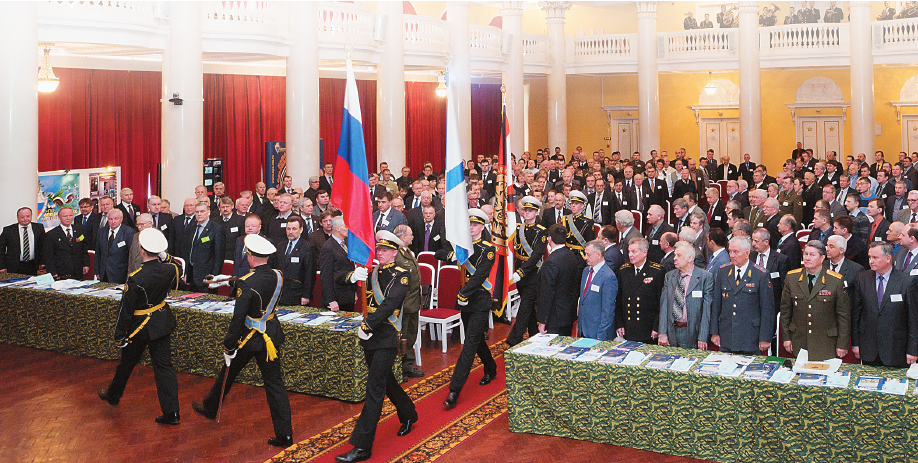
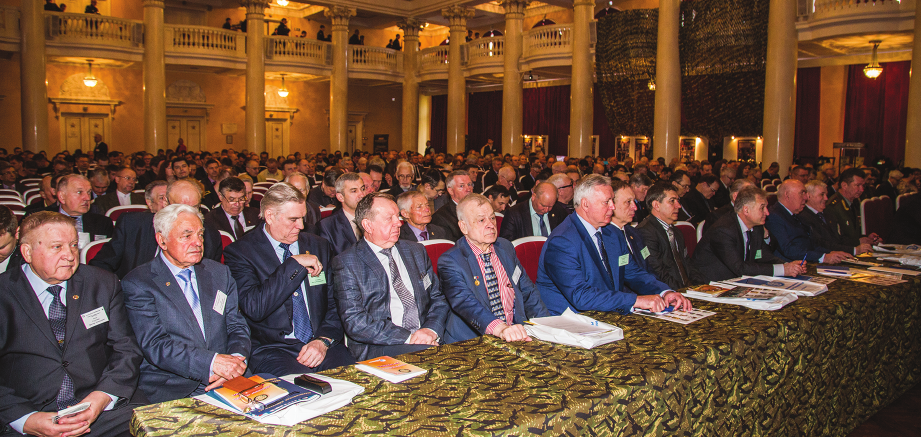
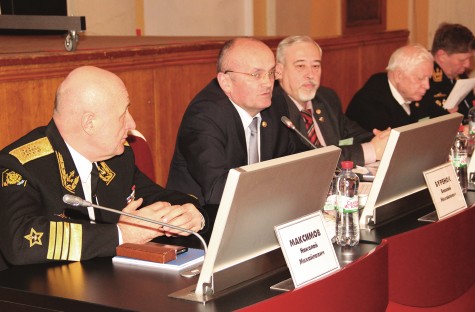
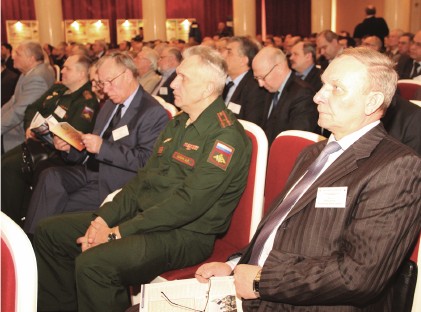
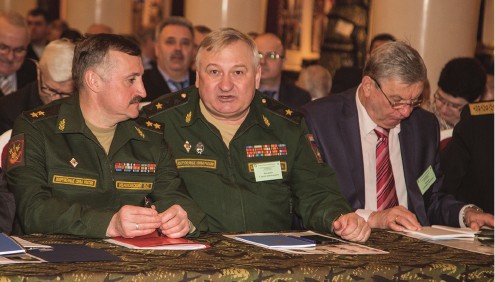
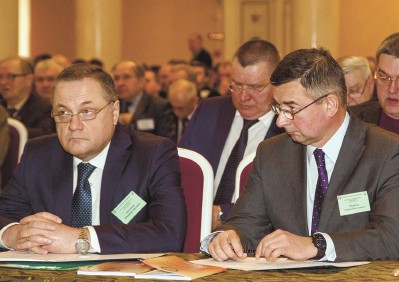
The Russian Academy of Missile and Artillery Sciences was held within the walls of the Naval Academy named after. Admiral of the USSR Fleet N.G. Kuznetsov annual XIX All-Russian scientific and practical conference “Current problems of protection and security”
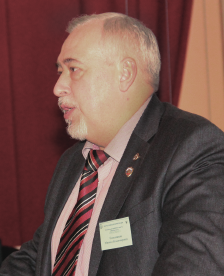
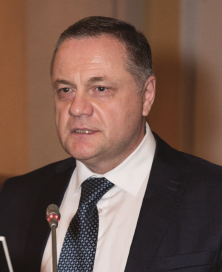
This year, the main theme of the conference was ensuring the military security of the state in the context of a sharply aggravated geopolitical situation. This left an imprint on the discussion of issues related to military development, the development of branches and branches of the military, the work of the military-industrial complex and those departments of science that are directly or indirectly aimed at the interests of the Armed Forces. The above also applies to the discussion, traditional for conferences of the last decade, of the tasks of recreating military and civilian infrastructure in the Northern strategic direction - in the Arctic. This was the subject of two key reports presented at the plenary session. They were addressed by State Secretary - Deputy Minister of the Ministry of Emergency Situations of Russia V.S. Artamonov and the head of the VUNTS Navy “Naval Academy named after. N.G. Kuznetsov" Admiral N.M. Maksimov, as well as the authors of a number of reports presented at the meetingssections.
This year, the discussion of the rapidly growing military-political tension along Russia’s borders in all strategic directions, which took place, as our diplomats say, on the sidelines of the conference, became unusually lively and acute. Discussions on its sidelines were not limited by protocol. Things and events were called by their proper names, and forecasts were formulated in a language very far from Aesopian. The authors of the proposed material carefully listened to the opinions of the participants and guests of the conference and, to the best of their talent, tried to summarize what they heard.
Today we are not at the parade
Over the past year or two, almost all we hear about our army are reports of victories and successes, often sounding with fanfare and drumbeats. But the place of trumpets and kettledrums has long been determined in ceremonial marches. Military service certainly needs them. But not often. And the thunder of brass bands is not at all conducive to thoughtful creative work.
We're not at the parade today. The state's military organization, including its armed component, is stretched to the limit of its capabilities. The country is embroiled in two regional wars of low intensity, a fuse is smoldering in the South Caucasus, threatening to blow up the world in the immediate vicinity of the Russian borders, in the zone of vital economic and military-political interests of our state, and irrepressible warmongers are trying to provoke another armed conflict - in the Central Asian republics. At the same time, there are loud disputes about the deployment of NATO troops (forces) in the Baltic countries. The disputes are not related to the question of “to post or not to post.” Not about this, which was decided long ago!
Thus, a trio of cosmopolitans, consisting of an employee of the Atlantic Council of the United States, Jan Brzezinski, the Ambassador of Slovakia to NATO, Tomasz Valasek, and the director of the Foundation for Strategic Studies (Paris), Camille Grand, recently blessed the planet with discussions about what the strengthening of NATO in the East should look like*. Its goal should be to deter, and if necessary protect, from external aggression. It is curious that the authors managed to leave neither the countries to be protected nor the aggressor states named. Strategists and political scientists in civilian clothes believe that the new groupings of forces (means) being created in Central and Eastern Europe should be more powerful and more combat-ready than they are now. These sages, imagining themselves as Atlanteans with Europe on their shoulders, busily talk about purely tactical issues: the number, composition and order of rotation of units and subunits. It is especially emphasized that limited militarythe contingent must certainly be multinational. They say that only then will an attack on the defended country really affect all allies - something like a mutual responsibility in the criminal environment, so that if something happens, no one would be able to evade and “jump to the side.”
Translating from cosmopolitan language into Russian, it is easy to understand that the more recent nuclear war mongers are chattering about the need for military protection of the so-called European values from the invasion of barbarians from the east.
what else could it be in the European theater of war? — they are defending not countries that no one intends to attack, but the right they themselves have appropriated to cynically violate the established world order and legalized norms of international relations. And all this is happening against the background of the reckless use of military force, trampling on the sovereignty of independent states.
Note that many of the participants in the All-Russian Conference already knew about the retaliatory steps of the Russian leadership caused by NATO’s aggressive expansion to the east. This was not discussed at meetings open to public coverage, but behind the scenes this topic, as they say, took place. Be that as it may, they were waiting for an answer, and in early May it came: “
The Ministry of Defense is taking a number of measures to counter the buildup of NATO forces in the immediate vicinity of Russian borders. By the end of the year, two new divisions will be formed in the Western Military District, one in the Southern Military District,” said Army General S. Shoigu at one of the meetings.
To claim that these measures mean nothing is to sin against the truth. But to consider that the measures mentioned are sufficient means to fall into a criminal delusion. The lessons of history speak precisely to this. Although today it seems that humanity is gripped by an incurable and destructive disease - progressive historical amnesia. Conclusions from the world tragedy of the middle of the last century have been pushed to the far shelves of archival special storage facilities. Meanwhile, today these lessons are more instructive than ever. Let us recall that the fatal forties were preceded by the consistent participation of the USSR in low-intensity hostilities and in one local war, victory in which could not be called easy. This is the liberation campaign of the Red Army in Eastern Poland, a lightning rush to the shores of the Baltic, which met virtually no organized resistance, and the Soviet-Finnish war, after the end of which the Red Armyunits raised victorious banners over the lands of primordially Russian Bessarabia.
And then there was a war that left half of Europe in ruins, including part of the USSR. Dizziness from the successes of the Red Army in these armed conflicts, blatant shortsightedness in assessing the military-political situation, along with subjective errors and miscalculations - all this led to the fact that the Soviet country met the dawn of June 22, 1941 in a state of, to put it mildly, insufficient combat readiness.
One would have to be a bunch of blind people led by blind guides not to notice the similarities between the situation on the eve of World War II and the growing military-political tension around modern Russia.
Without the fog of self-praise
Active rearmament, the latest technology (as a rule, “unparalleled in the world”), a sharp improvement in the lives of military personnel (now, as we are assured, young people are simply eager to join the army), victories on all fronts. That's all true
and not so. There is no need to flatter yourself. Once upon a time, the mischievous moods have already cost us too dearly. In order for your brain to get into place, it is very useful to familiarize yourself with the materials of the next, XIX All-Russian Scientific and Practical Conference “Current Problems of Defense and Security.” The military leaders, scientists, engineers and designers of defense industry enterprises who gathered there did not need any embellishment of the true situation in our Armed Forces. They knew her “brilliance and poverty” like no one else.
The main feature of our life today is the colossally increased role of the geopolitical background. Without this, you can’t understand or appreciate anything at all. Let's call a spade a spade - we live in a state of war with the whole world. And if real bombs and missiles fly and explode somewhere far away (and, indeed, close to someone), this does not mean at all that we are not at the front. This is just such a front - modern, not familiar to us.
The global trend of geopolitics—a fierce struggle for resources—continues. But the actions of contenders for world domination are becoming increasingly tough and aggressive. Behind the scenes, through equipping with dual technologies, countries are being armed and drawn into the orbit of struggle against unstable political regimes. The geopolitical space is being adjusted by force - North Africa, the Middle East, Ukraine. Social, national and religious conflicts are involved, and migration flows are formed “in the right way.”
As a result, international terrorism, arms and drug trafficking, transnational organized crime and piracy at sea are on the rise. And - as a necessity - weapons systems are being improved and strengthened, space and information space (cyber environment) are being increasingly used, and the US missile defense system is being deployed in Europe. Interethnic multi-purpose armed formations are being created, ready to respond almost instantly to real or perceived threats anywhere on the planet (the so-called “instant global strike” concept).
However, despite gigantic efforts, all attempts of the “world gendarme” to preserve the monocentric model of the world order are unsuccessful. US geopolitical initiatives are suffering one failure after another. The world is becoming polycentric - Russia and China with a powerful economy and inexhaustible mobilization potential act as other centers of power, India and Japan are gaining muscle. Radical states are also becoming more active—North Korea and Iran, with rapidly developing nuclear and missile programs.
The situation is heating up before our eyes. One careless move and the armed struggle for world domination will leave no stone unturned throughout the world. Scientists are calculating the likely strategies of the warring parties. USA:
global coverage, consolidation of achieved milestones, “orange” strikes against undesirable political regimes and the transfer of destabilized economies under their control. Russia: active defense, deterrence and countering threats (including internal, “orange” ones), expansion of influence in the world and bloc building. In other words, we are working in the mode of “our answer to Chamberlain,” maintaining global balance and maintaining “necessary sufficiency.”
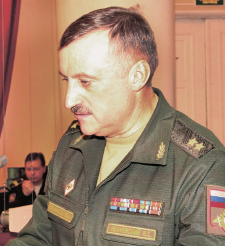
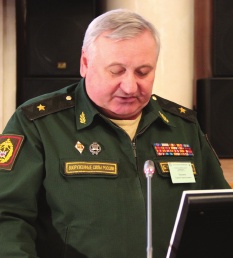
In order to determine the vector of required efforts as accurately as possible, it is advisable to imagine the concept of a probable war. The President of the Russian Academy of Missile and Artillery Sciences Vasily Burenok presented the most famous of them: network-centric, information, contactless. But he immediately noted that not a single one in its pure form works anymore. After every attempt at practical application, weak points are discovered, and therefore, strictly speaking, no one knows what the probable war might be. Ultimately, General Burenok believes, everything will be determined by the technologies existing at that time.
And here there is room for imagination. Listen to what it sounds like: directed energy weapons, hypersonic and kinetic, biological, based on nanotechnology and convergent (mixed) technologies, cybernetic and information-psychological warfare. We are talking, for example, about the remote transmission of damaging energy, influencing global information flows in order to subjugate huge masses of people, creating molecular nanorobots that duplicate and change human organs, for example, to “repair” the wounded on the battlefield. Which of the relevant developments are in reasonable stages of readiness? What are the results of active disinformation? Be that as it may, the totality of the proposed methods of armed struggle makes it possible to formulate predictive assessments of the shape of future wars. In the end, one should remember what authoritative generals (and not onlydomestic) about scientists who in the early 60s argued that the soldiers of the future would be entirely armed with lasers?
It is clear that in the context of the development of new technological structures, the role of fundamental science has not just increased; it began to determine the level of defense capability of the state. Meanwhile, the analysis of the dynamics of the number of fundamental, forecasting and exploratory research work in the field of creating new military-technical products carried out by institutions of the Russian Academy of Sciences is still bleak. In less than 15 years, the number of such works has decreased by almost 10 times.
In previous years the situation was even worse. In the nineties, expenditures on research and development (R&D) decreased by more than 11 times, and their share in defense budget expenditures fell from 18.6% in 1990 to 3.6% in 1996. Operational positions in scientific and scientific-applied research were lost in such important areas as radio electronics, information technology, machine tool and mechanical engineering and others, including a number of humanitarian disciplines that are important for maintaining the combat readiness of the Armed Forces. Let us note that during this period, the Russian defense industry reduced production by almost 80 percent. Meanwhile, the colossal scientific and technical reserve that we inherited from the Soviet defense industry is gradually becoming scarcer. One should not be deluded by the growth in exports of weapons, military and special equipment. Jubilant reports of current successes will soon be followed by severe disappointment. After all, many typesmilitary products produced in Russia are on the verge of exhausting their moral resources and are about to lose their competitiveness.
Meanwhile, NATO countries have moved to the final stage of deep modernization of their armed forces: the share of new types of weapons and military equipment in Western armies has reached 90 percent or more.
For comparison: in the Armed Forces of the Russian Federation this figure may reach 70 percent by 2020. And perhaps it won’t achieve it. But somehow I don’t want to think about it.
Currently, the troops of the potential enemy practically do not leave training grounds and classrooms. An endless series of exercises take place in an environment as close as possible to the conditions of real combat operations. The geography of these exercises is wide: from the subpolar regions of the Arctic to the southern Pacific and Indian oceans. From the shores of Chukotka and Japan to Latin America.
And the actions of the United States and its allies in the Near and Middle East, in the zone of clearly defined interests of Russia, definitely cannot be called exercises. These are non-contact combat operations using high-tech weapons, the latest control systems, reconnaissance, navigation and target designation equipment.
However, we should pay tribute to our military and scientists. They are doing everything they can. Some difficult steps in the right direction were highlighted in the papers and messages given at the conference.
Robots on the battlefield
Missile strikes against terrorists carried out from small Russian ships from the waters of the Caspian and Mediterranean Seas not only greatly exceeded the damage inflicted on the enemy, but also fundamentally changed the military-political calculations of NATO headquarters.
Having demonstrated mastery of long-range, high-precision weapons, Russia “showed its teeth” in a very timely manner. The US Navy has long been in control of the waters of the Mediterranean and North Seas—ship groups with missile defense systems are constantly stationed there. In the next two years, the number of warships will reach almost three dozen. In addition, special structures of “expeditionary forces” are being created on the basis of the 6th Fleet of the US Navy and units of the Marine Corps. The buildup of the Russian Navy's missile potential of the type indicated above is an adequate response to threats from distant sea directions.
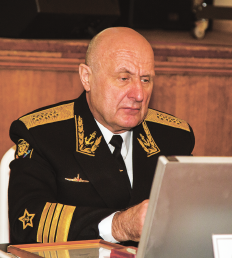
Of course, the United States is not spending billions of dollars to strengthen its naval power to satisfy its ambitions. Head of the Naval Academy named after. N.G. Kuznetsov, Admiral Nikolai Maksimov cited statistics: 80% of Russian (30% of the world) proven oil and gas reserves are concentrated on our continental shelf. The Russian economic zone, including its shelf, contains up to 30% of the world's seafood reserves. This is where the vector of interests of a potential enemy is directed.
Under these conditions, the Russian Navy becomes in the full sense a guarantor of stability. Today, over 60 ships, support vessels and submarines of the Russian Navy perform service and combat missions at sea. They operate both as part of detachments and groups, and alone. Their presence in the far ocean and sea zones is provided for by the state’s Maritime Doctrine, adopted in July 2015.
Armed, but... not dangerous
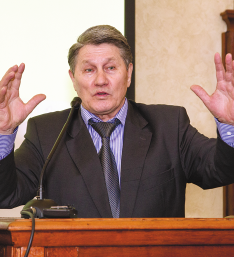
These are very real successes, but the specialists’ heads are not turning. Professor of the Military Academy of the General Staff of the Russian Armed Forces, Major General Vladimir Sheptura gave a comparative analysis of the development of modern domestic and
foreign technologies in the field of creation and use of new high-energy substances, gunpowders and fuels, as well as directed energy systems (lasers, infrasound, etc.). Things are going well in these areas. But in terms of new promising designs, structures, machines and mechanisms, radio engineering, optoelectronic and hydroacoustic equipment and energy technology, the RF Armed Forces lag behind the potential enemy by 5 years. For simulating and modeling situations, forecasting, preparing and justifying the choice of decisions - for 5–10 years. In the field of computer technologies, automated control methods and systems, and promising telecommunications, the lag is more than 10 years or is already irreversible.
Our weakest point, according to Sheptura, is the lack of a unified information space. Computerization of different types and branches of the military, as well as their structural units, occurred at different times, was carried out by different organizations and on different material and ideological bases. As a result, “you don’t understand me”: automated control systems turned out to be incompatible with each other, and it is technically impossible to establish an effective data exchange system.
In addition, the troops literally “speak different languages”: there is no single conceptual apparatus and linguistic base. For 37 thousand terms - 60 thousand interpretations. Of the 40 thousand abbreviations in military dictionaries and standards, 40% are the same concepts, only with a different spelling. Is it any wonder that a system for unifying documents regulating the activities of military command and control bodies has not yet been created.
In the conditions of modern warfare, when the armed forces must work as an integral, well-regulated organism, decisions are made and commands are executed in seconds, such “Babylonian pandemonium” is a sure path to defeat.
Meanwhile, the first “Concept for the formation and development of a unified information space in Russia and corresponding state information resources” was developed back in 1995. Its provisions were repeated in all subsequent governing documents, including the “Military Doctrine of the Russian Federation” (2014) and “National Security Strategy of the Russian Federation” (2015).
However, things are still there. And, apparently, it will be “there” for a very long time. At the same time, it is well known that our potential adversary has successfully completed this task long ago. For clarity: in the USA, out of 100 available supercomputers, 44 are used for the needs of the armed forces (including “Titan” - No. 1 from the world Top 500 list), in China - 4, in Russia - only one!
Our main shame has not gone away either: 90% of the software and components in the electronics we use are foreign-made. At any second, our army can go blind and deaf, and all “unparalleled” weapons systems will turn into a pile of useless metal.
This has already been said thousands of times, but our electronics industry cannot be restored from the ashes - it has been swept away by the mighty breath of the “Asian tigers.” The only thing that can be done (and our prime minister recently mentioned this) is to buy out the relevant enterprises from them. If, of course, they sell them to us.
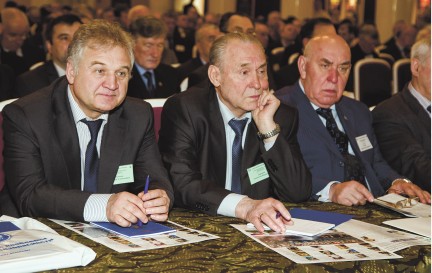
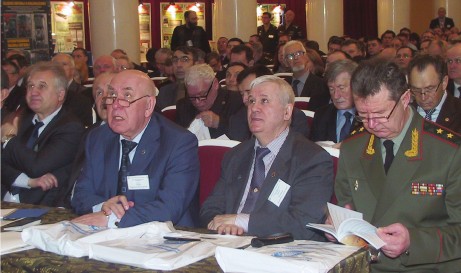
Active anxiety caused by the escalation of military threats, as well as the readiness to do everything possible to strengthen the combat readiness of the Armed Forces and the development of the military organization of the state, ran like red threads through the speeches made during the plenary and sectional sessions of the 19th All-Russian Scientific and Practical Conference “Current Problems of Defense and Security.” About five thousand reports and communications will be published in full in the Proceedings of the Conference, in the journals “Izvestia RARAN” and “Problems of Defense Technology. Series 16", and the most interesting for a wide range of readers - in the magazine "Protection and Security".
The Organizing Committee, participants and guests of the conference received many greetings and congratulations, including from prominent government figures, heads of federal departments, enterprises and organizations, command of military units and formations (associations), and leadership of law enforcement agencies.