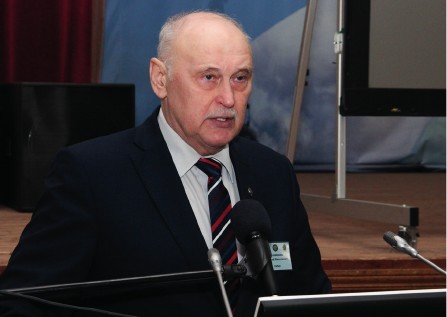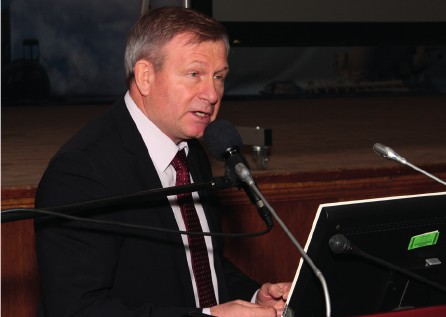
XXV APZB Conference
WE KNOW WHAT'S ON THE SCALES NOW
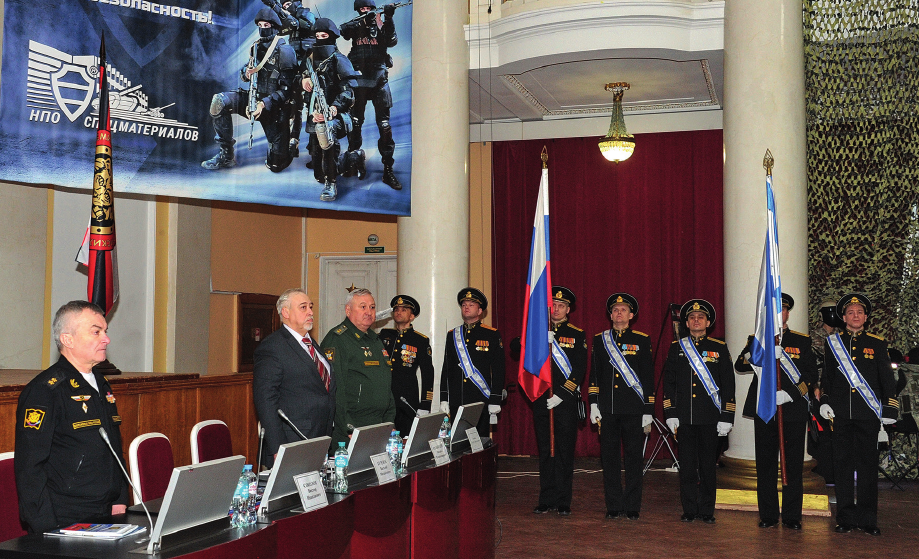
The anniversary XXV All-Russian scientific and practical conference “Current problems of protection and security” was held in St. Petersburg in early April. The meeting with the participation of prominent representatives of the Ministry of Defense, other law enforcement agencies, and the Russian Defense-Industrial Complex took place in the midst of Russia’s Special Military Operation in Ukraine, and in fact, a hybrid war with the collective West. To the military people gathered within the walls of the famous Naval Academy named after. Admiral N.G. Kuznetsov, it was absolutely clear: in this battle there can be no half-hearted solutions; the very existence of our country, its entire future, is at stake. The main guarantor of the integrity and progressive development of Russia today, more than ever, is its Armed Forces. But without mobilizing the economy and the entire people to achieve victory, confronting an unprecedented trade, diplomaticThe blockade in which our country finds itself cannot be withstood by the Army and Navy either. That is why the responsibility for every decision made is so great: there is no room left for unfounded forecasts, capricious proposals, and squandering of budget funds. Many speakers started from this starting point in their reports.
At the beginning of April 2022, in one of the famous and oldest educational institutions in Russia - the Naval Academy named after. Admiral of the Fleet of the Soviet Union N.G. Kuznetsova - the opening and plenary session of the XXV anniversary All-Russian scientific and practical conference “Current problems of protection and security” took place.
The most important and widely discussed issue of the scientific and practical conference was the issue of solving the problem of general mobilization of the economy and society to ensure the defense capability of our country. The speakers in their reports emphasized that the main guarantor of the integrity and progressive development of Russia today, more than ever, is its Armed Forces.
GEOPOLITICAL RECOVERY
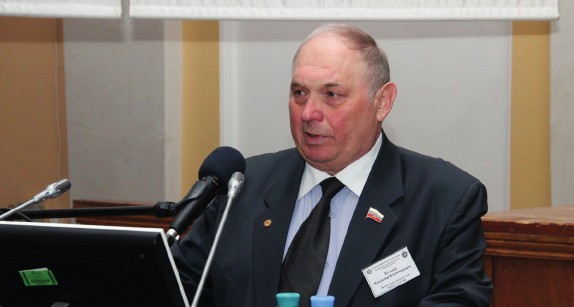
The crisis erupted as soon as Russia began to advance its national interests in relations with NATO countries, when their troops and missiles not only moved close to our western borders, but had actually already begun deployment in Ukraine. Its harbingers and components were discussed in a report prepared by a group of authors under the leadership of Deputy of the State Duma of the Russian Federation, Colonel General V.A. Shamanov (the report was read by V.V. Kulakov). Requirements of the President of Russia V.V. Putin’s proposal to return the alliance troops to the lines where they were in the 90s of the twentieth century (as promised when our country agreed to withdraw its armed forces from Europe) was not taken seriously by the United States and its allies. On the contrary, the alliance’s plans included in the near future taking full control of the entire Black Sea area, over which hundreds of flights of their reconnaissance aircraft anddrones. NATO Secretary General Stolpenberg declared the Black Sea region a zone of US interests: air and sea patrols of its waters were to be transferred to the standard activities of the alliance, for which significant forces were being prepared for the transfer. At the same time, Ukraine, during the planned attack on the Donbass, was ordered to stage a serious provocation against the Russian Federation in the Sea of Azov - in order to disable the Crimean bridge and by joint efforts to surround the Crimean peninsula from all sides.
Having placed Russia on the defensive, the NATO countries were not going to ease the pressure. The United States in advance, back in 1972, withdrew from the Treaty on the Limitation of ABM Systems. And, starting from the 90s, they began to actively place them in Eastern Europe. At the same time, they brushed aside the accusations that the missiles in the installations could, if desired, be replaced with offensive ones with a nuclear charge. In the 21st century, American strategists are increasingly speaking out about the admissibility of the use of tactical nuclear weapons (TNW). By 2025, NATO planned to fully deploy the missile defense system and strike Russia, hoping that by this time their saboteurs would be able to disable our systems. Only the latest Russian weapons, which have no analogues in the world, and the interception of the initiative in the situation with Ukraine were able to mix up their plans.
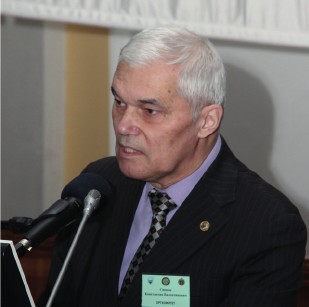
From an ideological and substantive point of view, the theme of confrontation between Russia and the West was developed in the speech of military expert, deputy president of RARAN Konstantin Sivkov. He noted that in 2020–2021, two main development concepts were presented to the world. The model of the mondial world, which was presented by Klaus Schwab at the economic forum in Davos. And an alternative model of a polycentric multipolar world, which was presented by Russian President V.V. Putin. If the first assumes the dominance of international corporations and the destruction of national states and elites, then the second, on the contrary, defends the priority of states and their voluntary entry into unions. It has already been outlined in general terms which countries gravitate towards one or another model. The contradictions between both concepts are so great, and the ideological confrontation takes place with such fierceness that it becomes clear: one way or anotherthey should be resolved soon. Schwab insists that the major problems of the global world must be eliminated by 2025. However, globalism suffered an unexpected blow in the country that is the springboard for its adherents. In 2016, Donald Trump, a representative of the interests of national capital, won the US elections. And now the Republicans are breathing down the Democrats’ necks in the election race, blaming them for the economic crisis. In order to strengthen their positions, the globalists need Russia with its countless natural resources and favorable geographical position. There can be many options: from the destruction of a single state and the emergence of several small ones in its place, as was the case with Yugoslavia, to the establishment of a new puppet regime, even more treacherous than in the 90s. Hence the series of military conflicts and rebellions on the borders of our country orin the zone of its influence - in the former Soviet republics (military clashes in Kazakhstan, Nagorno-Karabakh, the failed coup in Belarus are examples of this) and as the pinnacle of the influence of destructive forces - the imposition of an armed conflict in Ukraine. Hence the sanctions unprecedented in history and information pressure mixed with endless lies, the rejection of international peacetime legal norms in relation to Russia. This is a full-fledged hybrid war, which is supported by hotbeds of military conflicts. The goal is to isolate our state and under no circumstances allow it to deepen cooperation with other countries within the framework of economic and military alliances (BRICS, CSTO, EAEU). In light of this, we certainly should not expect any easing of sanctions, no matter what concessions our systemic liberals push the government to make. But the threat of military conflicts is increasing, especially in the Caucasus, Central andCentral Asia, in the Barents Sea area on the Northern Sea Route. Considering that our Armed Forces are already participating in operations in Ukraine and Syria, another theater of military operations could become an unbearable burden for the country’s economy and security bloc. So that new trials do not take us by surprise, we must prepare for them in advance.
“Ready for work and defense”
It was not possible to blow up Russia by being drawn into an armed conflict with Ukraine, largely due to the fact that our Army and Navy turned out to be head and shoulders better armed than the Kiev regime - despite all the military assistance it received from the West. High-precision missiles "Caliber" and hypersonic "Dagger", OTRK "Iskander", aircraft (SU-35, SU-34) of the Russian Armed Forces, unmanned aerial vehicles remotely defeat enemy personnel, weapons, fuel reserves, production and repair bases. In close combat, the advantage of our armored vehicles and infantry is provided by such systems as the TOS-1A Solntsepek, the short-range anti-aircraft missile and gun complex Pantsir-S1, the Shturm-S ATGM, helicopters (Ka-52, MII-28NM) and others. And to protect all the borders of our Motherland, the forces of Russia’s strategic nuclear triad, which also have no equal in the world, have been put on combat duty. But scientificthought does not stand still, the United States and other NATO countries are actively developing advanced weapons designed for new types of conflicts, and we cannot afford to lag behind. It is not without reason that the new State Defense Order (SDO) names the development of unconventional types of weapons based on new physical principles (lasers, electromagnetic guns, space weapons, etc.) and the fundamental research that supports them as a priority area. We have little time and limited funds for these expensive studies. Therefore, more than ever, the question of rational planning of work and timely introduction of necessary amendments to them has arisen, since the situation is changing very quickly.
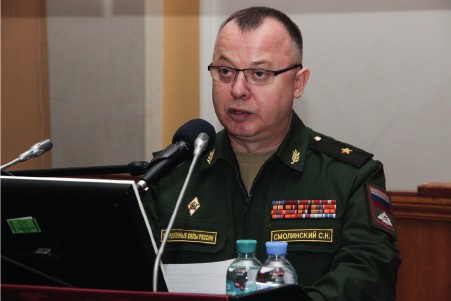
Representative of the scientific and technical committee (weapons development) of the Russian Defense Ministry, Major General Sergei Smolinsky, spoke about the problems that arise when drawing up and adjusting the state defense order. On the one hand, the pace at which technology is being developed and modernized is accelerating, and the complexity of samples is increasing. The speaker cited the following figures: in 2021, the Russian Armed Forces received more than 1.5 million units of new and modernized military equipment. Among them are 750 missile systems, 670 armored vehicles, 1,600 vehicles, 70 airplanes and helicopters, 38 ships, boats, and submarines. On the other hand, with all the diversity of performers, demands are put forward to them regarding the standardization of defense products. To tie everything together, constant military-scientific support of research and development work is necessary, as well as continuous monitoring and analysis of scientific and technical problems in their implementation. Providing interspecificThe coordination of work, the development of proposals and recommendations for solving problems that have arisen is carried out by the Coordination Scientific and Technical Council under the Moscow Region. The Directorate for organizing R&D control operates under it. At 20 meetings of the Directorate, more than 120 works were considered, among which, in addition to applied ones, were developments related to the creation of artificial intelligence, as well as fundamental research. The best of them were included in the State Defense Order for 2022.
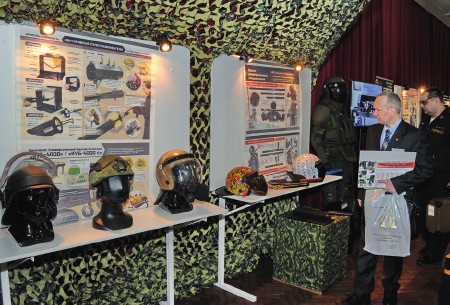
Another source of replenishment of the range of weapons and military equipment (W&M) was the annual Army forum. It displays promising samples of equipment and weapons, from which, after inspection, the commission selects the best and recommends them for prompt inclusion in the State Defense Order.
An equally important issue remains the testing of selected samples and testing them in action. For these purposes, the Ministry of Defense independently held or participated in 34 competitions, of which 19 were held on the territory of foreign countries.
The data coming from all these sources is monitored, analyzed, summarized, and on their basis, regulatory and legal acts are prepared that facilitate the dissemination of the experience gained across the entire range of manufactured products.
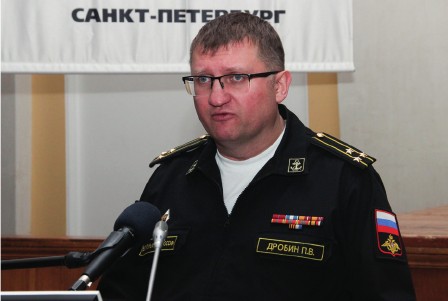
Both for the present and for the future technical superiority of the RF Armed Forces, an advanced scientific and technical basis is needed. Therefore, the long-term strategies of industrial enterprises and the Russian Ministry of Defense are becoming increasingly open to innovative projects and technologies implemented as part of initiative work (for reference, about 2,000 subjects of innovative activity work for the Ministry of Defense). This work requires systematic support, active interdepartmental cooperation, and a more structured approach to management. It is coordinated by the Main Directorate of Innovative Development of the RF Ministry of Defense, as described by Captain 1st Rank Pavel Drobin. The department is engaged in monitoring, examination and selection, as well as the implementation of innovative projects. At the moment, he has already reviewed more than 2,500 domestic and 1,100 foreign developments, many of which were initially notedon the Army forum. Next, a special Commission on Innovative Projects and Technologies for the implementation of initiative work and the introduction of dual-use inventions in the interests of the RF Armed Forces assesses the possibility and feasibility of implementing the project - its meetings are held quarterly, and, if necessary, monthly. Direct control over the activities of the commission is exercised by the Deputy Minister of Defense, Army General P.A. Popov. Thus, in December 2021, out of 41 selected innovative innovative works, 28 were approved. Some of the implemented developments have already been applied in Ukraine (for example, a hardware-software encryption complex). At the moment, another 277 initiative developments are included in the list of projects under consideration, and their number will grow - this is facilitated by the recently adopted new regulatory documents. Now everything has been simplified: after accepting the application forinitiative work, the leader makes a decision on the state. sample testing. The timing can be judged by the following example: in July 2021, the Lastochka UAV for the Airborne Forces was tested on the basis of the Era military technopolis, and in September, during the Zapad-21 exercises, military-technical experiments with its participation were already carried out. It is already clear that the commission has enormous unrealized development potential, including issues of comprehensive automation of innovation activities, analysis of inventive work, protection of its results, and incentive mechanisms.
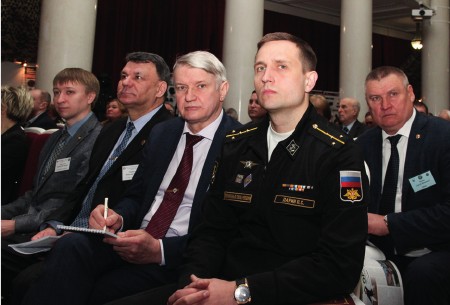
The Changing Face of War
The latest military conflicts in Syria and Ukraine have shown that the achieved technical capabilities open up new horizons for military leaders in building tactics and strategy. Frontal clashes between troops are a thing of the past: the calculation is based on either successively dispersing the enemy’s forces, exhausting him, or driving them together for final suppression. This is also demonstrated by the special operation of the Russian Armed Forces in Ukraine. Rapid maneuvers of units would be impossible without remote reconnaissance operations, operational logistics and total air supremacy carried out by the air forces and missile forces.
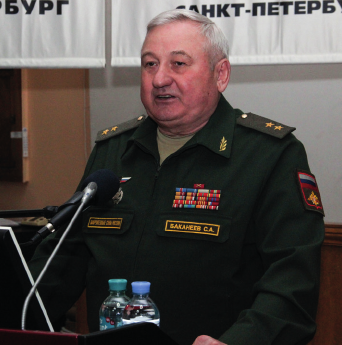
Accordingly, the role of artillery and missile forces in the nature of military conflicts has also undergone changes, to which the head of the Mikhailovsky Military Artillery Academy, Lieutenant General S.A., dedicated his report. Bakaneev. He identified several levels in the historical development of military art: general battle, blitzkrieg, non-contact war and system-network war. The latter is characterized by the spatially dispersed nature of combat operations, which are conducted according to the focal-network principle, as well as a reduction in the differences between tactical and strategic operations. Moreover, strategic control points can even be located on the territory of neighboring states. The goal of a network operation is to seize the initiative throughout enemy territory.
The network principle of warfare is used not only by regular troops, but also by militants who are supported financially and technologically by the Western military. Their favorite form of tactical action has become the use of a combat swarm or swarm of drones. However, the same tactics were used by Azerbaijani troops in Nagorno-Karabakh or the Ukrainian Armed Forces in Ukraine, trying to disable Russian ships with a swarm of drones.
Technologies for waging system-network wars require missile defense and warfare to move to a qualitatively new level: in addition to the further development of fire systems, automated control systems, UAVs, in the future they must use unconventional methods of influence based on new physical principles: laser and radio-frequency weapons, robotic reconnaissance systems with automatic control, capable, in addition to collecting data, of suppressing enemy assets and forces, etc. Scientific research in these areas is already underway.
Among the already mastered new products, it is worth noting short-range micro- and mini-class UAVs for personal use by the division spotter; loitering munitions for destroying enemy targets, radio frequency weapons for protection against UAVs. As a result, by the 2025–2030s, the missile defense forces will be finally transformed into a reconnaissance and fire system as part of an interservice troop system.
Rears behind
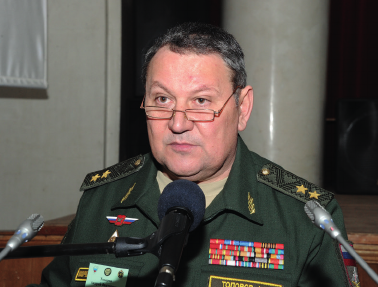
The events in Kazakhstan that occurred at the beginning of 2022 actually demonstrated the relevance of the Collective Security Treaty Organization (CSTO). Its collective peacekeeping force (CPF) in a matter of
days extinguished the resistance of the rebels and international terrorists who flooded the country. The CSTO, created in 2002, has since then contributed to the transfer of national troops to uniform standards and coordinated their actions in special exercises. The head of the Military Academy of Logistics Support named after Army General A.V. spoke about how the integration process occurs in the field of logistics. Khrulev, Lieutenant General Andrey Viktorovich Toporov. It is this academy that has the status of the CSTO’s parent organization in the field of logistics.
The fact is that the Armed Forces of the Russian Federation and other countries that are members of the CSTO have significant differences, including in the methods of logistical support - both in theory and in practice. To resolve emerging contradictions, the Academy does a lot of work: develops basic documents, trains military personnel, substantiates rational volumes of material reserves for combat operations, makes proposals for projects of joint research programs, exercises, etc. In the interests of the Armed Forces of the CSTO member countries, students and cadets are being trained in 56 educational programs in all accounting specialties. In total, the academy trained more than 2,000 cadets, 8 candidates and 1 doctor of sciences for the CSTO states. Moreover, the training courses are developed taking into account the generalized practical experience gained during special andpeacekeeping operations - in Syria, Nagorno-Karabakh. On the special operation in Syria alone, the academy published more than 20 monographs and scientific papers. A clear vision of the problem made it possible to successfully use groupings of forces in Kazakhstan in January 2022: the operation was prepared as a special case of a full-scale deployment of troops. The accumulated experience has served well in analyzing the features and preparing the logistics of Russian troops in Ukraine.
The fate of land is decided at sea
NATO's interest in Ukraine was initially dictated by the desire to oust Russia from the Black Sea and return it almost to pre-Catherine times. And in the future, completely block its access to the sea - let’s remember the endless exercises of the alliance fleets in the Arctic, attempts to complicate communications with Kaliningrad, the eternal tension around the Kuril Islands with Japan. And a power that leaves the sea loses not only its great status, but also a full-fledged opportunity to defend its interests and defend itself. Yes, the revival of Russian military shipbuilding is in full swing, but the damage caused to the Navy in the 90s was too great, when fully combat-ready ships were sent for scrap. As a result, we alone must resist the combined force of the fleets of most developed countries. And how can one not remember Suvorov’s behest: to fight not with numbers, but with skill.
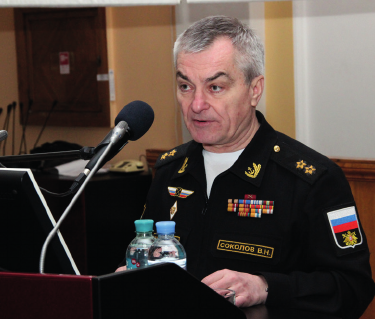
In recent years, all over the world, naval art has been developing very intensively - in our country, specialists from the Naval Academy named after. Admiral of the Fleet N.G. Kuznetsova. Its chief, Vice Admiral Viktor Nikolaevich Sokolov, made a report on this topic. The breakthrough occurred in a very short period of time: only in November 2018, the Commander-in-Chief of the Navy approved the concept of the documents, and today not only all provisions of the concept have been verified, but also based on them, tactical manuals have been created that form the basis of the new Battle Manual of the Russian Navy.
The concept of a “network-centric battlespace” lies at the heart of future global naval warfare. This is a unified information and strike structure, which includes a single global system for illuminating the underwater situation and weapon carriers - anti-submarine aircraft, surface ships, submarines, and robotic equipment. Their integration allows real-time monitoring of large areas of the World Ocean.
In the process of developing the concept in accordance with the theory of combat spaces, command and staff games were held at the Naval Academy in 2019 and 2022, in which the actions of opposing factions were simulated. On this basis, an automated methodology for organizing combat defeat was created, measures were developed to improve the methods of tactical actions for the generic components of the Navy, based on modeling spaces taking into account complex fire, reconnaissance, coordinating systems - one's own and the enemy's. The general provisions are detailed down to specific methods and techniques, partly tested in the conflict in Syria. As a result, the tactical component acquired an integral structure: it highlights the theoretical aspect, lists the forms of use of naval forces, provides tactical guidelines, and regulates the operation of integrating fire control systems for ships of the newgenerations. The new control documents cover all levels of the operation - from receiving the mission to the fire defeat of the enemy, and their provisions are exclusively of an applied nature and practical orientation.
What kind of force will the Russian Navy have to deal with now and in the near future? The scientific director of the Krylov State Scientific Center, Valery Nikolaevich Polovinkin, spoke about this at the conference. Dry facts indicate the following. 166 countries now have a navy, the top three are the USA, China, and Russia; India is coming. Given the enormous length of Russia’s maritime border, up to 90% of its territory and more than 80% of its military-industrial potential fall within the range of high-precision weapons of the US Navy and NATO countries. This causes many states to want to dispute part of the coastal territories and shelf: about 300 claims to the sea area have already been expressed to our country, each of which is fraught with a potential conflict. Thus, in the Arctic, the Russian Northern Fleet is opposed by the forces of the 2nd, 6th, 3rd, 5th, 7th US fleets. When deploying the 2nd Fleet, NATO may fieldin the Arctic direction there are about 145 warships and vessels. In terms of overall weapons equipment, the layout looks like this: the American fleet has 12,000 missiles, the Chinese - 5,000, and the Russian - 3,200 missiles. But the balance of power can quickly change. For example, so far the American fleet has the largest total displacement - more than 3 million tons. However, just one shipyard in China currently builds more warships than the entire United States. In 2021, 5 destroyers, 12 frigates, and 16 corvettes were launched in China. India has picked up a high pace in shipbuilding: it is believed that by 2035 its navy will occupy 2nd-3rd place in the world.
The composition of modern fleets is also changing, the criterion of effectiveness of which is the ability to effectively deploy and maintain forces in several dispersed places, which the Americans call “force projection.” Aircraft carriers, amphibious assault ships and marines are considered to be capable of striking such a force. Of the 10 countries that have aircraft carriers, only three can build them; the United States has always been in the lead in terms of their number. However, with the advent of hypersonic weapons, aircraft carriers are becoming a very vulnerable target and there is a tendency to transform universal landing ships into light aircraft carriers.
In surface shipbuilding, changes have also occurred in the relationships between cruisers, destroyers, corvettes and frigates. If earlier there were 2-4 large ships per limited displacement ship, now it’s the other way around: for one large ship there are 3-4 light ones, and in terms of its armament the destroyer is already approaching the cruiser. The goal of the fleet construction program in the United States and other countries is to create a high-tech “distributed” fleet, in which striking power would be distributed across all classes of ships in the theater of operations.
The program for the development of military shipbuilding for the period until 2050, adopted for the first time in Russia, provides for the commissioning of new ships and the modernization of existing ones - all of them will be equipped with advanced weapons, control and long-distance communication systems. Parity is also maintained in the submarine fleet. American nuclear submarines such as Columbus, Seawolf, and Virginia are opposed by our strategic submarines Prince Oleg, Prince Vladimir, and nuclear submarine Kazan. Work is actively underway to create the 5th generation Husky nuclear submarine, which is not inferior to its foreign counterparts.
It is also worth noting that, while modernizing their missile systems, the Americans unified them all to a single diameter of missile silos. We developed our own submarine for each complex.
Of course, there are still many problems - primarily with financing. In the United States, funding for all shipbuilding programs increases annually by 30–40%. A separate race has developed in the field of creating robotic vehicles and autonomous unmanned underwater vehicles.
And speaking about the foundation for the future, Admiral of the Fleet Viktor Viktorovich Chirkov, now the chief adviser to the president of United Shipbuilding Corporation JSC for military shipbuilding, highlighted the main thing: “To build a 5th generation fleet, you need to clearly know the goals that need to be achieved. Give us the requirements for technology - then both the automated control system and the air defense system will go completely differently. You can’t build new weapons to yesterday’s standards!”
There is little time left for everything, but we have nowhere to retreat. And as many of the speakers noted, only the mobilization of the entire economy and society to ensure the defense capability of our state will allow us to cope with the tasks.