VII APZB Conference
Seventh time about protection and safety
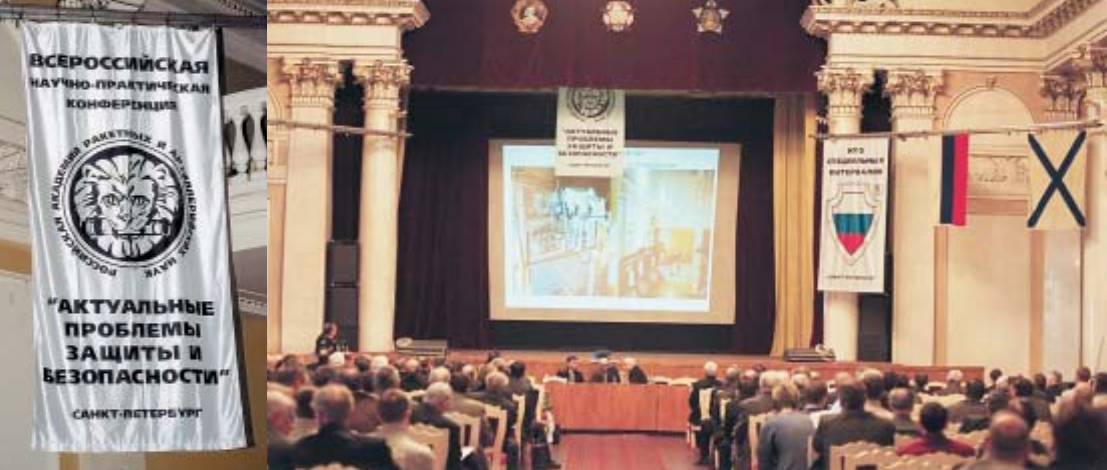
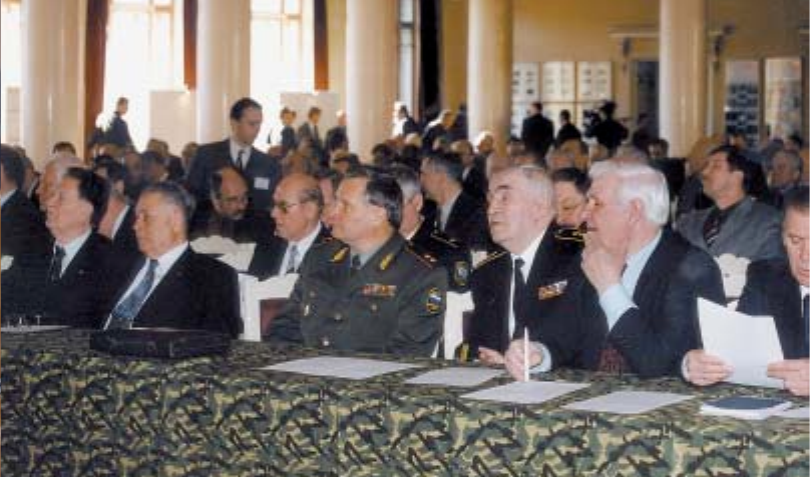
Within the walls of the renowned Naval Academy named after Admiral of the USSR Fleet N.G. Kuznetsov, scientists and specialists from defense industries, developers of weapons, special equipment and protective equipment, as well as those who use weapons, military and special equipment in everyday service and combat activities gathered.
About 400 reports and messages prepared by the Ministry of Defense, Ministry of Internal Affairs, FSB, FSO, other ministries (departments), as well as higher military and civilian educational institutions, research organizations and industrial enterprises of the Russian military-industrial complex were presented at the plenary session and thematic symposiums.
Now it is not ministries and departments that form orders for enterprises and scientific organizations of the military-industrial complex, but they themselves, studying the needs of the military, police and special forces, develop, test and establish the production of the necessary products - without any guarantee that they will be in demand. The All-Russian Conference “Current Problems of Protection and Security” has become a kind of bridge between developers, manufacturers and customers, the recommendations of which are carefully listened to.
This year the geography of the conference has expanded significantly. Representatives of many enterprises arrived who had not participated in previous conferences. And one more distinctive feature of the 2004 forum: its character, of course, was influenced by the worsening danger of terrorism in the world and in the country. All five symposia of the conference paid attention to means and methods of combating terrorism. And one of them was called: “Technical means of countering terrorism.”
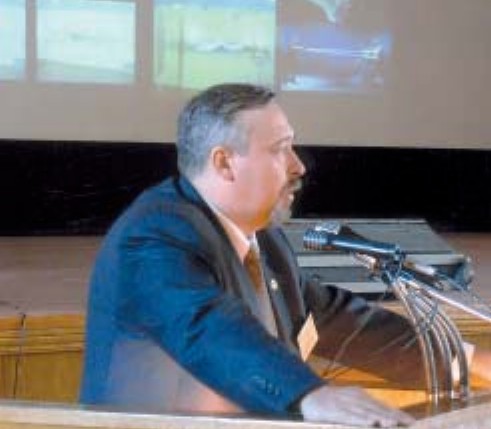
The work of this symposium was led by Academician of the Russian Academy of Sciences, General Director of the NPO Special Materials M.V. Silnikov. Speaking at the plenary session, he noted that the company continues to develop in a number of promising areas. About 200 models and modifications of body armor have been created. The “Fontan” protective devices designed by the association can significantly reduce the effect of criminal-terrorist explosions. Tests have shown that Fountains can significantly reduce the destructive consequences of an explosion. The company has created and mass-produced new designs of road barriers that have proven themselves in practice, stun guns, laser devices that cause temporary blinding, and other anti-terrorist equipment.
A symposium led by RARAN academician V.V. Selivanov was devoted to summarizing the experience of developing non-lethal weapons in the country and the world. In particular, he noted that the most promising types of non-lethal weapons (NLM), according to the leading developers of this type of weapon in European countries, are: the family of kinetic types of NLM (rubber and plastic strikers of various shapes, water cannons, nets); electroshock devices – stationary and fired; family of light and sound special means; various physical and chemical ONDs, incl. irritants and aerosol systems; various security, fencing and blocking systems, including microwave generators; lasers and other types of ONDs of wave nature.
Today it is obvious that increased attention is being paid to the problem of the development and application of OND in Europe, the USA and Asia; specialized structural units are being formed to deal with this problem, both at the state level and at the level of individual companies known for their high-tech products in other fields of science and technology (including in the field of conventional weapons). A significant amount of research is being carried out in this direction, and very significant budget funds are being invested in the development of technologies for creating ONDs. For example, over the past four years, about 2.5 million euros have been spent on the research program and development of only well-known modifications of OND in the Netherlands, and about 5 million euros in Italy.
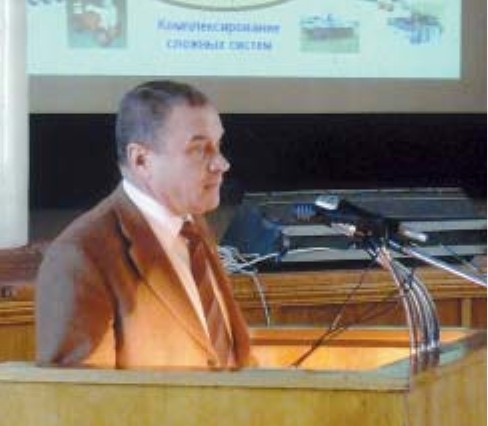
The special symposium was dedicated to new threats to Russia from the sea, including terrorist ones, and the role of the country's Navy in repelling these threats. The report prepared by the head of the Naval Academy, Yu. N. Sysuev, notes that international terrorism focuses its activities, among other things, on maritime objects - communications, transport and passenger ships, warships of countries actively fighting the “terrorist international”. Terrorism is also moving toward global maritime space due to increased counteraction to it on land and in the air. Thus, terrorist No. 1 - the head of Al-Qaeda, Bin Laden, according to established data, is the owner of about 20 large ships that are hidden under “flags of convenience”. Other terrorist organizations also have naval forces, which pose a serious threat to navigation in the World Ocean.
The attacks carried out were evidence of the capabilities of maritime terrorists. Thus, on October 12, 2000, the American destroyer Cole was damaged in the port of Aden. The United States suffered serious material and moral losses. There are other known cases of attacks on maritime civilian and military targets. There are currently about 40 terrorist organizations on the “black list” that are, to one degree or another, capable of carrying out attacks and other terrorist actions against maritime targets.
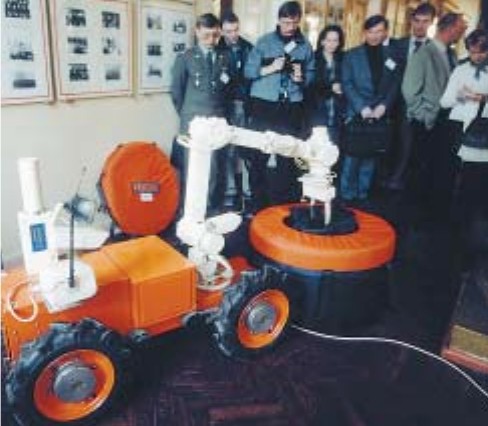
The problems of expanding the capabilities of robotic systems and their application were discussed by the participants of the Extreme Robotics symposium. A whole family of robots has been created in Russia, designed to replace humans in the most dangerous areas, including areas with high levels of radiation.
The mobile robotic complex “Razvedchik”, created at the Central Scientific Research Institute of Robotics and Cybernetics, has proven itself very well, designed to search and evacuate local sources of gamma radiation, to perform routine technological operations at nuclear industry enterprises, as well as to eliminate the consequences of accidents at nuclear physics installations, to eliminate the consequences of acts of radiation terrorism.
The robot's parameters allow it to be delivered by almost any type of transport to the place of use and ensure rapid deployment. The robot is equipped with television surveillance equipment, a dosimeter, a gamma direction finder and a gamma visor.
This robot worked very well in Chechnya, when highly radioactive cobalt isotopes were seized by terrorists from storage and scattered throughout the chemical plant, and also hidden in the forest. The robot precisely localized the location where the isotopes were and collected them. "Reconnaissance" is the only robot that participated in the NATO Barents Rescue exercise that successfully detected and evacuated a hidden source of ionizing radiation. An American robot was unable to find a cesium isotope in an hour and a half. Ours did it in 12 minutes.
Much attention at the Conference was paid to the analysis of the experience of the last Chechen war. Thus, according to the artillerymen, the tragic death of the 6th company of the Pskov Airborne Division occurred due to the lack of support from its own small artillery, which included 82 mm and 120 mm mortars. Their use at the company and battalion level with the help of air transportation, especially in hard-to-reach areas, which include up to 70% of the territory of our country, significantly reduces losses. The experience of Afghanistan is proof of this. However, since the late 80s, our airmobile forces have declined, and the situation urgently needs to be changed.
One hundred and eleven reports and messages were presented as part of the symposium on weapons, military equipment and medical and biological problems. Its participants discussed, in particular, the main directions for the development of individual combat equipment for military personnel of the Russian Armed Forces.
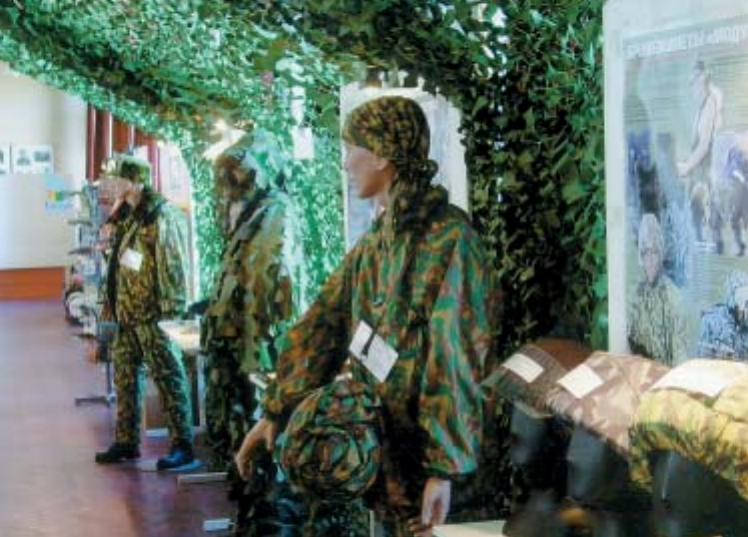
Scientists and designers agree that the 21st century is the century of new technologies that can make a breakthrough in the direction of equipping a soldier. Head of the 3rd Central Research Institute of the Ministry of Defense of the Russian Federation, Academician of the Russian Academy of Sciences V.I. Baidak spoke about the wide possibilities opened up in this area by nanotechnology, which makes it possible to create materials with predetermined properties - ballistic, light-absorbing, camouflage. In the evolution of infantry equipment, which has always been limited by the weight and size characteristics of its constituent elements, the use of nanotechnology creates the basis for a scientific and technological breakthrough.
One of the current tasks of V.I. Baydak named the improvement of close-combat small arms that dominate modern tactics. It is necessary to expand the range of use of hand-held assault weapons and hand grenades, moving away from their purely anti-tank purpose. As for equipment, the speaker noted the trend towards creating suits for representatives of different branches of the military, rather than individual elements in their combination. An unusual report by the Military Medical Academy (authors A.B. Shangin, S.A. Peleshok, A.E. Andreev) was devoted to reducing losses among the wounded. As you know, the outcome of recovery largely depends on care and nutrition. Up to 80% of the wounded need special dietary nutrition, which cannot be provided to them in the field. The so-called durable food bags currently in use are produced by the freeze-drying method, in whichreconstituted products not only become indigestible and are not protected from bacteria, but also lose most of their nutrients and vitamins. The report included links to an article from the journal Defense and Security, which compared the diet of Russian and American infantrymen. Our soldiers already receive a total of half as much meat as their American colleagues, and if you still lose money when processing food using this method, then there is very little left.
Meanwhile, Academy scientists proposed switching the diet to a new drying method - infrared. In dry form, this results in weight loss, guarantees the absence of bacteria, and when reconstituted, there is almost no loss of nutrients and vitamins. In addition, it is possible to create nutrition packages for patients with different types of wounds. The question again arises: with all the advantages of this method, how long will it take to transfer our clumsy military machine to it, and will this ever happen?
The scientists have spoken - Russian military science has created everything necessary to strengthen the defense capability of our Motherland. And now it’s up to the authorities to reduce the huge gap that exists between theory and reality. By all accounts, the conference was another important step towards strengthening Russia's security.